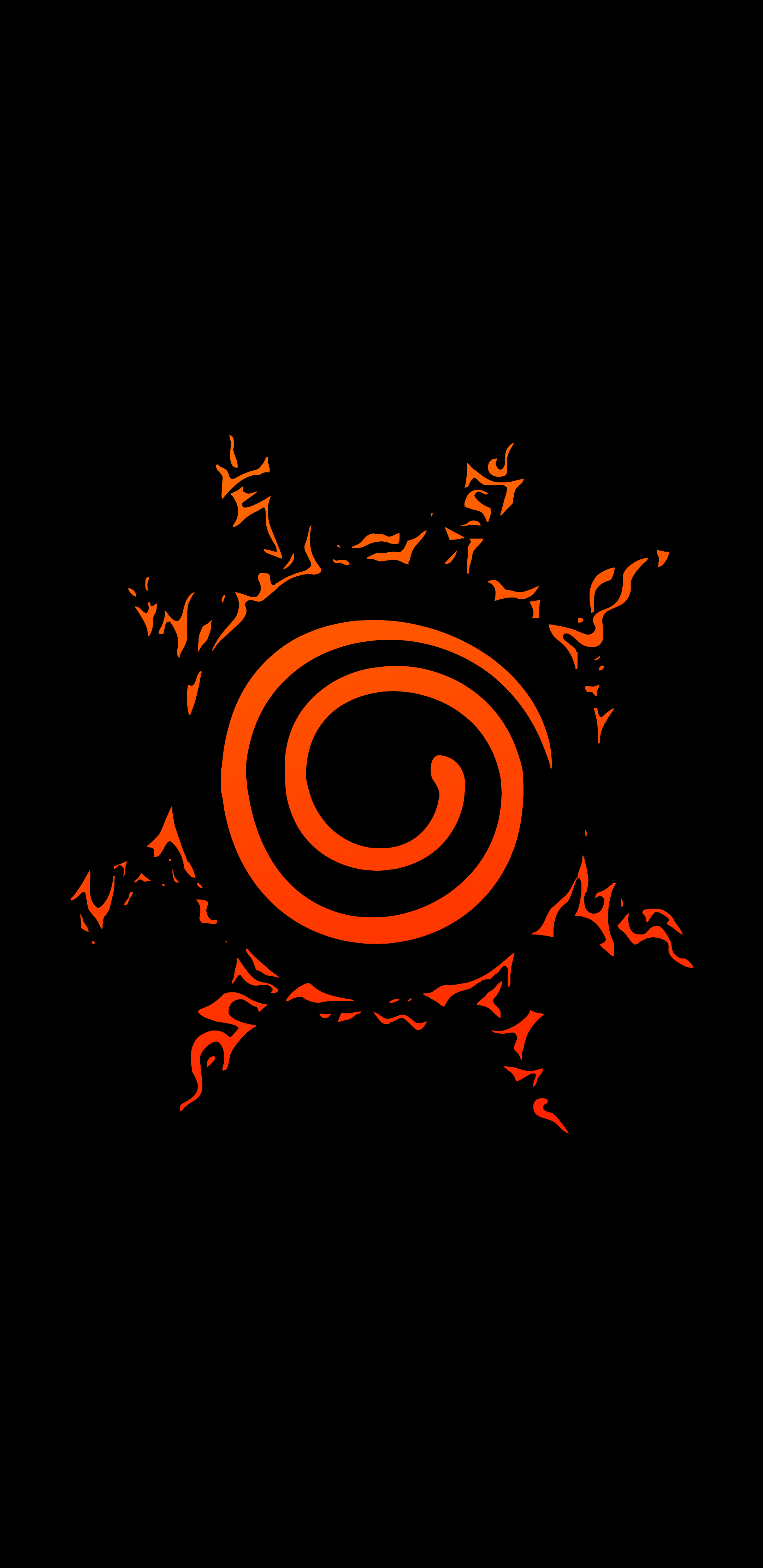
It is the most iconic visual in anime history. A swirl of black ink centered on a belly button, glowing red whenever things get hairy. Most people just call it the "Nine-Tails seal" and move on. But honestly? The Naruto seal on stomach—formally known as the Eight Trigrams Sealing Style—is a masterpiece of fictional engineering that Masashi Kishimoto used to ground the entire power scaling of the series. It wasn't just a cage. It was a filter.
When Minato Namikaze slammed that seal onto his newborn son, he wasn't just trying to stop a disaster. He was playing a very dangerous game of biological alchemy.
Why the Naruto Seal on His Stomach Was Actually a Leak
Think about most seals in the series. Usually, they are meant to keep something in. Total isolation. But the Four Symbols Seal—which actually makes up the two layers of the Eight Trigrams Seal—was designed with a specific flaw. It leaked. Minato intentionally crafted the seal so that Kurama's chakra would slowly seep out and merge with Naruto’s own chakra reserves.
This is why Naruto has such absurd stamina.
It’s not just Uzumaki genetics, though that’s a huge part of it. It’s the fact that for sixteen years, his body was constantly being flooded with tiny, manageable amounts of the most potent energy in the world. The Naruto seal on stomach acted like a slow-drip IV bag of radioactive god-power. If the seal had been "perfect" and air-tight, Naruto probably would have died in his first real fight against Haku. He needed that leak to survive.
The Mechanical Nuance of the Eight Trigrams
Technically, the seal is two Four Symbols Seals layered on top of each other. This creates the "Eight Trigrams" (Hakke no Fuin Shiki).
The space between the two seals is where the magic happens. Jiraiya explains this early on, though it’s easy to miss between the gags. It’s a filtration system. It takes the "malice" out of the Nine-Tails' chakra—or at least tries to—and converts it into something Naruto can use. However, this system is incredibly sensitive. When Orochimaru slapped the Five-Pronged Seal (Gogyo Fuin) on top of it during the Chunin Exams, he didn't just add a new lock. He disrupted the "odd-numbered" vs "even-numbered" balance of the seals.
Naruto suddenly couldn't walk on water. Why? Because the Naruto seal on stomach was now fighting itself. The flow was blocked. It’s like putting a kink in a garden hose while the pressure is still building at the faucet.
The Key, the Toad, and the Evolution of the Spiral
We have to talk about Gerotora.
Gerotora is that scroll-toad that holds the "key" to the seal. This is where the lore gets really dense. Minato knew the seal would weaken over time. He wanted it to weaken. The seal on Naruto’s stomach was always meant to be temporary. The goal was for Naruto to eventually "unlock" the cage and move from a prisoner-warden relationship to a partnership.
When Naruto finally turns the key in his own mindscape, the physical manifestation of the Naruto seal on stomach changes. It goes from a messy, swirling whirlpool to a sleek, geometric design.
- The Original Seal: Represented containment and struggle.
- The Torii Seal: Represented Cage-free control (after Naruto beats Kurama).
- The Final State: Pure cooperation.
Misconceptions About the Reaper Death Seal
A lot of fans get the Shiki Fujin (Reaper Death Seal) mixed up with the Eight Trigrams Seal. They are related but different. The Reaper was the method used to pull the soul of the Nine-Tails out, but the Eight Trigrams is the container left behind.
Minato died to the Reaper. Naruto lived with the Trigrams.
Also, it's worth noting that the seal is physically tied to Naruto's life force. In the Road to Ninja movie (which is filler-adjacent but supervised by Kishimoto) and several data books, it’s implied that if the seal is completely ripped away, the physical trauma to the "tenketsu" (chakra points) around the stomach is usually fatal. This isn't just because the Bijuu is gone; it's because the seal has basically become a part of his nervous system.
The Visual Storytelling of the Ink
Kishimoto is a genius with symbolism. The spiral is the symbol of the Whirlpool Country (Uzu), but on the stomach, it represents the "Maelstrom" that Naruto’s name implies.
Whenever Naruto used too much power, the ink would spread. It looked like it was burning his skin. That’s because it was. The Naruto seal on stomach was under constant physical pressure. If you look at the frames during the Pain fight, the seal is almost unrecognizable because the Fox’s chakra is literally trying to melt the ink off his flesh.
It’s brutal.
It’s also interesting that the seal is located at the "hara" or the "dantian." In many Eastern philosophies, this is the center of a person's gravity and spirit. By putting the monster there, Minato didn't just put it in Naruto's body; he put it at the center of his soul.
How the Seal Functioned in Boruto
Without spoiling too much for the three people who haven't caught up, the legacy of the Naruto seal on stomach changes as Naruto ages. Once Kurama and Naruto became true partners, the seal became more of a formality. It was a bridge rather than a barrier.
However, the physical mark remains a scar of sorts.
It’s a reminder of the burden he carried. When we look at the Karma marks in Boruto, they are clearly a narrative evolution of the sealing concept. While the original seal was about holding back a force of nature, Karma is about the erasure of the host. It makes you appreciate the Eight Trigrams Seal even more. Minato’s seal was built to empower his son. The Otsutsuki seals are built to replace the host entirely.
Why It Still Matters for Cosplayers and Artists
If you're drawing the Naruto seal on stomach, the number of "swirls" and the direction matters. The seal spins clockwise. This is standard for "gathering" energy. If it spun counter-clockwise, it would be a "dispersing" seal.
Details like this are why the series has such longevity.
Real-World Takeaways for Fans
If you're looking to dive deeper into the lore of the Naruto seal on stomach, there are a few things you should do to really master the concept.
First, go back and re-watch Episode 55 of the original series. This is where Jiraiya explains the "Even vs Odd" sealing theory. It’s the most technical the show ever gets regarding the mechanics of the ink itself.
Second, look up the real-world inspiration for the "Eight Trigrams." It comes from the I Ching (Book of Changes). The symbols around the edge of the seal in the manga aren't just cool shapes; they are Taoist symbols representing fire, water, wind, and earth. Minato was essentially using the fundamental elements of the universe to pin down a sentient disaster.
Lastly, pay attention to the color. In the manga, the chakra isn't always "red" in the way the anime portrays it. The seal glows with a specific intensity that tells you how close the "gate" is to breaking.
The Naruto seal on stomach isn't just a tattoo. It’s a story of a father’s hope and a son’s burden. It’s the most complex piece of "tech" in the entire Naruto universe, hidden in plain sight on the protagonist's midriff.
To fully grasp the mechanics, your next move should be investigating the "Four Symbols Seal" specifically. It is the foundational building block of the Eight Trigrams. Understanding how one "Four Symbol" block interacts with another will explain why Naruto was able to survive the extraction process better than any other Jinchuriki in history. Look into the Uzumaki clan's specific sealing scrolls—often referred to as the Fuinjutsu archives in the series data books—to see the other variations of this spiraling technique.