It started as a scream for autonomy. Decades ago, "My Body, My Choice" was the iron-clad mantra of the second-wave feminist movement, specifically tied to the landmark 1973 Roe v. Wade decision. It was serious. It was political. It was a line in the sand regarding reproductive rights. But then, the internet happened. Now, if you search for the my body my choice meme, you aren't just finding protest signs and political op-eds. You’re finding a weird, often toxic, and deeply layered digital soup of satire, irony, and genuine political rebranding.
The shift is jarring. Memes take heavy things and make them light, or they take light things and weaponize them. This specific slogan has done both. It’s been adopted by anti-vaccine groups during the COVID-19 pandemic, co-opted by influencers to talk about their diet choices, and most recently, flooded by "Manosphere" creators who used it as a taunt following the 2024 U.S. Presidential Election.
It’s messy. Honestly, it’s kinda fascinating how four words can mean everything and nothing at the same time depending on who is posting the GIF.
The Viral Mutation of a Political Pillar
For years, the phrase was a shorthand for abortion access. That’s the history. But memes live in the present. Around 2020, the world saw a massive pivot. Protesters against mask mandates and vaccine requirements began printing the slogan on posters. They weren't being accidental; they were being tactical. By using the my body my choice meme framework, they were attempting to point out what they saw as liberal hypocrisy.
The logic? If you support bodily autonomy for reproductive health, you must support it for medical injections.
This created a massive rift in digital discourse. You had bioethicists and legal scholars like Lawrence Gostin jumping into the fray to explain the difference between communicable disease law and individual reproductive health. But memes don't care about legal nuances. They care about "gotcha" moments. On Twitter and Reddit, the slogan became a rhetorical football. One side used it to mock the other's inconsistency, while the original proponents felt their primary battle cry was being hijacked and diluted.
Then came the TikTok era. TikTok takes political slogans and turns them into sounds.
Suddenly, you had people using the phrase to justify buying a third iced coffee or getting a controversial tattoo. It became a lifestyle "vibe." This is the "meme-ification" of everything. When a phrase becomes a meme, its original weight starts to evaporate. It becomes a punchline. Sometimes that punchline is harmless, but sometimes it's a precursor to a much more aggressive cultural shift.
The 2024 Shift: When the Meme Became a Taunt
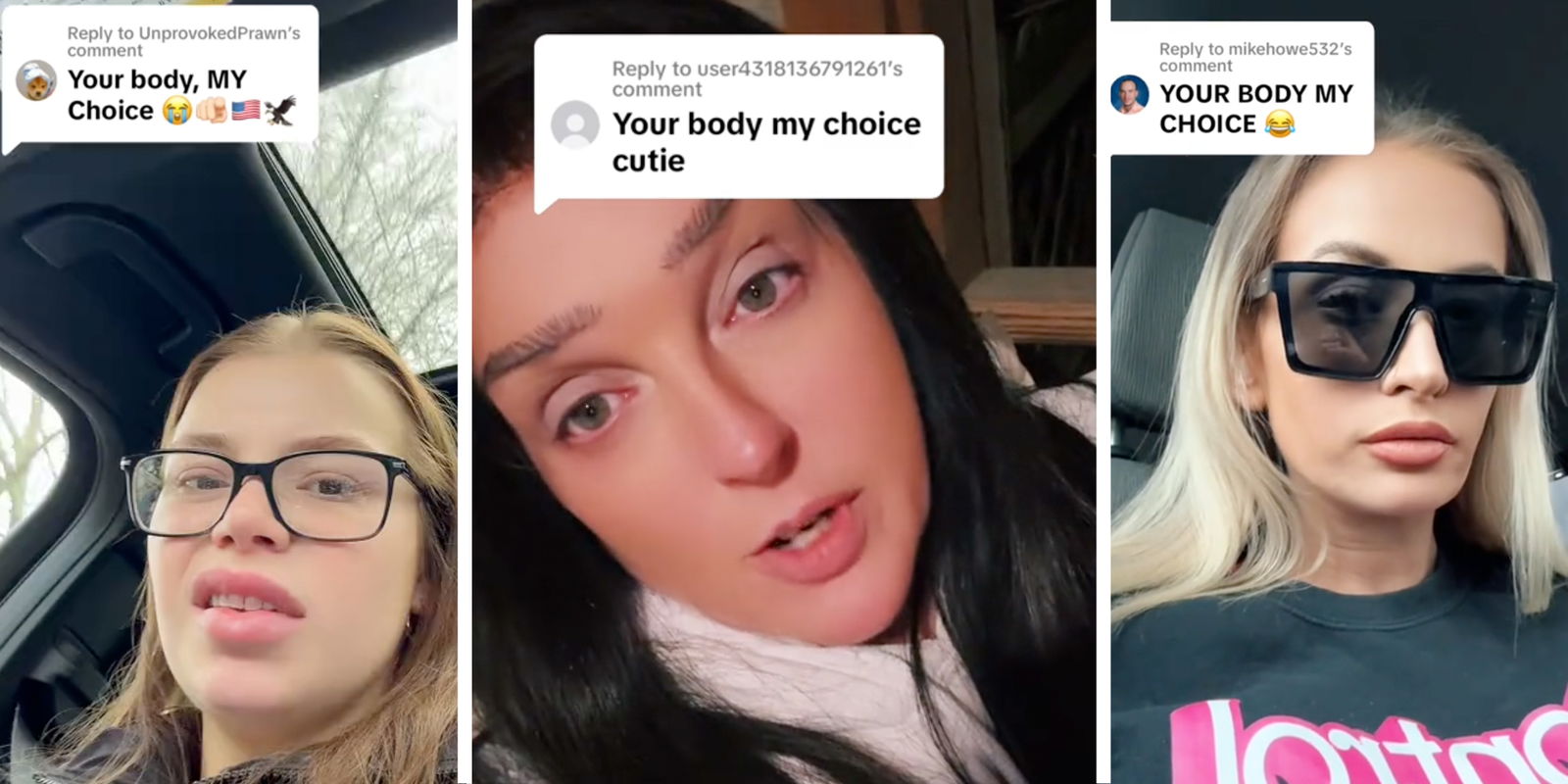
If you were on social media in late 2024, you probably saw a darker version of the my body my choice meme. Following the re-election of Donald Trump, a specific brand of online provocateur—most notably Nick Fuentes—began posting "Your body, my choice."
It was a deliberate, sharp inversion. It wasn't about autonomy anymore. It was about dominance.
The phrase blew up on X (formerly Twitter) and TikTok almost overnight. According to data from the Institute for Strategic Dialogue (ISD), mentions of "Your body, my choice" surged by thousands of percent in the days following the election. It wasn't just a few fringe accounts. High school teachers began reporting that male students were chanting it at female classmates in hallways.
This is where the "meme" stops being a joke and starts being a tool for harassment.
What’s wild is how fast the counter-meme culture reacted. Women on TikTok started responding with their own versions—some humorous, some defiant, and some focusing on the "4B Movement," a South Korean feminist movement involving the refusal of marriage, childbirth, dating, and sex with men. The my body my choice meme essentially evolved into a digital war zone where nobody was really talking to each other, just at each other through layers of irony and anger.
Why This Meme Refuses to Die
Most memes have a shelf life of about two weeks. Think about "Hawk Tuah" or "Demure." They peak and then they feel cringe. But the "My Body, My Choice" framework is different because it’s tied to a fundamental human conflict: who gets to control you?
- Political Utility: It’s a "sticky" phrase. It's short, punchy, and everyone knows what it refers to.
- The Irony Factor: Memes thrive on hypocrisy. Both the left and the right use the meme to accuse the other side of being inconsistent.
- Algorithmic Friction: Content that causes arguments gets pushed to the top. When you post a my body my choice meme, you are guaranteed to get a comment section full of people fighting.
Basically, the algorithm loves the drama.
The Confusion Between Satire and Sincerity
One of the biggest problems with the my body my choice meme today is that it's getting harder to tell who is joking. Poe’s Law suggests that without a clear indicator of the author's intent, it's impossible to create a parody of extreme views so obviously exaggerated that it cannot be mistaken by some readers for a sincere expression of the views being paraded.
You’ll see a video of someone saying "My body, my choice" while eating a huge tray of fast food. Is it a dig at health culture? A parody of political slogans? Or just a person who likes burgers?
This ambiguity is the meme's superpower. It allows people to float ideas without taking full responsibility for them. If someone gets offended by a "Your body, my choice" post, the poster can just say, "It’s just a meme, bro. Don't be so sensitive." It’s a classic "Schrödinger’s Douchebag" situation—someone who says offensive things and decides whether they were joking based on the reaction of those around them.
Real World Consequences of Online Slang
We tend to think that what happens on a 6-inch screen doesn't matter. We're wrong. The my body my choice meme has had tangible effects on how people view bodily autonomy.
When a serious slogan is turned into a joke, the gravity of the issue it represents starts to feel less "real" to younger generations who only know the phrase from their "For You" page. If your first exposure to "My Body, My Choice" is a video of a guy mocking it after an election, your perception of reproductive rights is going to be filtered through that lens of mockery.
School districts across the U.S. have had to issue statements regarding the "Your body, my choice" trend. It’s a rare case where an internet meme directly leads to disciplinary action in middle schools. It shows that the digital and the physical are now one and the same. There is no "offline" anymore.
Navigating the Current Landscape
If you're trying to understand the my body my choice meme today, you have to look at it through three different lenses:
- The Historic Lens: The fight for abortion access and the legal right to privacy.
- The Medical Freedom Lens: The COVID-era pushback against mandates.
- The Modern Trolling Lens: The post-2024 election taunts and the rise of the 4B movement as a counter-response.
Each of these groups uses the same four words but they are speaking entirely different languages. It’s a linguistic car crash.
Actionable Steps for Digital Literacy
Understanding the my body my choice meme requires more than just scrolling. You have to be an active consumer.
Check the Source
Before getting outraged or sharing a meme, look at who posted it. Is it a political satire account? A known provocateur? A random teenager looking for clout? Context changes the meaning of the slogan entirely.
Recognize the Tactic
If you see the "Your body, my choice" variation, realize it’s designed to provoke a reaction. The goal isn't debate; the goal is "salt." Engaging with it often just feeds the algorithm and boosts the post to more people.
Understand the Legal Reality
Memes simplify things. The law doesn't. Regardless of the meme, the legal landscape of bodily autonomy in 2026 is complex, varying wildly from state to state and country to country. Don't get your legal or medical advice from a JPEG.
Report Harassment
When the meme crosses the line into targeted harassment or threats—which the "Your body, my choice" version often does—use the reporting tools on the platform. Most social media guidelines have specific clauses against "coordinated harassment" and "targeted hate speech," even if it's disguised as a meme.
The internet isn't going to stop remixing our political language. It’s what it does. The my body my choice meme is just the most recent and most volatile example of how a few words can be stretched until they nearly break. Stay skeptical of the intent behind the post, and remember that behind every viral image is a real-world conflict that doesn't resolve as easily as a scrolling feed.