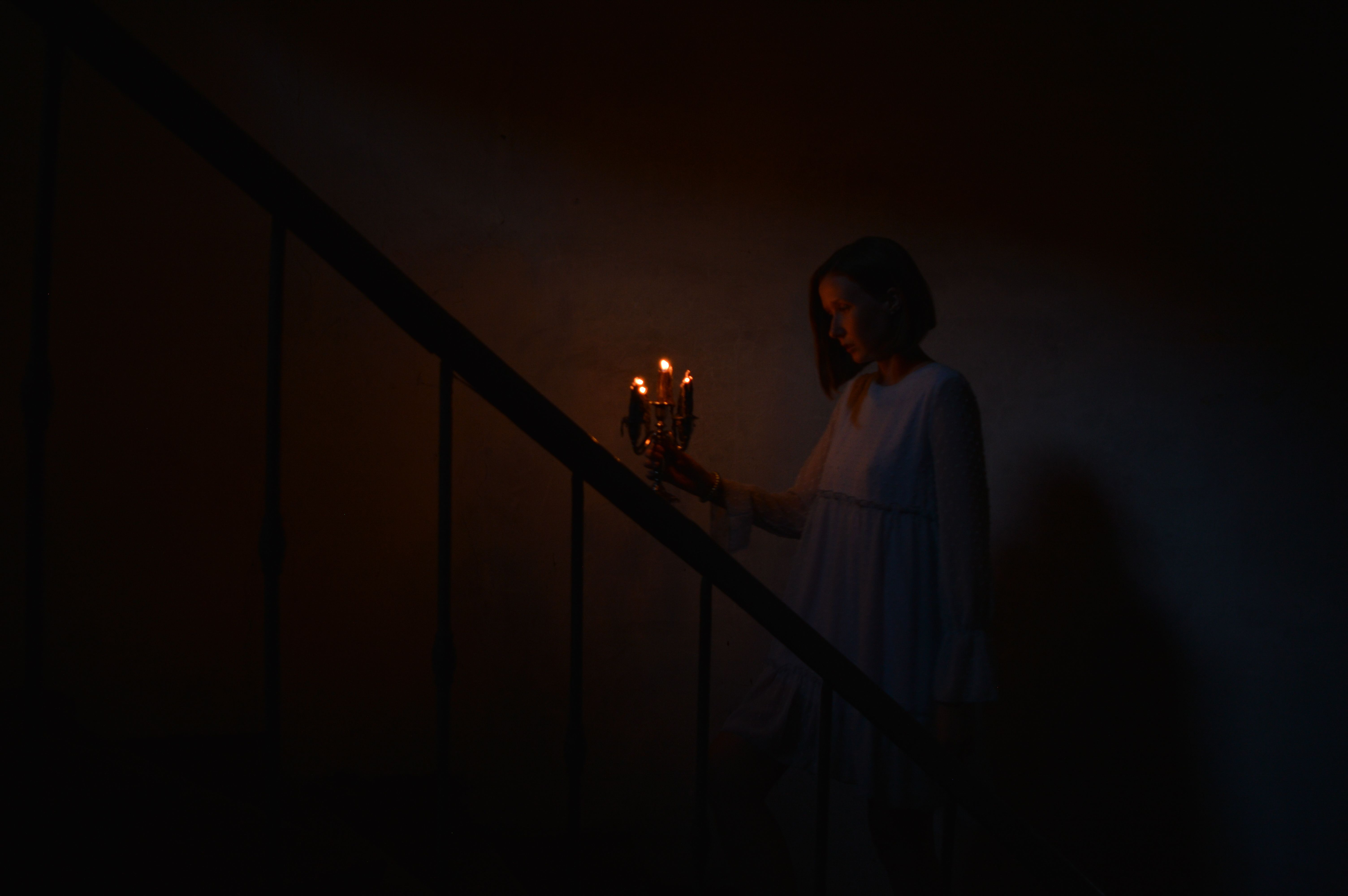
You’ve seen him. Maybe it was in a grainy black-and-white illustration from a Dickens novel, or perhaps it was a cartoon character creeping down a hallway in the middle of the night. The man in nightgown with candle is one of those visual tropes that feels baked into our collective DNA. It’s weirdly specific. Why a long, flowing gown? Why that tiny little brass saucer for the candle? Honestly, if you saw a grown man walking around like that today, you’d probably call for medical assistance or assume he was deep into some serious historical reenactment.
But for centuries, this was just... bed.
It wasn't a costume. It was survival. Before central heating turned our homes into climate-controlled boxes, nights were brutal. You didn't just strip down to your boxers and hope for the best. You geared up. The image of the man in nightgown with candle represents a bridge between the grueling reality of the pre-industrial world and the cozy, curated "cottagecore" aesthetic we see on social media today.
The Logistics of the Long Gown
Let’s talk about the garment itself. The nightgown, or nightshirt, wasn't just a long t-shirt. For a man in the 18th or 19th century, this was a functional piece of equipment. Most were made of linen or flannel. Linen is great because it breathes, but in the winter, heavy wool or flannel was the only thing keeping you from literal hypothermia.
They were long for a reason.
Heat rises. By having a gown that reached the ankles, you were essentially creating a personal heat tent. If you've ever wondered why they didn't just wear pants, the answer is mostly about ease of movement and hygiene. Trousers in the 1800s were complicated. They had buttons, falls, and braces. If you had to get up in the middle of the night to use a chamber pot, you didn't want to be fumbling with a dozen pewter buttons in the dark. You wanted something you could just lift. Simple.
Why the Candle Matters
Then there’s the light. The "chamberstick" is that specific type of candle holder you see the man in nightgown with candle carrying. It’s got that wide pan at the bottom to catch dripping wax and a little ring for your finger. It was the flashlight of the 1840s.
It's actually kind of terrifying if you think about it.
Imagine waking up to a strange noise in a house made of seasoned wood, straw-filled mattresses, and heavy velvet curtains. You strike a match—which, by the way, were incredibly unreliable and smelled like rotting eggs back then—and you carry an open flame through the house while wearing a giant, highly flammable linen sack. It’s a miracle anyone survived the night without turning into a human torch. This is why the image carries so much tension in literature. When Ebenezer Scrooge or Arthur Conan Doyle’s characters move through a house with a candle, the light isn't just a tool; it’s a tiny, flickering shield against a vast, oppressive darkness we can't really comprehend in the age of LED streetlights.
The Pop Culture Fingerprint
We can't talk about this without mentioning A Christmas Carol. Charles Dickens basically codified the man in nightgown with candle look for the modern imagination. John Leech’s original 1843 illustrations of Scrooge are the blueprint. When Scrooge hears Marley’s ghost, he’s not in a suit. He’s vulnerable. He’s in his nightcap and gown.
The nightcap is a whole other layer of weirdness.
Why the pointy hat? It wasn't a fashion statement. People believed—rightly so—that you lost a massive amount of body heat through your head. If you’re sleeping in a room where the water in your washbasin has literally frozen solid overnight (a common occurrence in Victorian winters), you wear the hat. The tassel? Some historians argue it was just a leftover bit of yarn from the knitting process, while others suggest it made the cap easier to pull off in the morning. Either way, it completed the silhouette.
The Shift to Pajamas
So, when did the man in nightgown with candle disappear? You can blame the British Empire and the "pajama." During the Victorian era, British colonials in India noticed people wearing pae jama—light, loose-fitting trousers tied at the waist. They were cooler, more "masculine" by the standards of the time, and frankly, more practical for active movement.
By the late 1800s, pajamas started trickling into the Western wardrobe. By the 1920s, the long nightgown was largely considered "old fashioned" or something only your grandfather wore. The candle, of course, was killed by Thomas Edison and the spread of domestic electricity.
Yet, the image persists.
It persists because it represents a specific kind of solitude. There is something deeply human about a lone figure in a dark house, carrying a small light, dressed for rest but forced to be awake. It’s the visual shorthand for "things that go bump in the night."
Psychological Weight of the Image
There's a reason horror movies and gothic novels love this trope. A man in a nightgown is a man stripped of his social standing. You can't tell if he's a Duke or a clerk when he's in a plain linen gown. He's just a person.
The candle adds a "circle of safety" element. In cinematography, this is called the "liminal space." The area where the candle light hits the wall is known, but everything beyond that yellow glow is the abyss. When we see the man in nightgown with candle, we aren't looking at a fashion choice. We are looking at a person navigating the unknown.
Practical Takeaways for the Modern Enthusiast
If you're looking to recreate this look for a film, a play, or just because you’ve decided that 2026 is the year you embrace peak comfort, don't just buy a cheap polyester costume.
- Material is everything. Look for heavy-weight linen or brushed cotton flannel. Polyester will make you sweat and lacks the "drape" that makes the silhouette look authentic.
- The Chamberstick. If you want a real one, search for "brass finger-loop candle holder." Ensure it has a wide base. Modern candles are often tapered, so you might need to shave the bottom of the wax to make it sit securely.
- Safety first. Honestly? Don't actually walk around a dark house with a real flame in a nightgown. Use a high-quality LED taper candle. They make some now with "flicker technology" that looks incredibly real without the risk of burning your house down.
- Length matters. A true historical nightshirt should fall at least below the knee, preferably to the mid-calf. Anything shorter is just a long shirt; anything longer is a trip hazard.
The man in nightgown with candle isn't just a meme or a ghost story. It's a reminder of a time when the night was a serious business and staying warm was a full-time job. Whether it's Scrooge facing his past or a modern person looking for a bit of "old world" comfort, that flickering light in the dark remains one of our most potent symbols of the human spirit trying to find its way back to bed.
To get the most out of this aesthetic or historical study, start by looking at the archived illustrations of the 1840s Punch magazine or the works of Gustave Doré. These artists captured the play of light and shadow that makes this specific image so enduring. If you’re purchasing a nightgown for actual use, prioritize 100% natural fibers to avoid the skin irritation that often comes with synthetic "vintage-style" sleepwear.