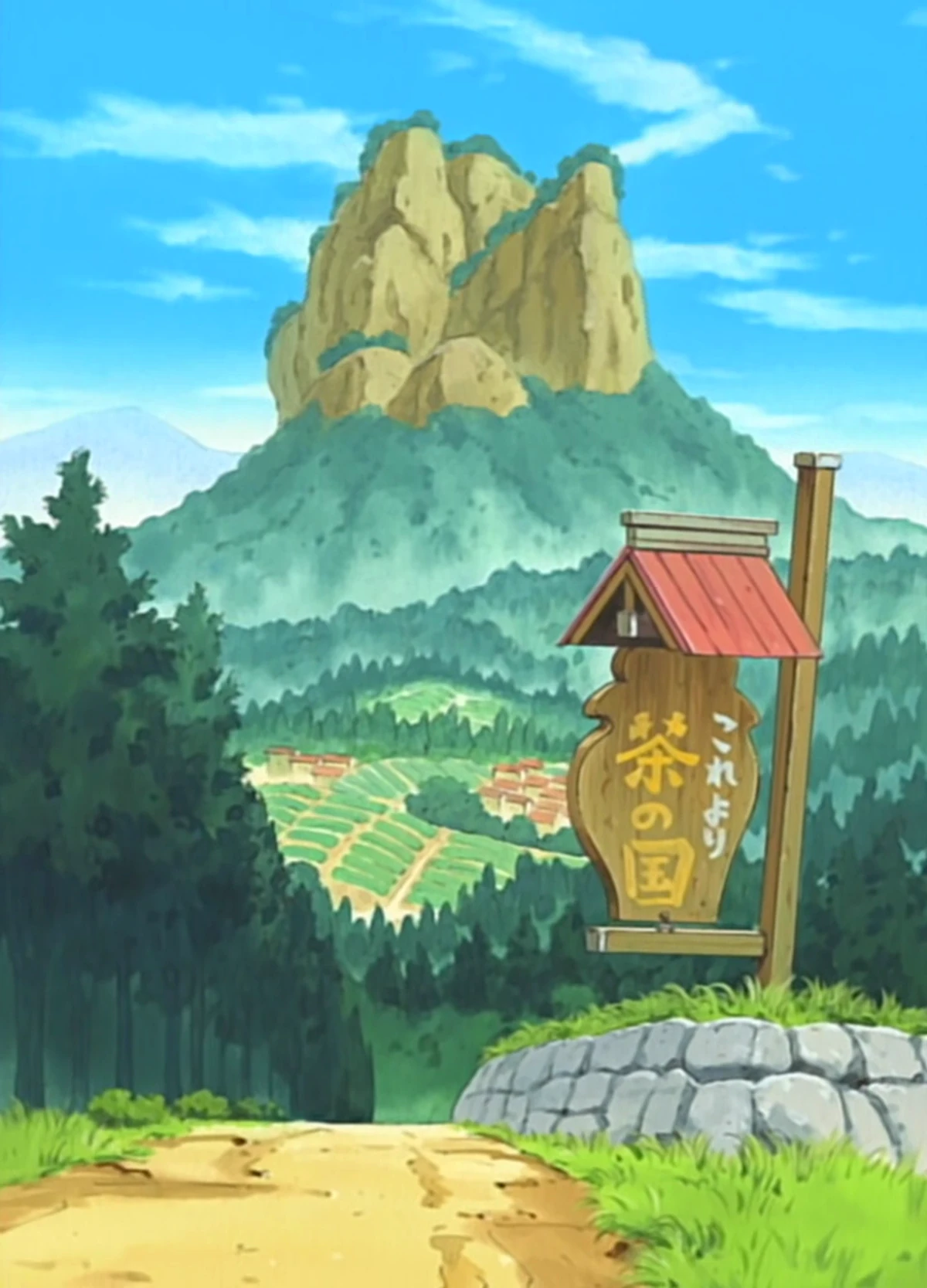
Let’s be real for a second. If you’re a die-hard Naruto fan, you’ve probably seen a dozen watch guides telling you to skip everything between the Search for Tsunade and the Valley of the End. They call it "filler hell." But honestly? The Land of Tea Naruto arc—officially spanning episodes 102 to 106—is one of those rare moments where the anime staff actually tried to bridge the gap between Team 7’s childhood and the trauma of the Sasuke Retrieval arc.
It’s weird. It’s a bit clunky. But it’s surprisingly essential for understanding why Sasuke eventually snapped.
Most people remember this arc for the racing. It’s basically a high-stakes marathon with ninjas. But if you look past the "Run, Idate, Run!" screaming, there’s a lot of lore about the smaller nations in the shinobi world that Kishimoto’s manga usually ignores. The Land of Tea isn't a hidden village powerhouse like Konoha. It’s a small, maritime nation tucked away near the Land of Fire, and its problems are purely political and economic. No world-ending threats here—just a family feud and some really fast runners.
What's Actually Happening in the Land of Tea?
The story kicks off when Team 7 gets a mission that seems beneath them. They’re tasked with protecting a guy named Idate Morino. If that surname sounds familiar, it should. He’s the younger brother of Ibiki Morino, the terrifying, scarred proctor of the Chunin Exams.
The Land of Tea holds a massive competition every few years called the Todoroki Shrine Race. Two rival clans, the Wasabi and the Wagarashi, compete for control over the Degarashi Port. It’s a classic "winner takes all" scenario. The Wagarashi clan are basically the villains here—they’re hiring cutthroats and cheating their way to the top. The Wasabi clan, who are the "good guys," hire Konoha to make sure their runner, Idate, doesn't get murdered mid-sprint.
Here’s the thing: Idate hates ninjas.
He was a failed Genin from Konoha who got caught up in a cheating scandal during his own Chunin Exams. He fled the village, ended up in the Land of Tea, and became a runner. His backstory is actually one of the darker bits of early Naruto filler. It involves betrayal, a missing legendary sword, and a rogue ninja named Aoi Rokusho.
The Problem with the Sword of the Thunder God
We have to talk about the Sword of the Thunder God (Raijin no Ken). This is one of the most debated "filler" items in the entire franchise. In the Land of Tea Naruto episodes, Aoi Rokusho—a former Konoha Jonin—wields this glowing yellow blade that supposedly belonged to the Second Hokage, Tobirama Senju.
It’s a lightsaber. Let’s call it what it is.
The sword is made of pure lightning energy. In the context of the show, it's hyped up as this invincible weapon that can cut through anything. Aoi stole it from Konoha and used it to terrorize Idate and Team 7. While the manga purists hate it because it never appears in the source material, it served a huge narrative purpose for Sasuke Uchiha.
Think about Sasuke at this point in the story. He just got out of the hospital after being absolutely humbled by Itachi. He’s seeing Naruto use the Rasengan and realize his teammate is catching up—maybe even surpassing him. Then, in the Land of Tea, he goes up against the Sword of the Thunder God and his Chidori... fails. It doesn't just fail; it gets cracked.
That moment is pivotal. Sasuke’s pride is his Chidori. Seeing it get bested by a filler villain with a stolen Hokage relic was the final nail in the coffin for his loyalty to Konoha. It fueled the jealousy that eventually led him to Orochimaru. Without the events in the Land of Tea, Sasuke’s defection feels a bit more abrupt. Here, we see the slow burn of his frustration.
Why the Landscape Matters
The Land of Tea is visually distinct from the forest-heavy Land of Fire. You get these massive coastal cliffs, swirling whirlpools, and long stretches of open road. It’s a "travelogue" arc. It gives the sense that the world of Naruto is bigger than just five major villages.
- Degarashi Port: The hub of the conflict, a vital trade point.
- Modoroki Shrine: The finish line of the race where the fate of the nation is decided.
- Nagi Island: Where the initial part of the race takes place before the runners have to cross the sea.
The animation in these episodes (shout out to Studio Pierrot) was actually pretty decent for the early 2000s. The scenes where Naruto uses a "double Rasengan" or helps Idate through the storm have a kinetic energy that some of the later, longer filler arcs lack.
Breaking Down the Idate and Ibiki Relationship
One of the best parts of the Land of Tea Naruto arc is the subtle character work for Ibiki Morino. We usually see Ibiki as this cold, torturous interrogator. But through Idate’s flashbacks, we see a brother who was trying to protect a kid who wasn't cut out for the ninja life.
Idate wasn't a bad person; he was just weak and easily manipulated. Aoi Rokusho convinced him that if he stole the Second Hokage’s sword and a secret scroll, he’d be made a Chunin. It was a lie, obviously. Ibiki had to watch his brother become a traitor. When they reunite (sort of) at the end of the arc, there's no big hug. There’s just a nod of respect. It’s very "Naruto." It’s about grit and proving your worth through physical suffering rather than words.
Common Misconceptions About This Arc
A lot of fans think the Land of Tea is part of the Land of Waves. It’s not. While both are coastal and involve Team 7 protecting someone, the stakes are totally different. The Land of Waves was about the burden of being a hero; the Land of Tea is about the consequences of failure and the hope for a second chance.
Another mistake is assuming the Sword of the Thunder God is "canon." It’s not. If you try to find it in the Boruto era or the late-stage Shippuden war arcs, you won’t. It was destroyed by Naruto’s Rasengan and Sasuke’s Chidori working (unintentionally) together. It’s a "lost" relic of the Second Hokage that only exists in this specific five-episode window.
The Racing Mechanics: Not Just Running
You’d think a race between a ninja and a professional runner would be a blowout. But Idate is fast. He’s "shinobi-fast" without actually using chakra in the traditional sense. The Wagarashi clan hired the Rain Ninja (Amegakure) to interfere.
This brings back the Rain Ninja trio we saw during the Forest of Death. Seeing them again provides a nice sense of continuity. They use their umbrella needles and genjutsu to slow Idate down, forcing Team 7 to play defense. It’s one of the few times we see Naruto, Sasuke, and Sakura working as a cohesive unit after the Chunin Exams but before everything goes to hell.
Technical Details: Production and Timing
These episodes aired in Japan in late 2004. At the time, the anime was catching up to the manga way too fast. Kishimoto was still drawing the Sasuke Retrieval arc. The producers needed a month of content to give the manga a lead.
Usually, this results in "The Great Ostrich Chase" or some other nonsense. But the Land of Tea felt like it had weight because it involved a character related to a known Jonin (Ibiki). It felt like it could have happened in the background of the main story.
How to Watch It Today
If you’re doing a rewatch in 2026, you can find the Land of Tea Naruto arc on basically any streaming service that carries the original series (Crunchyroll, Netflix, Hulu).
- Episode 102: Mission: Help an Old Friend in the Land of Tea
- Episode 103: The Race is On! Trouble on the High Seas!
- Episode 104: Run Idate Run! Nagi Island Awaits!
- Episode 105: A Fierce Battle of Rolling Thunder!
- Episode 106: The Last Leg: A Final Act of Desperation
Don't go in expecting the emotional depth of the Zabuza arc. Go in for the world-building. Watch it for the moment Sasuke realizes he’s not the strongest person in the room. Watch it to see Naruto’s stubbornness actually inspire someone who had given up on life.
Real-World Takeaways for the Fan
The Land of Tea is a reminder that the Naruto world isn't just about the "chosen ones." It’s full of people like Idate—people who fail, people who run away, and people who have to find a different path to honor.
If you're writing fanfic or building a tabletop RPG set in the Naruto universe, the Land of Tea is a goldmine for how small countries operate under the shadow of the Great Nations. It shows that even without a "Hidden Village," a country can have its own complex systems of honor and conflict.
Actionable Next Steps for Fans
If you've finished the Land of Tea arc or are planning to dive in, here is how to get the most out of the experience:
- Compare the Chidori: Pay close attention to Sasuke’s Chidori in episode 105 compared to his fight with Gaara. Notice the "cracking" sound and visual effect. It’s a direct foreshadowing of his power-seeking arc.
- Check the Timeline: Watch these episodes immediately after episode 101 (the famous "Kakashi's Face" episode). They provide a much-needed tonal shift before the heavy drama of the Sasuke Retrieval arc begins in episode 107.
- Explore the Lore: Look up the Raijin no Ken in official databooks. Even though it's filler, the design and history given to it by the anime staff are often documented in fan wikis as "Anime-Only Lore," which is fascinating for collectors of series trivia.
- Note the Theme: Observe how the "will of fire" is interpreted by someone outside the ninja system (Idate). It’s a rare perspective that enriches the overall philosophy of the show.