Tom Six is a name that makes moviegoers either cringe or lean in with a morbid curiosity that’s hard to shake. Honestly, when The Human Centipede (First Sequence) dropped in 2009, most people thought they’d seen the peak of "gross-out" cinema. We were wrong. By the time we reached The Human Centipede Final Sequence in 2015, the franchise had transformed from a claustrophobic German thriller into a sprawling, meta-textual, and frankly exhausting exercise in cinematic nihilism. It didn't just push the envelope; it shredded it and threw the pieces into a prison yard.
You've probably heard the numbers. 500 people. One long line.
It’s easy to dismiss this film as mere shock value, and in many ways, it is. But there’s a weirdly specific legacy left behind by this third installment that distinguishes it from the clinical horror of the first or the grainy, black-and-white depravity of the second. This was Tom Six’s "grand finale," a Technicolor explosion of everything he wanted to say about his critics, his fans, and the very nature of exploitation film.
The Shift to Prison Politics and Meta-Horror
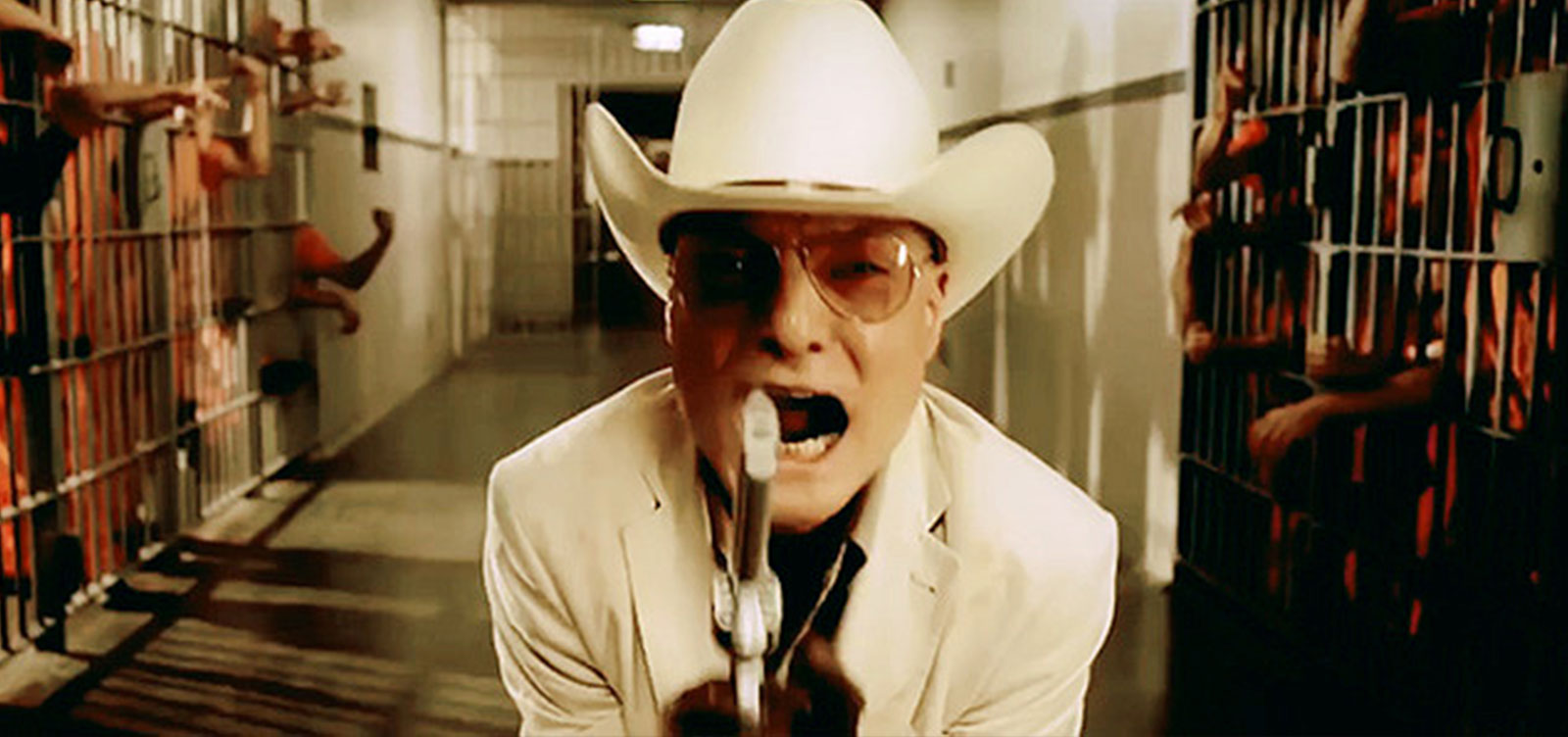
The setting changes everything. We move from a lonely villa and a damp warehouse to George Bush High Security State Penitentiary. Dieter Laser, the iconic Dr. Heiter from the original, returns—but he’s not Heiter. He’s Bill Boss, a screaming, racist, unstable prison warden who is failing to keep his inmates in line. Beside him is Laurence R. Harvey, playing Dwight Ricari, the prison accountant.
This is where the movie gets weirdly meta. Dwight is obsessed with the previous two Human Centipede films. He looks at them as instructional videos. He literally suggests the "centipede" as a cost-cutting measure for the American penal system. It’s a biting, albeit incredibly crude, satire on the privatization of prisons and the dehumanization of inmates. While the first film was a "100% Medically Accurate" (well, according to the marketing) horror show, the Human Centipede Final Sequence is an over-the-top political caricature.
It's loud. Boss screams almost every line. The sun-bleached cinematography makes everything feel sweaty and uncomfortable. It feels less like a horror movie and more like a fever dream directed by someone who hates the audience.
Building the 500-Person Chain
The logistics of the "final sequence" are what most people actually care about when they search for this movie. How do you even film something like that?
Six didn't use CGI for the wide shots of the centipede. He used hundreds of extras in Los Angeles, many of whom were reportedly fans of the series or just people looking for a weird story to tell at parties. They were linked together using the signature "mouth-to-anus" prosthetic rigs, creating a visual that is objectively impressive from a production standpoint, even if it's conceptually repulsive.
- The Scale: 500 people. That's a massive jump from the three-person "triple" or the twelve-person "full" centipede.
- The Intent: It wasn't about medical curiosity anymore. It was about "Total Punishment."
- The Visual: A massive, winding line of orange jumpsuits in the desert heat.
Unlike the first film, which focused on the individual agony of Lindsay, Jenny, and Katsuro, this film treats the victims as a collective mass. They aren't characters; they are a landscape. This shift reflects the warden’s view of the prisoners—they aren't humans, just a problem to be solved through "efficient" surgical intervention.
Why the Critics Hated It (and Why Some Fans Did Too)
The reviews were brutal. Rotten Tomatoes scores for this film sit in the single digits. Most critics felt that by the time The Human Centipede Final Sequence rolled around, the joke wasn't funny anymore. The shock had worn off.
But there's an argument to be made for its place in "transgressive cinema." If you look at the works of Pier Paolo Pasolini (like Salò, or the 120 Days of Sodom), there’s a history of using extreme bodily degradation to comment on power structures. Is Tom Six as sophisticated as Pasolini? Probably not. But he is playing in the same sandbox. He’s showing us the logical conclusion of the "tough on crime" rhetoric taken to a literal, surgical extreme.
The film is also a middle finger to everyone who complained about the first two. People said the first was too slow? This one is chaotic. People said the second was too dark? This one is blindingly bright. It’s a movie that actively tries to make you turn it off. That’s a rare thing in a world where most content is designed to keep you clicking.
The "Caterpillar" vs. The "Centipede"
One detail that often gets lost in the conversation is the "Human Caterpillar." In the film, Bill Boss isn't satisfied with just the centipede. He wants something for the "life-termers"—the ones who have no hope of release. He orders their limbs to be amputated before being sewn together.
It’s a level of cruelty that even seasoned horror fans find difficult to watch. It moves the film away from "body horror" and into the realm of "torture porn," a subgenre that dominated the 2000s with Saw and Hostel but was starting to fade by 2015. Six was trying to give it one last, massive gasp of air.
The Technical Execution of the Final Sequence
Filming in the California desert presented a nightmare of its own. You have hundreds of extras, many of whom are nearly naked or in restrictive costumes, under a blistering sun.
- Makeup Effects: The prosthetic team had to create hundreds of "linking" pieces that could be applied quickly.
- Choreography: Moving 500 people in unison is like directing a parade where everyone is on their hands and knees.
- Endurance: The filming process for the final reveal took days of coordination.
It’s a testament to the crew's dedication to a very specific, very strange vision. Whether you like the result or not, the sheer physical effort required to put that many bodies on screen in that configuration is a feat of indie filmmaking logistics.
The Cultural Impact a Decade Later
Does anyone still talk about the Human Centipede Final Sequence? Surprisingly, yes. It has become a sort of "final boss" for horror fans. It’s the movie you watch to prove you can handle anything.
It also marked the end of an era. Shortly after its release, the "shock for shock's sake" trend in horror began to pivot toward "elevated horror"—think A24 films like Hereditary or The Witch. The audience's appetite for extreme gore and gross-out humor shifted toward psychological tension and atmospheric dread.
In a way, this movie was the tombstone for the "torture porn" era. You couldn't go any further than 500 people. There was nowhere left to go but back to basics.
Examining the Meta-Narrative
One of the most fascinating (and frustrating) parts of the film is Tom Six appearing as himself. In the movie, the warden invites the real-life director to the prison to witness the centipede.
This creates a bizarre loop. The characters in the movie are inspired by the movies themselves, and then they meet the creator of those movies. It’s Six basically saying, "I know what I'm doing, and I know you're watching." It’s a bold, arrogant move that breaks the fourth wall and forces the viewer to acknowledge their own role in the spectacle. You aren't just a spectator; you're the reason this exists. If nobody watched the first two, Bill Boss wouldn't have had the idea in the third.
Understanding the "Medical Accuracy" Claim
The original film's "100% medically accurate" claim was its primary marketing hook. By the third film, that claim is treated as a joke. Dr. Heiter was a world-class surgeon; the characters in the final sequence are essentially hacks.
This decline in "quality" within the story mirrors the decline in the "classiness" of the films themselves. The first was a sleek European thriller. The second was a grimy fan-film. The third is a bloated American blockbuster gone wrong. It’s a deliberate deconstruction of a franchise, dismantling itself as it grows larger in scale.
The Ending That Divided Everyone
The way the film wraps up is intentionally unsatisfying for many. Without spoiling the specific fates of every character, it’s safe to say that there is no "hero." There is no catharsis. There is only the scorching sun and the consequences of absolute power.
It’s a bleak ending to a bleak trilogy. But for those who stuck through all three films, it felt like the only possible conclusion. Anything less than a total, disgusting spectacle would have felt like a cop-out.
Assessing the Legacy of Extreme Cinema
The Human Centipede Final Sequence remains a polarizing landmark. It isn't a "good" movie by traditional standards—the acting is intentionally hammy, the plot is thin, and the content is repulsive. However, as a piece of performance art, it’s hard to ignore.
It challenges the boundaries of what is "allowable" in entertainment. It asks the question: just because we can film something, should we? Tom Six’s answer was always a resounding "yes," and he used 500 extras to prove it.
If you’re planning to dive into the world of extreme horror, or if you’re just curious about the history of the genre, understanding this film is essential. It represents the absolute ceiling of a specific type of filmmaking.
What to do if you're exploring this genre
If you are a student of film or a horror enthusiast looking to understand the mechanics of transgressive cinema, don't just watch the gore. Look at the framing. Look at the way the director uses the environment to create discomfort.
- Compare the color palettes of the three films to see how the "mood" of the franchise shifts from clinical to dirty to scorched.
- Research the "Splat Pack" directors of the 2000s (Eli Roth, Greg McLean) to see how Tom Six fit into that broader movement.
- Check out interviews with the cast, particularly Laurence R. Harvey, who provides a much more thoughtful perspective on the films than the scripts might suggest.
Understanding the context of the Human Centipede Final Sequence makes it more than just a gross-out flick; it becomes a bizarre, sun-drenched monument to the extremes of human imagination and the limits of cinematic endurance. It’s a messy, loud, and offensive piece of work that succeeded in its primary goal: ensuring that nobody who saw it would ever be able to forget it.
The best way to approach this specific era of film history is to look at it as a reaction to the sanitized, CGI-heavy horror of the early 2000s. It was a return to practical effects, physical bodies, and the visceral reality of the human form—even if that form was being stitched into something unrecognizable. Whether you view it as art or trash, its place in the history of the "midnight movie" is permanently secured.