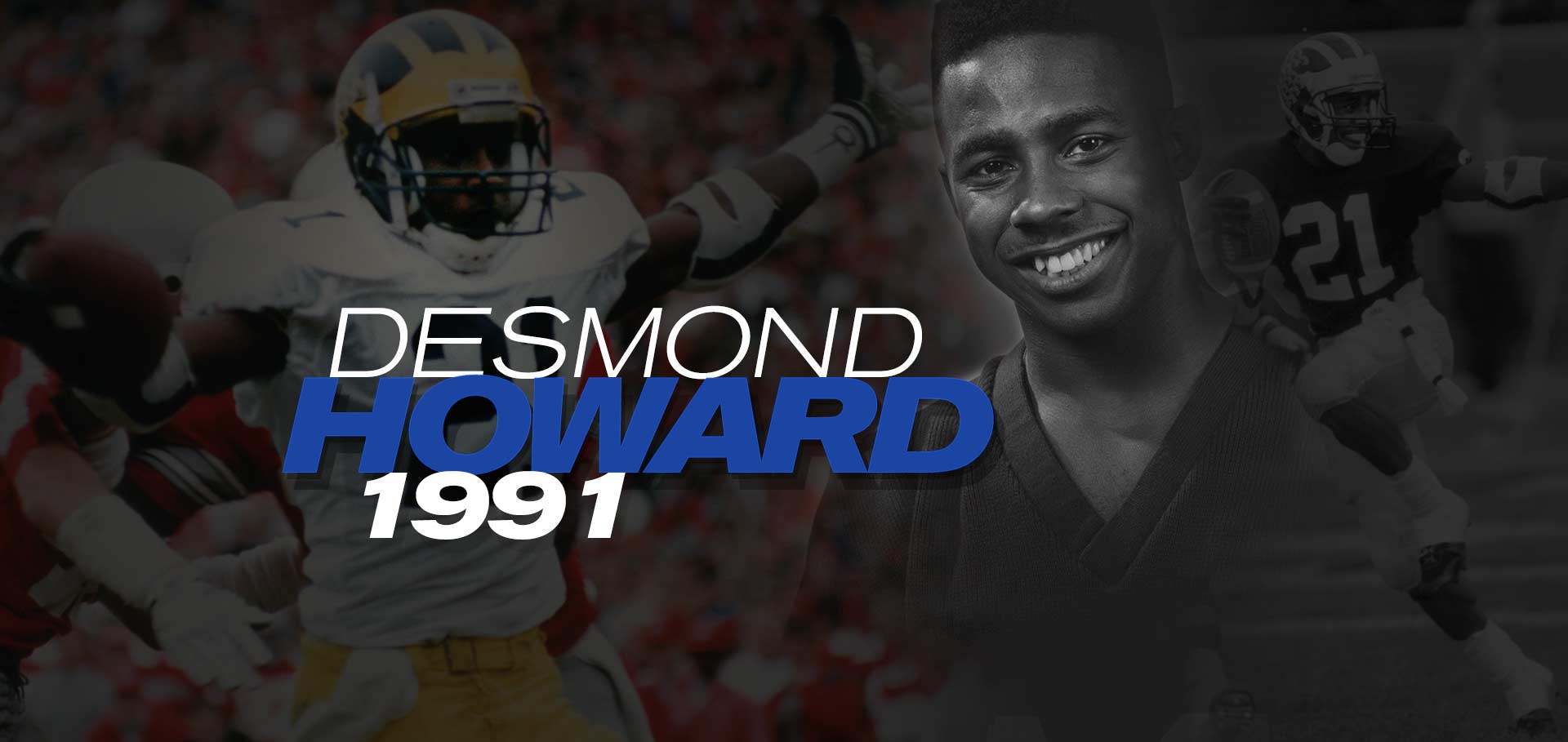
It’s Nov. 23, 1991. The Big House is shaking. 106,156 people are screaming, and if you weren't there, you've definitely seen the grainier-than-bread footage. Desmond Howard, Michigan’s electric wide receiver, is standing in the end zone after a 93-yard punt return against Ohio State. He stops. He strikes the pose.
"Hello, Heisman!" Keith Jackson bellows from the broadcast booth.
Most people think this was a carefully choreographed middle finger to Ohio State or a pre-planned marketing stunt. Honestly? It was almost a backflip.
The Heisman Pose Desmond Howard Almost Chickened Out Of
The backstory is actually pretty hilarious. Earlier that summer, Howard was dating a gymnast. She taught him how to do a backflip, and he became obsessed with the idea of sticking a landing in the end zone.
He wanted to do it on the one-yard line. Just a massive "look at me" flip right before crossing the plane. But as he was sprinting down the sideline against the Buckeyes, reality hit. Howard realized that if he slipped, or if his knees buckled on the turf, he’d be the guy on SportsCenter for all the wrong reasons. He’d be a laughingstock.
So, he reached the 8-yard line and basically chickened out on the flip. He crossed the goal line, realized he needed to do something to mark the moment, and the heisman pose desmond howard icon was born spontaneously.
He actually did it twice because he wasn't sure if the cameras caught the first one.
Why That 93-Yard Return Sealed the Deal
You’ve gotta remember the context of 1991. Howard wasn't just some guy having a good year; he was a human highlight reel. Before the Ohio State game, he’d already:
- Caught a diving fourth-down touchdown against Notre Dame.
- Scored 23 touchdowns in a single season.
- Led the Big Ten in scoring—the first receiver to ever do it.
But the Heisman race is a weird beast. You can have the stats, but you need the "moment." David Klingler was putting up video game numbers at Houston, and some voters were still on the fence.
That punt return changed everything. Howard caught the ball, took two steps back (which usually makes coaches want to pull their hair out), and then just sliced through the Buckeyes. He outran punter Tim Williams and then, well, you know the rest.
Michigan coach Gary Moeller actually missed the pose. When reporters asked him about it after the 31-3 blowout, he defended his player, saying, "One of my players wouldn't do something like that."
He was wrong, of course. But the fans didn't care. They loved it.
The Aftermath and the "Arrogance" Debate
Not everyone was a fan of the heisman pose desmond howard struck that day. In the 90s, the "unwritten rules" of sports were a lot more rigid. Some critics called it hot-dogging. They thought it was disrespectful to the game and to Ohio State.
When Michigan went to the Rose Bowl later that year to face Washington, the Huskies' defenders mocked him. They actually struck the pose themselves after hitting him or making plays. Howard had a rough game—only one catch—and Washington fans haven't let him forget it since.
But looking back, Howard won that Heisman by the second-largest margin in history. He got 85% of the first-place votes. That’s a landslide. People didn't just vote for him because of the pose, but the pose gave them permission to admit he was the best player in the country.
What You Can Learn from the Pose
If you're looking for the takeaway here, it’s about timing. Howard didn't do the pose in Week 2. He didn't do it against a cupcake team. He did it:
- Against his biggest rival.
- After a record-breaking play.
- When he already had the stats to back up the swagger.
Swagger without substance is just annoying. Swagger with a 93-yard return and 19 receiving touchdowns? That's legendary.
To truly understand the impact, you should watch the full 1991 Michigan vs. Ohio State highlights rather than just the 10-second clip of the pose. Pay attention to how many times the announcers mention his "Heisman candidacy" before the return even happens; the narrative was already built, and Howard just provided the perfect ending. If you’re a collector, look for the original Brian Masck photograph—it’s the definitive angle that captured the symmetry of the moment better than any TV camera did.
Actionable Insight: If you want to dive deeper into the history of the trophy, check out the official Heisman Trust records to see just how much Howard's margin of victory dwarfed other legendary winners. It puts his dominance into perspective beyond just a single celebration.