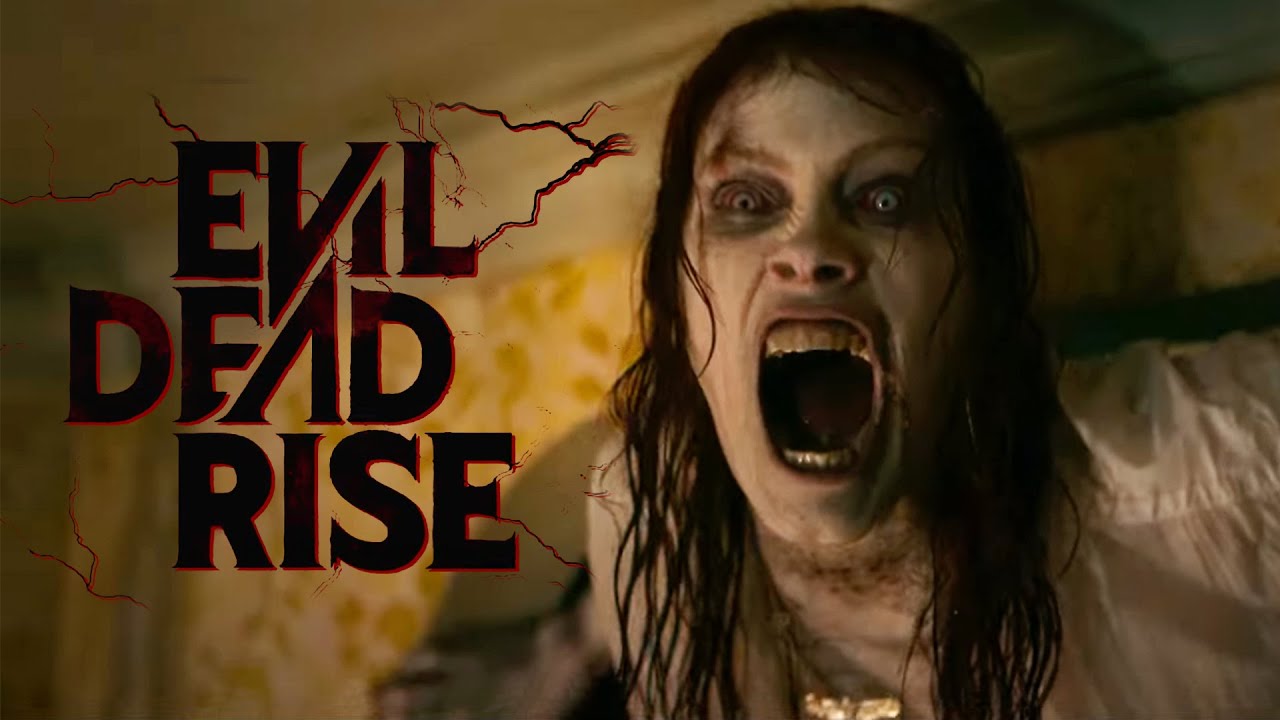
He just wanted to be a DJ. Honestly, looking back at the carnage of the 2023 reboot, it’s easy to get lost in the sheer volume of blood—all 1,700 gallons of it—and forget that the whole nightmare started because a kid wanted to provide for his family. Danny in Evil Dead Rise is one of the most polarizing characters in the franchise. Some fans call him the "idiot" who doomed everyone. Others see a kid trapped in poverty, desperately looking for a way out, who accidentally stumbled into a literal hell on earth.
Lee Cronin’s direction didn't hold back. When Danny, played by Morgan Davies, pries open that floor in the basement of their crumbling Los Angeles apartment, he isn't looking for demons. He's looking for value. This isn't the classic "teens in a cabin" trope where people are just being reckless for the sake of a plot device. This is a story about a family already on the edge of eviction.
What really happened in that basement?
The earthquake hits. The floor cracks. Most people would run, but Danny sees an opportunity. Inside that hidden vault, he finds the Naturom Demonto (the Book of the Dead) and some old vinyl records. You’ve probably seen the discourse online: "Why did he take the book?" Simple. Danny is a creator. He’s a DJ. He sees ancient artifacts and hears scratchy, mysterious recordings from 1923, and he thinks he's found the ultimate sample.
It’s heartbreaking.
He isn't trying to summon a Deadite. He’s trying to find a spark of inspiration in a life that feels like it’s suffocating him. When he plays those records, featuring the voice of a priest (played by Bruce Campbell in a subtle cameo), he unknowingly triggers the incantation. The sequence is loud, abrasive, and terrifyingly fast. The Necronomicon in this film—the Libre Ex-Sanguis variant—is distinct from the one Ash Williams fought. This one is toothy. It’s visceral. And it targets Danny’s mother, Ellie, almost immediately.
The transformation of Danny in Evil Dead Rise
Once the chaos starts, Danny’s role shifts from the catalyst to the victim of immense guilt. You can see it in Davies’ performance—the wide-eyed realization that his curiosity just killed his mom. Or rather, it turned his mom into a meat-puppet for a Kandarian demon.
The Deadite Ellie is psychological. She knows exactly how to twist the knife. She plays on Danny’s love for her, using his voice and his memories to tear the family apart. This is a massive departure from previous Evil Dead films. Usually, the "book-opener" is just a plot point. Here, Danny in Evil Dead Rise represents the crushing weight of a mistake you can never take back.
His death is arguably the most brutal in the film. Not just because of the gore, but because of the betrayal. He tries to help his sisters. He tries to fix what he broke. But in this universe, there is no "fixing it." When the demon finally takes him, it’s a chaotic, messy blur of stabbings and possession. He becomes a vessel. He becomes part of the "Marauder"—that multi-limbed monstrosity we see in the final act.
Why fans keep debating his choices
Let’s get real for a second. Horror fans love to scream at the screen. "Don't go in there!" "Don't read the book!" But Danny’s actions are grounded in a very specific kind of urban desperation. The apartment building is a tomb even before the demons show up. It's scheduled for demolition. The elevator is a death trap.
Some critics argue Danny should have known better when he saw the book was bound in human skin and held shut with literal teeth. Fair point. But the Evil Dead has always been about the "curiosity killed the cat" element. If Danny doesn't open that book, we don't have a movie. More importantly, we don't get the exploration of a son’s guilt.
- The Records: These are the real smoking gun. The audio recordings provide the lore, explaining that the priests were trying to study the book, not worship it.
- The Scissors: A recurring motif. Danny’s involvement with the "mother" Deadite often involves sharp, household objects that turn domestic safety into a nightmare.
- The DJ Setup: His passion is ultimately his undoing. The speakers he spent so much time on become the very things that amplify the demonic chanting.
The "Marauder" and the final indignity
By the time we reach the climax, Danny is gone. He’s been absorbed. The creature known as the Marauder is a fusion of Ellie, Danny, and Bridget. It’s a literal manifestation of a "broken home."
Seeing Danny’s face twisted into that mass of flesh is a gut-punch. It’s a far cry from the kid we saw at the start of the movie trying to mix tracks. This is where Cronin excels—he takes the body horror of the original trilogy and adds a layer of genuine familial tragedy. You aren't just watching a monster; you're watching a brother and a son being used as a weapon against his surviving sister and aunt.
Addressing the common misconceptions
I’ve seen people ask if Danny could have survived. Honestly? No. In the Evil Dead mythos, once the possession takes hold and the body starts to undergo significant physical trauma, the "soul" is essentially a passenger in a car heading off a cliff.
Another big question: Did Danny know what he was reading? No. He couldn't read the text. It was the playback of the priest's recordings that did the heavy lifting. Danny was just the one who provided the power. He was the technician for his own family’s demise. It’s a grim irony that fits perfectly with the franchise’s "splatstick" roots, though Rise leans much harder into the "splat" than the "stick."
Key Takeaways for Fans and Writers
If you’re looking at Danny in Evil Dead Rise as a case study in horror characterization, there are a few things to notice.
First, his motivation matters. Make your characters want something—even something small like "better samples for a song"—and their mistakes feel more human.
Second, the environment is a character. The decay of the Los Angeles setting mirrored Danny’s own deteriorating situation.
Third, guilt is a powerful engine. Danny doesn’t just hide; he actively tries to protect his younger sister, Kassie, which makes his eventual possession even more painful to watch.
If you're revisiting the film, watch Danny’s hands. From the moment he touches the book, he’s marked. The cinematography focuses on his interaction with the objects—the glass, the records, the parchment. It’s a tactile movie, and Danny is the most tactile character in it.
To really understand the impact of this character, you have to look at the "Elevator Scene." It’s become iconic for a reason. While Danny isn't the primary focus of the blood-flood, his absence in that moment—having already been turned—is what heightens the stakes for Beth. The loss of the "man of the house" (as Danny likely saw himself in his father's absence) leaves the remaining women to fight a battle that was never theirs to begin with.
Actionable Insights for Horror Enthusiasts
- Watch the background details: In the early scenes in Danny’s room, look at the posters and equipment. It builds his character as someone who values "found sounds," which explains why he was so drawn to the basement recordings.
- Compare the Necronomicon versions: Notice how the book Danny finds differs from the one in Army of Darkness. The "teeth" binding is a specific trait of this version, suggesting different "volumes" of the book exist simultaneously.
- Analyze the sound design: If you have a good home theater system, listen to the layers of the recording Danny plays. You can hear the scratching of the priest's pen and the muffled screams of others in the room, foreshadowing Danny's fate.
- Study the "Marauder" design: Look for Danny’s specific features in the final creature. It helps highlight the "family unit" theme that the director was aiming for.
- Re-evaluate the "Bad Decisions" trope: Instead of dismissing Danny as "dumb," try viewing his actions through the lens of economic desperation. It changes the entire tone of the first act.