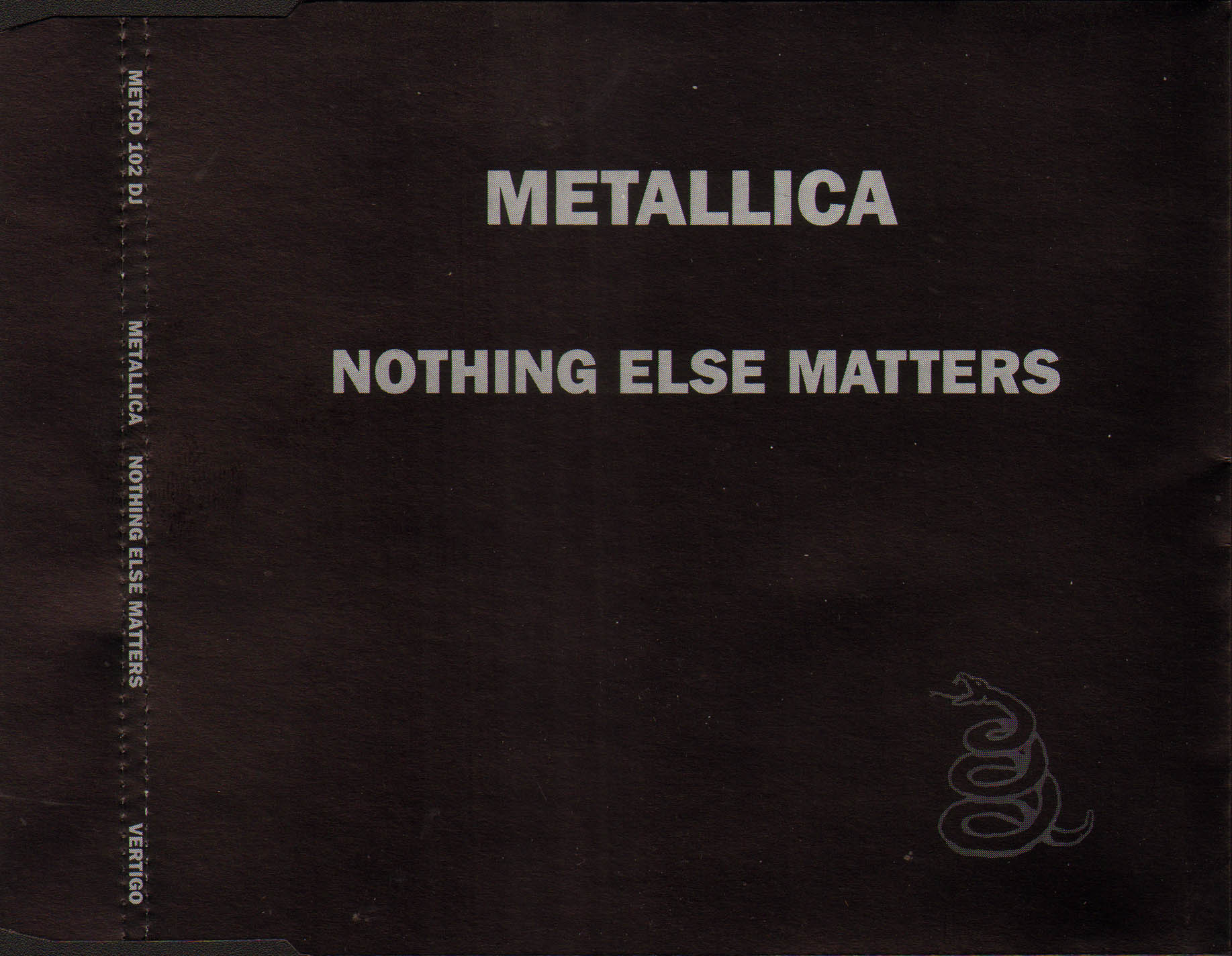
James Hetfield never meant for you to hear this song. Seriously. It was a private piece of music, a literal "love letter" to his girlfriend while he was out on the road, feeling the crushing weight of the tour schedule. He thought it was too vulnerable, too soft, and way too far removed from the thrash-metal dominance Metallica had established throughout the eighties. Then Lars Ulrich heard it. The rest is history. But because the song is fundamentally a simple, emotional skeleton built on an E-minor arpeggio, it has become one of the most covered tracks in the history of modern music. Finding a Nothing Else Matters cover that doesn't feel like a cheap wedding singer's rendition is actually harder than you'd think.
Most people fail because they try to out-metal Metallica. You can't. Or they go the opposite direction and make it so saccharine that the original grit vanishes entirely. The magic of the song is the tension between the leather-jacket exterior and the "open arms" interior.
Why Everyone Tries (and Often Fails) to Cover This Song
It's the open strings. The beginning of the song is famously playable with one hand because the melody sits on the open E, G, B, and high E strings. This low barrier to entry makes it the first thing every teenager learns in their bedroom. But that simplicity is a trap. When a professional artist decides to record a Nothing Else Matters cover, they are stepping into a arena where they have to compete with over 100 documented professional versions, ranging from Gregorian chants to post-punk reinventions.
The song is structurally a waltz. That 6/8 time signature gives it a swaying, oceanic feeling that lends itself to orchestral arrangements. If you strip away the distortion, you’re left with a melody that is surprisingly classical. This is why the San Francisco Symphony collaboration on S&M worked so well—it wasn't just "metal with violins," it was the song returning to its DNA.
Honestly, the biggest mistake covers make is keeping the guitar solo exactly the same. James Hetfield's solo on the original is one of the few he played himself instead of Kirk Hammett. It's pentatonic, bluesy, and incredibly specific to his "down-picking" DNA. If a cover artist just mimics that note-for-note, they've already lost the plot.
The Weird, The Epic, and The Acoustic
Let's talk about Miley Cyrus. When the Metallica Blacklist album dropped in 2021 to celebrate the 30th anniversary of the Black Album, her version was the one everyone talked about. Why? Because she has that gravel. She understands the country-rock roots that Hetfield himself has leaned into in his later years. Backed by Elton John on piano, Yo-Yo Ma on cello, and Chad Smith from the Chili Peppers on drums, it’s a powerhouse. It doesn't try to be "indie." It tries to be a stadium anthem, and Miley’s vocal fry hits the same emotional frequency as Hetfield’s 1991 growl.
Then you have the cellists. Apocalyptica basically built an entire career off the back of their Metallica covers. Their version of Nothing Else Matters is haunting because it replaces the human voice with the vibrating wood of a cello. It feels like a funeral dirge and a celebration at the same time. You've probably heard it in a dozen TV shows and didn't even realize it was a cover of a metal band.
- Vicky Psarakis (formerly of The Agonist) did a version that showcases incredible vocal range, shifting from a whisper to a roar.
- Phoebe Bridgers took a completely different route for the Blacklist project. She turned it into a ghostly, piano-led ballad that sounds like it’s being played in a haunted ballroom. It’s polarizing. Some Metallica purists hated it. Others felt it was the first time the lyrics actually felt "lonely."
- Chris Stapleton turned it into a soulful, bluesy stomp. If you want to hear how the song sounds if it was written in Nashville instead of Los Angeles, that’s the one.
The Lyrics: Why They Hold Up Under Pressure
"Trust I seek and I find in you / Every day for us something new." These aren't complex lines. They aren't "Master of Puppets" style social commentary. They are basic. But in the context of a Nothing Else Matters cover, that simplicity allows the performer to project their own meaning onto the words.
When Shakira covered it during her Sale el Sol tour, she added a rhythmic, Andean folk influence. It changed the context of the lyrics from a private letter to a universal anthem of connection. It’s fascinating how a song written about missing a girlfriend in a hotel room can be translated into a dozen languages and still make sense.
The song actually uses a lot of "open" metaphors. "Never cared for what they do / Never cared for what they know." It’s an "us against the world" mentality. That resonates whether you are a metalhead, a pop star, or a classical pianist.
Technical Hurdles for Musicians
If you're a musician looking to record your own Nothing Else Matters cover, you have to deal with the tuning. Metallica famously records a lot of their stuff a half-step down (Eb), but the studio version of this track is in standard E. However, the "feel" is often slightly sharp or flat depending on the live era you're looking at.
The fingerpicking pattern is the soul of the song. If you use a plectrum for the intro, you lose the warmth. Most successful covers use fingers or a hybrid picking style to keep that "plucked" intimacy. Also, don't ignore the drums. Lars’s drumming on the track is deceptively simple, but those heavy, delayed tom hits provide the "weight." If you replace them with a standard 4/4 pop beat, the song loses its gravity.
Beyond the Blacklist: Lesser Known Gems
You should check out the version by Lissie. She’s an American singer-songwriter who specializes in a sort of "canyon rock" sound. Her cover is stripped back and focuses entirely on the desperation in the lyrics. It’s less about the grandiosity and more about the fear of losing someone.
Then there’s the Lucie Silvas version. She’s a British singer who moved into the Nashville scene. Her piano-heavy arrangement highlights the melodic parallels between Metallica and 70s singer-songwriters like Elton John or Carole King. It’s a reminder that good songwriting is genre-agnostic.
The Impact on Metallica’s Legacy
Before this song, Metallica was a "no-video, no-radio" band for a long time. This track changed everything. It invited the "outsiders" in. Every time a new artist releases a Nothing Else Matters cover, it validates the band's transition from thrash kings to global icons. It proved they could write a melody that could stand next to "Yesterday" or "Bridge Over Troubled Water."
Is there such a thing as too many covers? Maybe. But the song survives because it’s "bulletproof." You can play it on a harp, a ukulele, or a wall of synthesizers, and the emotional core remains intact. It’s one of the few songs that is truly "cover-proof" in the sense that you can't really break it, even if you try.
Actionable Tips for Finding or Creating the Perfect Version
If you are looking to dive deeper into this specific rabbit hole, don't just stick to the Spotify "Top 10." You have to look at the live interpretations.
- Listen to the "S&M" (1999) version first. It is the blueprint for every orchestral cover that followed. If you don't understand the string arrangements there, you won't appreciate the covers.
- Search for "Isolated Vocal" tracks. To understand why covers often fail, listen to James Hetfield's raw vocal on the original. Notice the dynamics—how he goes from a breathy whisper to a full-throated belt. Any good cover must replicate that dynamic shift.
- Look for the "Genre Swaps." Search specifically for jazz or bluegrass versions. The Iron Horse bluegrass cover of Nothing Else Matters is a masterclass in how to re-contextualize metal riffs into banjo rolls.
- Check the BPM. The original sits around 46 beats per minute (in 6/8 time). If a cover speeds it up too much, it loses the "longing" feeling. If you're making your own, keep it slow. Let it breathe.
The reality is that Nothing Else Matters will likely be covered for the next hundred years. It has entered the "Great American Songbook" of rock. Whether it's a pop star looking for credibility or a classical musician looking for a modern edge, the song provides a perfect canvas. Just remember: it's not about the notes. It's about the space between them.
To get the most out of your listening experience, compare the Miley Cyrus version directly with the Apocalyptica version. You'll hear two completely different philosophies on what "heavy" actually means—one uses volume and grit, the other uses atmosphere and resonance. Both are valid. Both prove that for this song, truly, nothing else matters.