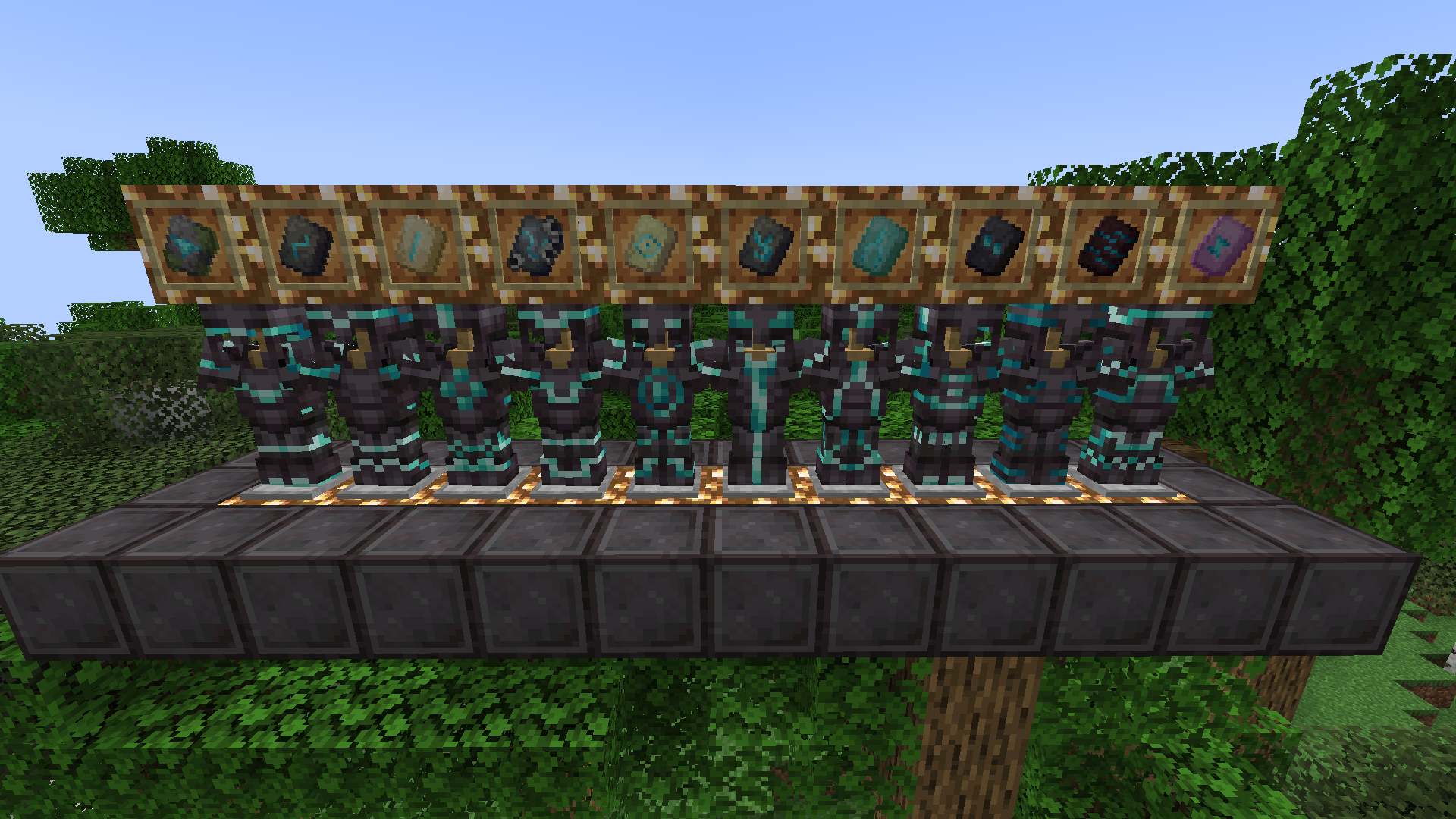
Let’s be real for a second. Netherite armor is kind of ugly. It’s effective, sure. It’s the strongest stuff in the game, it doesn't burn in lava, and it makes you feel like a tank. But that dull, grayish-purple slab of a chestplate? It’s boring. It looks like you’re wearing a burnt radiator.
Then Mojang dropped the 1.20 Trails & Tales update and finally gave us a reason to care about how we look while slaying the Ender Dragon. Armor trims changed the game. But choosing netherite armor trims isn't just about slapping a random pattern on your gear. It’s a flex. It’s a way to tell everyone on the server exactly how much time you’ve wasted—or spent productively—raiding Bastions and Ancient Cities.
Honestly, the sheer variety is overwhelming. There are 16 standard trims (plus the ones added in later updates like Bolt and Flow), and when you multiply that by the different materials you can use, the combinations are endless. But not all trims are created equal. Some are easy to find, while others will make you want to throw your mouse across the room.
Why Netherite Changes the Trimming Game
When you’re trimming iron or diamond, you have a lot of color contrast. On netherite, things get tricky. Because the base material is so dark, certain colors just... disappear. Using a Netherite Ingot as the trim material on Netherite armor creates a "dark on dark" textured effect that is incredibly subtle. It's the ultimate "quiet luxury" of Minecraft. You’re wearing the rarest material on the rarest material.
But if you want to actually see your netherite armor trims, you usually have to go with Gold, Diamond, or Silence.
The mechanics are simple but expensive. You need a Smithing Template, the piece of armor, and a mineral (like Redstone, Lapis, or Amethyst). The catch? If you want to trim your whole set, you need four templates. Since most templates are found in loot chests, you’ll likely end up using the crafting recipe to duplicate them: 7 Diamonds, 1 Template, and a specific block like Netherrack or Cobblestone.
Yeah. It's a diamond sink.
The Trims That Actually Matter
Silence: The Absolute Peak of Flexing
If you see someone walking around with the Silence armor trim on netherite, you stay out of their way. This is the rarest trim in Minecraft, period. It only has a 1.2% chance of spawning in chests within Ancient Cities.
It covers almost the entire armor set in a detailed, intricate pattern. Most trims just add a few lines; Silence re-skins the whole thing. If you use a Gold Ingot with Silence on Netherite armor, you look like a literal god. The contrast of the bright yellow against the dark netherite creates this regal, ornate look that nothing else can touch. But good luck finding it. You’ll likely loot twenty Swift Sneak books before you see one of these.
Ward: The Warden’s Calling Card
Also found in Ancient Cities, the Ward trim is much more common than Silence but still carries that "I survived the Deep Dark" energy. It features heavy lines on the chestplate that look a bit like the Warden’s ribcage. It feels bulky. It feels heavy. It’s perfect if you want your netherite to look even more reinforced than it already is.
Vex and Spire: For the End-Game Players
The Vex trim, found in Woodland Mansions, is a bit of a nightmare to get because Mansions are often tens of thousands of blocks from spawn. It has a jagged, aggressive look.
Then there’s Spire. Found in End Cities, this one is a personal favorite. It adds a clean, geometric pattern that doesn't clutter the armor. If you use a Diamond as the trim material, the bright blue lines against the dark purple-gray netherite look futuristic. It’s very "Tron."
Tide and Snout: The Niche Choices
Tide is dropped by Elder Guardians. Since you have to actually kill a boss-level mob to get it, it has a lot of prestige. The pattern is wavy and organic.
Snout is found in Bastion Remnants. It’s got a very "Piglin" vibe—blocky and snout-like. It’s one of the easier ones to find if you’re already hunting for Ancient Debris in the Nether, but it’s definitely an acquired taste. Some people love the heavy nose-bridge look on the helmet; others think it looks ridiculous.
The Cost of Looking Good
Let’s talk math. It’s painful.
To trim a full set of Netherite armor, you need:
- 4 Netherite Armor pieces (obviously).
- 4 Smithing Templates of your choice.
- 4 Minerals (Gold, Diamond, etc.).
If you only find one template, you have to duplicate it three times. That costs 21 Diamonds.
That’s the hidden cost of netherite armor trims. It’s not just the rarity of the find; it’s the diamond tax. If you’re playing on a multiplayer server, the economy often revolves around these templates. A Silence template can go for stacks of diamond blocks because the effort required to find another one is so high.
Which Material Should You Use?
This is where people mess up. They pick a cool trim but use the wrong color.
- Gold: The classic. It looks incredible on netherite. It gives off a "Black and Gold" luxury vibe.
- Amethyst: This is the sleeper hit. The purple glow of the amethyst matches the subtle purple undertones of the netherite perfectly. It’s mystical.
- Quartz: If you want high contrast, use Quartz. It looks like white enamel inlay.
- Copper: Honestly? Don't. It’s hard to see and looks a bit muddy against the dark base. Unless you're going for a "steampunk" look, skip it.
- Netherite: As mentioned, using a netherite ingot on netherite armor is for the people who want "stealth" gear. It creates a 3D textured look without changing the color. It's very subtle. Very cool.
Common Mistakes and How to Avoid Them
The biggest mistake is trimming your Diamond armor before upgrading it to Netherite.
Wait. Actually, you can do that now, but keep in mind that the Netherite Upgrade process (which requires its own separate Smithing Template) will preserve the trim. However, since the Netherite Upgrade template is itself a rare find in Bastions, you need to plan your resources.
Don't waste your rare Silence trim on a piece of armor with bad enchantments. Make sure your gear is "God Armor" first—Protection IV, Mending, Unbreaking III—before you commit the diamonds to the trim. There is nothing worse than having a beautiful Ward-trimmed chestplate that lacks Mending and eventually breaks.
Also, remember that you can change trims. You just overwrite the old one at a Smithing Table. But you don't get the old template back. It’s a one-way street.
Practical Steps for Your Next Session
If you’re ready to stop looking like a generic miner and start looking like a legend, here is how you should prioritize your hunt for netherite armor trims.
- Step 1: The Bastion Run. You need the Netherite Upgrade template anyway. While you're there, look for the Snout trim. It’s a solid "starter" trim for Netherite gear.
- Step 2: Establish a Diamond Mine. You are going to need at least 21-28 diamonds just to duplicate your favorite templates for a full set. Don't start trimming until your bank account is full.
- Step 3: The Ancient City. Take wool. Lots of it. Sneak around and aim for the Ward trim. If you get lucky and find Silence, do not use it immediately. Take it home and duplicate it first. Never use your last template.
- Step 4: Color Check. Before you commit, use a Smithing Table to preview the look. Place your armor, the template, and then cycle through different minerals like Emerald, Redstone, and Lapis to see how the colors pop.
The game isn't just about survival anymore. It's about aesthetic dominance. Whether you go for the jagged edges of the Vex trim or the royal complexity of Silence, your armor is your resume. Make sure it says something worth reading.