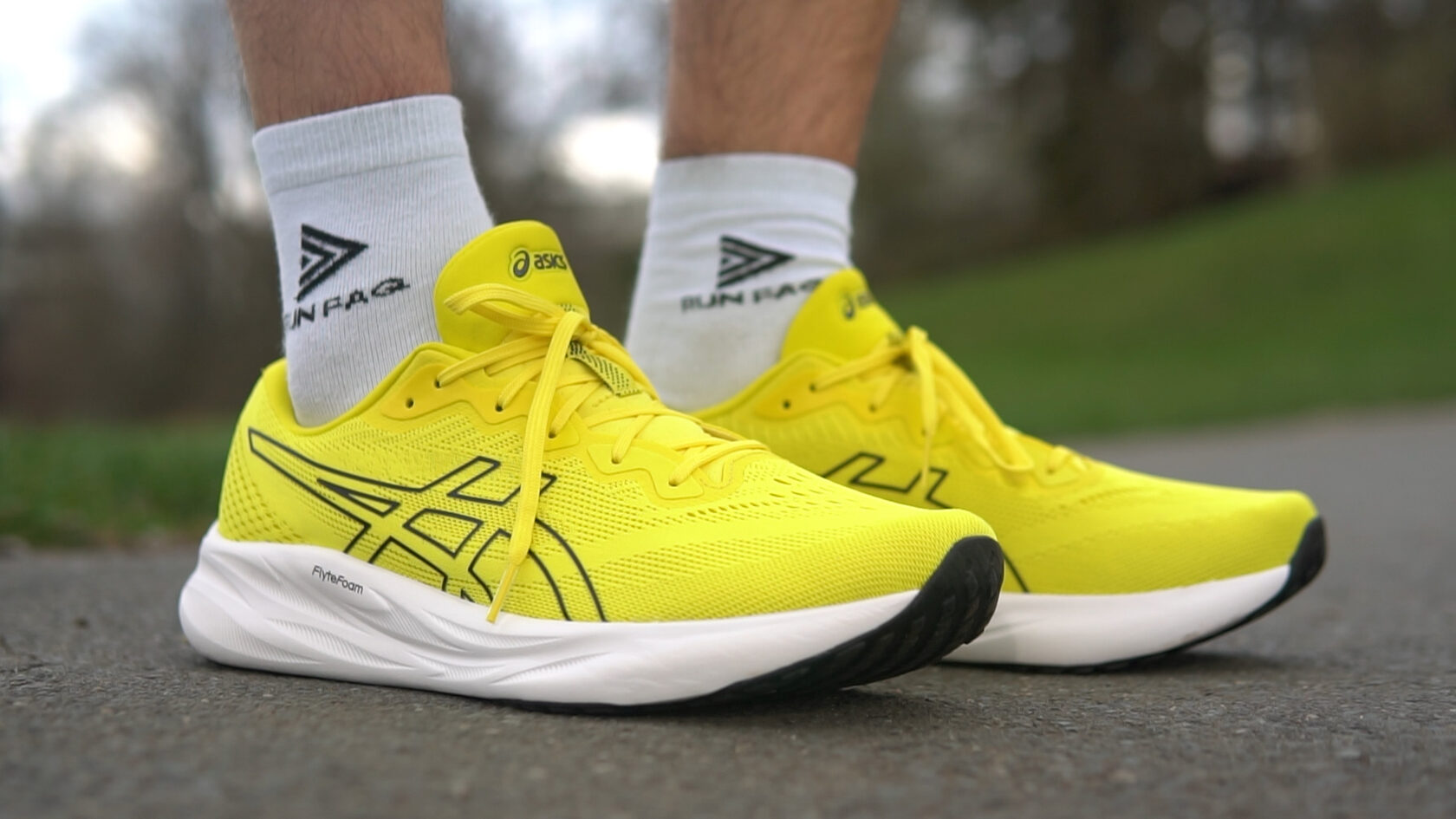
Finding a running shoe that doesn't cost as much as a car payment is getting harder. Brands keep pushing carbon plates and "super foams" that most of us don't actually need for a casual 5k. Honestly, it’s refreshing to see something like the ASICS GEL-PULSE 15 show up. It isn't trying to be a marathon racer. It’s a workhorse. It’s that reliable pair of shoes you keep by the front door for when you just need to clear your head for thirty minutes.
Most people overlook the Pulse series because the Gel-Nimbus or the Kayano get all the marketing budget. Those are great, sure. But they’re expensive. The Pulse 15 is basically the "quiet overachiever" of the ASICS lineup. It has undergone some massive changes recently, specifically moving away from the older, heavier aesthetics of the Pulse 13 and 14.
What Actually Changed in the ASICS GEL-PULSE 15?
If you've worn previous versions, the first thing you'll notice is the weight. Or the lack of it. ASICS finally brought FlyteFoam cushioning to this model in a way that feels meaningful. It isn't just a name on the midsole; it’s a total shift in how the shoe rides. It’s lighter. Much lighter. In fact, it feels more like a streamlined daily trainer than a budget-friendly alternative.
The upper is a technical mesh. It breathes. If you’re running in 90-degree humidity, your feet aren't going to feel like they’re trapped in a sauna. The design language has shifted too. It looks faster. It has these sleek lines that mimic the more expensive Novablast series, which is a nice touch if you care about not looking like you’re wearing "dad shoes" at the gym.
Let’s Talk About the Foam
We need to get into the weeds of the midsole. The ASICS GEL-PULSE 15 uses a combination of FlyteFoam and the iconic Rearfoot GEL technology. This is where most people get confused. They think more GEL equals more comfort. Not necessarily.
The GEL technology in the heel is specifically there for impact attenuation. When your heel strikes the pavement, that silicone-based insert absorbs the shock so your shins don't have to. The FlyteFoam does the rest of the heavy lifting. It’s a proprietary EVA (Ethylene-vinyl acetate) blend that’s reinforced with organic "super fibers." This helps the foam keep its shape longer. Cheap shoes usually "bottom out" after 100 miles. These won't.
- FlyteFoam: Lightweight, responsive, doesn't pack out quickly.
- Rearfoot GEL: Specifically for those of us who land heavy on our heels.
- AHAR Rubber: The outsole uses ASICS High Abrasion Rubber in high-wear areas.
I’ve seen runners complain that the Pulse feels "stiff" out of the box. It sort of is. But that’s the trade-off for durability. Give it 20 miles. The foam needs a break-in period to start feeling truly plush.
Is It a "Real" Running Shoe?
There is this weird elitism in the running community. If you aren't spending $160, some people think you’re just "jogging." That’s nonsense. The ASICS GEL-PULSE 15 is a legitimate neutral trainer.
What does neutral mean? It means if your feet don't roll inward excessively (overpronation) or outward (supination), these are for you. If you have flat feet and need massive arch support, you might want to look at the GT-2000 instead. But for the average person with a standard arch, the Pulse 15 provides a stable, predictable platform.
One thing people get wrong is the "stack height." It’s not a maximalist shoe. You can still feel the ground. For some, that’s a dealbreaker. For others, it’s exactly why they buy it. You get a sense of "ground feel" that helps with balance and proprioception.
The Durability Factor: Real Talk
Let’s be real—running shoes are an investment. You want them to last. The outsole of the ASICS GEL-PULSE 15 is surprisingly rugged. ASICS uses their AHAR (ASICS High Abrasion Rubber) compound. They put it exactly where you need it most. Usually, that's the lateral side of the heel and the medial side of the forefoot.
I’ve seen testers put 300+ miles on these with minimal wear on the tread. The upper usually holds up well, too. The mesh is dual-layered, so you won't get that annoying "pinky toe hole" after two months of use. However, the foam is the limiting factor. While FlyteFoam is durable, it will eventually lose its "pop." For a casual runner doing 10-15 miles a week, these could easily last a year.
Why the Price Point Matters
The ASICS GEL-PULSE 15 usually sits around the $90-$100 mark. In a world where the Nimbus is $160, that’s a steal. But you have to know what you’re giving up. You don't get the "PureGEL" found in the premium models. You don't get the "FF Blast Plus" foam which is even bouncier.
Is that a problem? Probably not for most.
If you are training for a sub-3-hour marathon, yeah, you’ll want more tech. If you’re hitting the treadmill at OrangeTheory or doing 3 miles around the neighborhood after work, the Pulse 15 is plenty. You're paying for what you need and skipping the gimmicks. It’s honest.
Comparison: Pulse 15 vs. Excite 10
People always ask: "Why not just get the Excite? It's cheaper."
The Excite is a fine shoe for walking or very light gym work. But once you start running consistently, you’ll feel the difference. The Pulse 15 has a more sophisticated midsole. The transition from heel to toe is smoother. In the Excite, the foam feels a bit more "dead." The Pulse gives you back a little bit of energy. It’s that extra 10% of engineering that makes it a "running shoe" rather than just a "sneaker."
Real-World Performance Nuances
Running in the Pulse 15 is a predictable experience. That sounds boring, but in running, boring is good. You don't want surprises. You don't want a shoe that feels "tippy" or unstable.
The heel collar is well-padded. It locks your foot in. I’ve noticed that ASICS has narrowed the midfoot slightly in this version compared to the 13. If you have very wide feet, you’ll definitely want to try the "Wide" (2E) version. Don't try to squeeze into the standard width; the mesh doesn't have a ton of lateral stretch.
The laces are standard. Nothing fancy here. They stay tied. The tongue is traditional—it’s not a "bootie" construction or gusseted. This is one area where the "budget" nature of the shoe shows a bit. It might slide slightly to the side if you don't lace them up tight, but it's a minor gripe.
Breaking Down the Specs (The Prose Version)
Instead of a boring table, let's just look at the numbers that matter. The drop is usually around 8mm to 10mm. This is a classic "high drop" shoe. It’s designed to take the pressure off your Achilles and calves. If you struggle with tight calves or Achilles tendonitis, this geometry is generally more forgiving than "zero drop" brands like Altra.
Weight-wise, it’s hovering around 9 to 10 ounces depending on the size. That’s competitive. It won't feel like a brick on your foot. The midsole height provides enough cushion for concrete but isn't so tall that you feel like you’re walking on stilts.
Who Should Buy This?
I’d recommend the ASICS GEL-PULSE 15 to three types of people:
- The Newbie: If you’re just starting out and don't want to drop $150 on a hobby you might quit in three weeks.
- The Gym Goer: You spend half your time on the weights and half on the treadmill. These are stable enough for squats but cushioned enough for a mile run.
- The Value Hunter: You know that last year's tech is still 90% as good as this year's "revolutionary" breakthrough.
Common Misconceptions
People think "entry-level" means "low quality." That isn't true with ASICS. They use the same factories and many of the same materials for the Pulse as they do for their top-tier shoes. The difference is the complexity of the assembly and the specific density of the foams.
Another misconception is that you can't use these for long runs. You can run a half-marathon in these. Your legs might feel a bit more tired than if you wore a $200 super-shoe, but the Pulse 15 is more than capable of handling the distance.
Summary of Actionable Advice
If you’re looking at the ASICS GEL-PULSE 15, don't just buy your standard shoe size. ASICS tends to run slightly small. Go up a half size if you plan on running long distances, as your feet will swell.
Check the "Last" of the shoe. If you have a very high arch, you might need an aftermarket insole because the stock ones are fairly flat and basic. Replace them every 300 to 400 miles to avoid injury. If you start feeling a nagging pain in your knees or shins, it’s usually a sign that the FlyteFoam has finally given up the ghost.
Find a local shop and try them on against the Brooks Launch or the Saucony Ride. You’ll likely find the ASICS feels a bit firmer but more stable. If you want a shoe that gets the job done without the marketing fluff, this is it.
The next time you're browsing the wall of shoes and feel overwhelmed by the neon colors and $200 price tags, look for the Pulse. It’s the smart choice for the practical runner. It’s not flashy, it’s not "revolutionary," it’s just a damn good shoe.
Go to a dedicated running store to get your gait analyzed first. Even a great shoe like this won't work if you actually need a stability shoe. Once you know you're a neutral runner, wait for a holiday sale—you can often snag these for under $80, making them perhaps the best value-to-performance ratio in the entire industry right now. No fancy carbon plates needed. Just lace them up and get out the door.