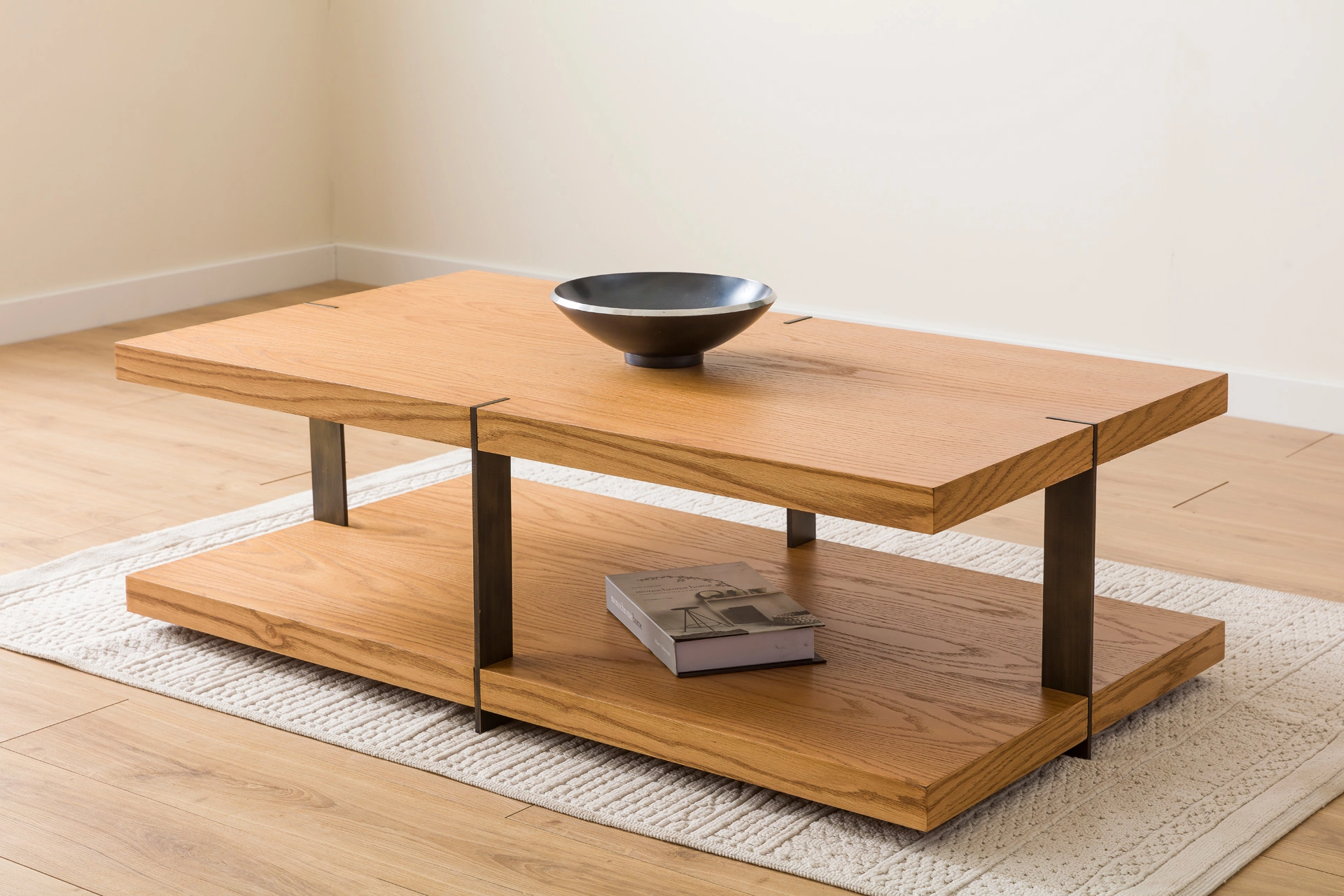
You’ve seen it. If you’ve spent more than five minutes scrolling through interior design TikTok or flipping through a West Elm catalog over the last few years, you have definitely seen the Anton solid wood coffee table. It’s everywhere. But unlike those flimsy, flat-pack particle board pieces that seem to dominate the mid-range furniture market, this one is a bit of an anomaly. It's chunky. It’s heavy. Honestly, it’s a beast.
People buy it because it looks "organic modern," which is just design-speak for "it looks like a giant hunk of a tree." But there’s a lot more going on with the construction than just aesthetics. When we talk about solid wood in 2026, we’re often actually talking about veneers over MDF. Not here. This specific line is crafted from solid mango wood, and that choice of material changes everything about how the table ages, how it handles a spilled glass of red wine, and why it weighs enough to make your delivery driver contemplate a career change.
Why Mango Wood is the Secret Sauce of the Anton Solid Wood Coffee Table
Mango wood is weird. Most people think of oak, walnut, or maple when they hear "solid wood," but mango wood is actually a byproduct of the fruit industry. Once the trees stop producing those delicious mangos, they’re cut down to make room for new ones. Traditionally, these were just burned. Now, brands like West Elm use them for the Anton series. It’s sustainable, sure, but the real benefit is the grain.
Mango wood has these crazy, kaleidoscopic shifts in color. You’ll see streaks of amber, grey, and even a weirdly beautiful pinkish hue in some slabs. Because the Anton solid wood coffee table uses thick planks, you get to see all that character. No two tables look exactly the same. You might get one that’s relatively uniform, or you might get one that looks like a topographical map of a distant planet.
That’s the risk, though. If you’re a perfectionist who needs every piece of furniture to match a specific Pantone chip, this table will drive you insane. It’s "perfectly imperfect."
The Burnt Wax Finish vs. The Natural Look
Most people gravitate toward the "Burnt Wax" finish. It’s dark, moody, and has a certain "Brussels cafe" vibe. The process involves literally rubbing wax into the wood and, in some cases, using heat to help it penetrate. This creates a matte finish that doesn't feel like plastic. When you run your hand across it, you feel the wood, not a thick layer of polyurethane.
The downside? It’s thirsty.
If you live in a dry climate—looking at you, Denver and Phoenix—that wood is going to breathe. It’s going to expand and contract. Without proper care, you might notice tiny "checks" or hairline cracks appearing over time. That’s not a defect; it’s just wood being wood. It’s alive, in a sense.
Real Talk: The "Fair Trade" Factor
You’ll see the "Fair Trade Certified" label slapped all over the marketing materials for the Anton solid wood coffee table. Usually, that feels like corporate fluff. However, in this case, it actually refers to the factory in India where these are manufactured.
Being Fair Trade Certified means a portion of the purchase price goes into a community development fund. The workers themselves vote on how to spend that money. In some regions, it’s gone toward clean water initiatives or school supplies. It’s a nice thing to know when you’re staring at your coffee table on a Sunday morning, even if it doesn't make the table any more "functional." It just makes it feel a little less like a faceless commodity.
The Construction: Why It Isn't Falling Apart Anytime Soon
Look at the legs. They’re blocky. They’re essentially thick slabs of mango wood that create a pedestal-like base. This is a design choice, but it’s also a structural one. Because the table is so low to the ground and has such a wide footprint, it’s incredibly stable. You can put your feet up on it. Your dog can run into it. It’s not going to wobble.
- Kiln-Dried Wood: This is the most boring but important part. If the wood isn't dried properly before construction, it will warp like a banana within six months. West Elm kiln-dries the Anton slabs to prevent this.
- Varying Thickness: The top isn't just one thin sheet. It’s a thick, substantial surface that can be sanded down and refinished if you really mess it up.
- Minimalist Hardware: There aren't many screws or bolts to loosen over time. It’s mostly joinery-focused.
One thing to watch out for is the weight capacity. While it's sturdy, the "drum" style or the "pedestal" style versions have different stress points. Don't use it as a step ladder. Seriously.
Dealing with the "West Elm Wobble"
There is a running joke in the interior design world about "West Elm quality," specifically regarding their mid-century legs that tend to get shaky. The Anton solid wood coffee table largely avoids this because it doesn't use those spindly tapered legs. It relies on mass. Weight equals stability. But that mass comes with a price: assembly. If you aren't paying for "White Glove" delivery, have a friend help you. Trying to flip this thing over by yourself is a great way to pull a muscle or dent your floor.
Maintenance: Keep It From Looking Like a Mess
Since the finish is often a wax or a light lacquer, you can't treat this like a formica table from a 1950s diner.
- Coasters are non-negotiable. Even with the wax finish, a sweating glass of ice water will leave a white ring. If that happens, don't panic. Usually, a little bit of Howard Feed-N-Wax or even a hair dryer on low heat can pull that moisture out.
- Dusting matters. Use a soft, dry cloth. Avoid those lemon-scented sprays you find at the grocery store; they contain silicones that can gunk up the wax finish and make it look cloudy over time.
- Humidity control. If your house is as dry as a bone in the winter, consider a humidifier. Your skin will thank you, and so will your table.
Honestly, the best thing about the Anton solid wood coffee table is that it actually looks better with a few scratches. It’s a rustic piece. A little "patina" (which is just a fancy word for "damage you've accepted") adds to the story. It’s not a museum piece; it’s a place to put your books and your pizza boxes.
Is It Worth the Price Tag?
You’re looking at anywhere from $600 to over $1,000 depending on the size and current sales. Is it worth it?
If you compare it to a $200 table from a big-box Scandinavian retailer, yes. It will outlast five of those. If you’re comparing it to a custom-made walnut table from a local artisan that costs $3,500, it’s a bargain. It sits in that "attainable luxury" sweet spot. It feels substantial. It feels real.
The biggest "con" is simply the ubiquity. You will see this table in your neighbor's house. You will see it in your doctor's waiting room. If you want something totally unique, this isn't it. But if you want something that looks good, smells like real wood, and won't fall apart when you move apartments, it's a solid choice.
Actionable Steps for New Owners
If you’ve just pulled the trigger on an Anton solid wood coffee table, or you're about to, do these three things to ensure you don't regret it:
- Inspect it immediately upon arrival. Because mango wood varies so much, check for "checks" (cracks) that go all the way through the wood. Surface grain shifts are fine; structural splits are not.
- Get felt pads. The base of the Anton is wood. If you have hardwood floors, sliding this heavy beast even an inch can leave a permanent gouge. Stick some heavy-duty felt on the bottom before you even set it down.
- Buy a high-quality wood wax. Every six months, give it a quick buff. It takes ten minutes and keeps the wood from looking "thirsty" or dull.
This table isn't just a surface; it's a heavy-duty piece of the room's foundation. Treat it with a little bit of respect, and it’ll probably be the piece of furniture you're still holding onto ten years from now when everything else has been replaced.