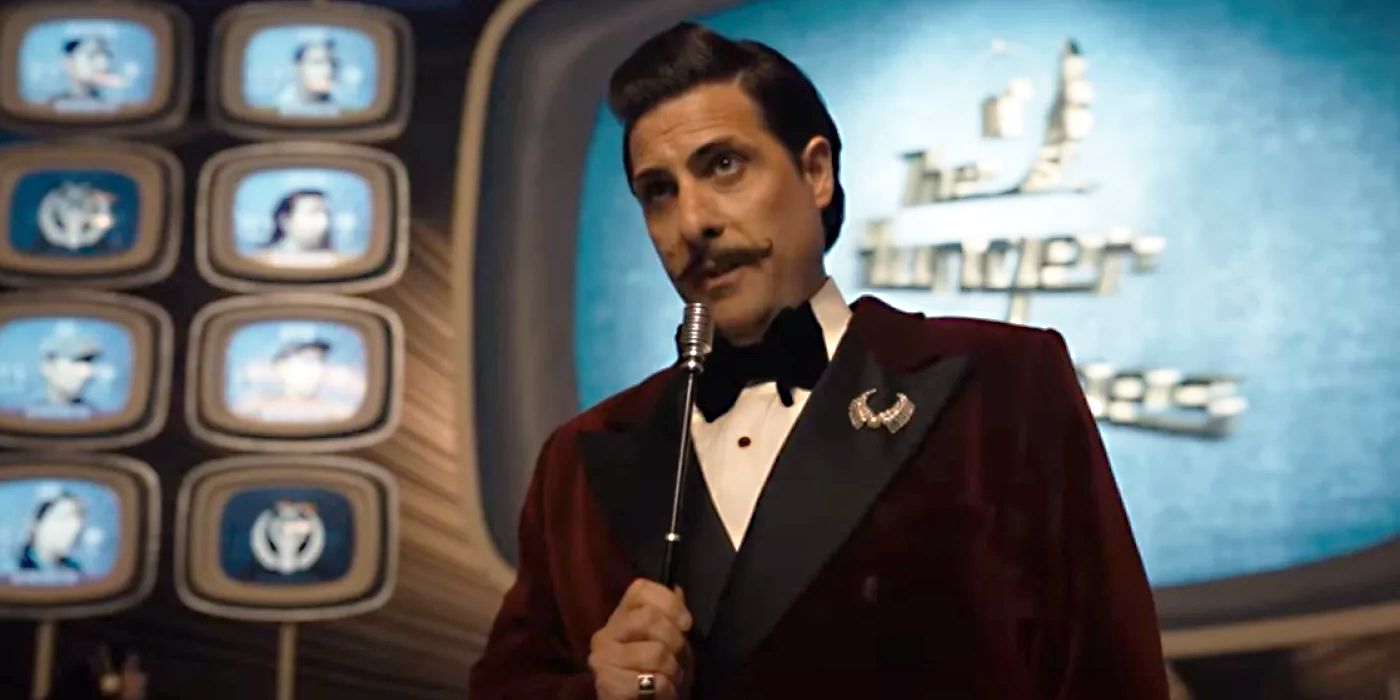
You know that feeling when you're rewatching a movie and a specific melody just sticks in your brain, but you can’t quite place where it came from? That’s exactly what happens when people start hunting for the Hunger Games Caesar Flickerman song.
It’s a bit of a Mandela Effect situation. Honestly, if you ask ten different fans what the "Caesar Flickerman song" is, you’ll get three different answers. Some swear it’s the flashy, synth-heavy brass theme that plays when he walks onto the stage in the first film. Others are convinced there’s a lyrical ballad he sang.
The truth is actually a lot more interesting than just a catchy tune.
Stanley Tucci’s portrayal of Caesar Flickerman is iconic for a reason. He’s the smiling face of a genocide. He’s the man who turns child murder into a Saturday night variety show. And the music associated with him—that loud, bombastic, slightly-too-cheerful orchestral flare—is the heartbeat of the Capitol’s propaganda machine.
The Sound of the Capitol: Horns, Hype, and Horror
When Caesar Flickerman steps onto that stage in The Hunger Games, he’s greeted by a specific fanfare. It’s titled "The Games" or often associated with the track "War" on the official score by James Newton Howard.
It’s loud. It’s brassy. It feels like a late-night talk show on steroids.
The Hunger Games Caesar Flickerman song isn't a "song" in the traditional sense with verses and a chorus. It’s an anthem of distraction. It’s designed to drown out the screams of the districts with the cheers of the elite. James Newton Howard, the legendary composer behind the franchise, used these themes to create a sharp contrast.
On one hand, you have the "District 12" music—sad, folk-inspired, heavy on the violin and dulcimer. On the other hand, you have Caesar’s world. It’s all synthetic gloss and high-pitched trumpets. It’s fake. Just like his teeth. Just like his blue hair.
Think about the way the music swells when he interviews Katniss. It’s manipulative. The score tells the audience in the Capitol exactly how to feel. If Caesar laughs, the music twinkles. If he acts concerned about Peeta’s "star-crossed" love, the strings pull at your heartstrings in a way that feels incredibly unearned.
Why Fans Keep Searching for a "Song"
So why do so many people think there’s a specific Caesar Flickerman song?
Part of it comes from the sheer theatricality of the character. Stanley Tucci played him with the energy of a Broadway star. In the books by Suzanne Collins, Caesar has been the voice of the Games for over forty years. He’s a constant. Generations of Capitol citizens grew up with his voice.
There's also the confusion with The Ballad of Songbirds and Snakes.
In the prequel, we see the origin of the Hunger Games host role through Lucretius "Lucky" Flickerman, played by Jason Schwartzman. Lucky is Caesar’s ancestor (likely his father or grandfather), and the music in the prequel is much more "old-school variety hour." Because the prequel is literally titled The Ballad, people often conflate the two, searching for a ballad that Caesar might have performed.
But Caesar doesn't sing. He performs.
He turns the tributes' trauma into entertainment. His "song" is the rhythm of his interviews—the "Right you are!" and the timed pauses for laughter.
The "Horn of Plenty" and the National Anthem
If we’re talking about the most recognizable piece of music associated with Caesar’s broadcasts, it’s "The Horn of Plenty."
This is the National Anthem of Panem.
It was composed by James Newton Howard specifically to sound like something a fascist regime would play at a sporting event. It’s triumphant but cold. When Caesar Flickerman introduces the tributes, this is the music that validates the horror.
Interestingly, many fans have created their own "tribute" songs for Caesar. On platforms like TikTok and YouTube, you’ll find fan-made edits where people have added lyrics to his theme music or created "Capitol Pop" tracks that imagine what a hit single in Panem would sound like.
It’s a testament to how well the world-building worked. We can almost hear the fake pop songs playing in the background of the Capitol’s bars while the children are fighting in the arena.
The Stanley Tucci Factor
We have to talk about Stanley Tucci's input. He didn't just read lines. He created a persona.
In various interviews, Tucci has mentioned that he viewed Caesar as a man who is always "on." The music that accompanies him isn't just background noise; it's his armor. The Hunger Games Caesar Flickerman song—that brassy entrance—is what allows him to disconnect from the reality of what he's doing.
Basically, the music is a character in itself.
It represents the peak of Capitol decadence. While District 11 is starving, Caesar is bathing in a soundscape that costs more than their entire yearly grain production.
Distinguishing the Tracks
If you’re trying to build a playlist and want the "Caesar vibe," you need to look for specific tracks from the official soundtracks.
- "The Games" (James Newton Howard): This is the primary theme for the broadcast. It’s the one with the driving percussion and the sense of "The show is starting!"
- "Horn of Plenty": The official anthem.
- "War": The more aggressive version of the Capitol’s musical theme.
Wait, there’s also the end credits music. Sometimes people mistake the upbeat pop songs on the soundtrack (like those by Maroon 5 or Taylor Swift) for music that might play in the Capitol. But those songs are actually meant for us, the real-world audience. The characters in the movie never hear "Safe & Sound." They only hear the cold, manufactured perfection of Caesar’s world.
Why This Matters in 2026
It’s weirdly relevant now. We live in an era of "edutainment" and hyper-polished media personalities.
When you search for the Hunger Games Caesar Flickerman song, you’re actually looking for the aesthetic of a specific type of propaganda. It’s the sound of someone selling you something terrible while making it look like a party.
The music is effective because it’s catchy. It’s supposed to be! If it were ugly or dissonant, the Capitol citizens wouldn't watch. They want the glitz. They want the "Flickerman Shine."
The Legacy of the Flickerman Theme
Even years after the final movie, Mockingjay Part 2, was released, that specific orchestral hit still triggers a response in fans. It’s a Pavlovian reaction. You hear those horns and you expect to see a man in a purple suit talking about "hope" while children die.
Nuance is key here. The music isn't "evil" on its own. It’s the context. It’s the way Caesar uses the music to bridge the gap between the audience and the victims.
Honestly, the best way to experience the "song" is to watch the transition from the silent, somber reaping in District 12 to the loud, obnoxious televised special in the Capitol. The jump in volume and tempo is jarring. It’s meant to be.
How to Find the Authentic Caesar Flickerman Sound
If you want to dive deeper into the auditory world of the Capitol, don't just look for "songs." Look for the score.
- Check the "Hunger Games: Original Motion Picture Score" rather than the "Songs from District 12 and Beyond" album. The score contains the actual instrumental tracks used during the broadcast scenes.
- Listen for the motifs. James Newton Howard uses a specific four-note sequence that repeats whenever the Capitol’s power is being asserted.
- Compare with the Prequel. Listen to "The Lucky Flickerman Show" tracks from The Ballad of Songbirds and Snakes score by James Newton Howard. You can hear the "musical DNA" that eventually becomes Caesar's theme.
The "song" isn't a single track. It's an atmosphere. It’s the sound of a gilded cage. If you’re looking for a specific lyrical piece, you won't find one in the canon—but the instrumental "Horn of Plenty" is the closest you’ll ever get to the true anthem of Caesar Flickerman.
To get the full effect, listen to the transition between the tracks "Reaping Day" and "The Games" on the first film's score. It perfectly captures that shift from District despair to Capitol artificiality. For those interested in the technical side of the music, pay attention to the time signatures; the Capitol music often uses very rigid, driving rhythms to symbolize control, whereas the District music is much more fluid and organic. Over half a decade later, these musical choices remain some of the most effective world-building tools in modern cinema.