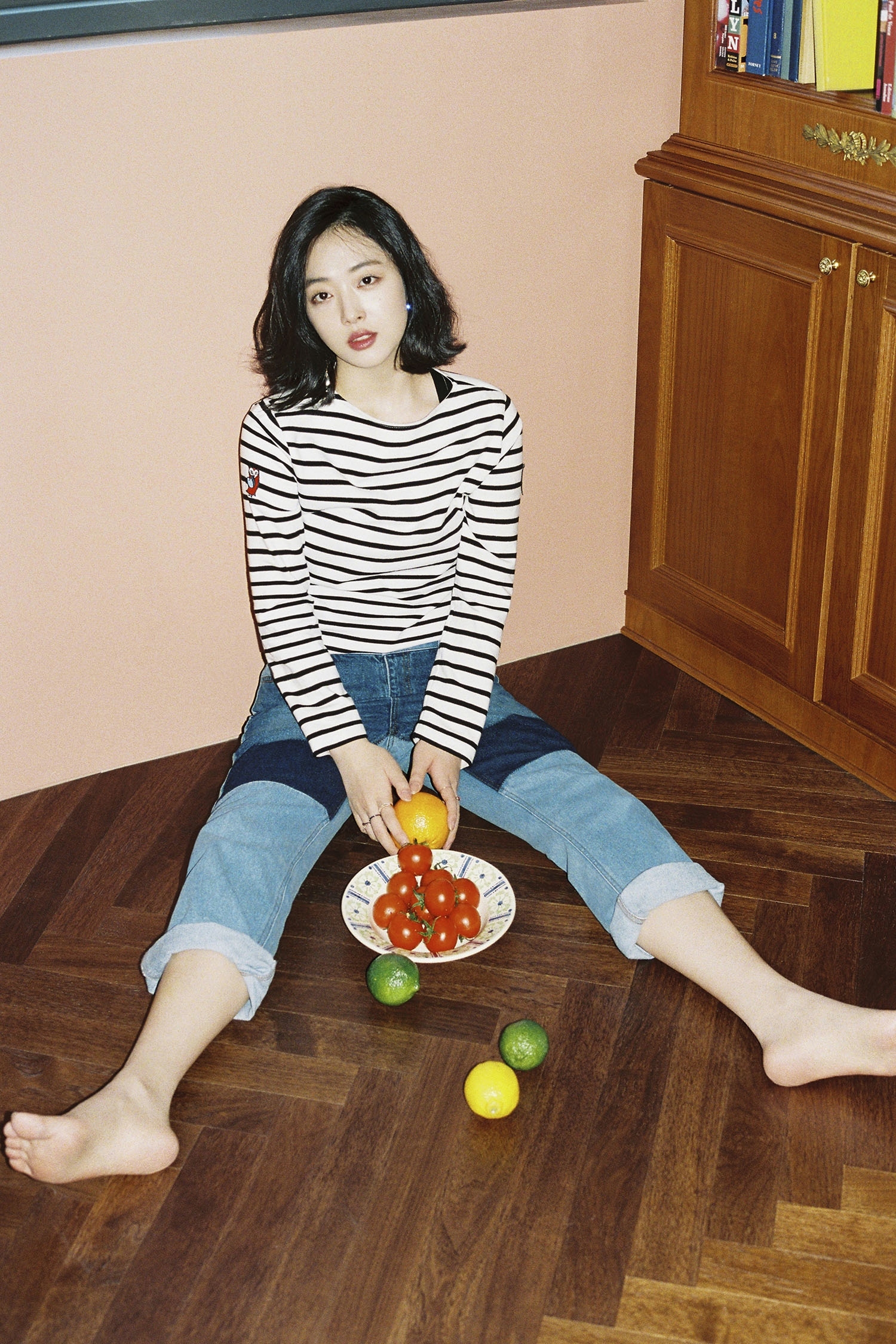
She was the "Giant Baby." That’s what fans called her. It sounds cute, almost harmless, but looking back in 2026, that nickname feels heavy. It perfectly captured the impossible duality of Choi Seol Ri—known to the world as Sulli—a woman who was forced to grow up in a glass box while the public demanded she stay frozen in a state of innocent childhood.
Honestly, the story of Sulli isn’t just about K-pop. It’s a case study in how a society treats its most visible women. If you’ve spent any time on the internet lately, you’ve probably seen her face pop up in "aesthetic" mood boards or tragic video essays. But who was the actual person behind the stage name?
From Seodong to f(x): The Making of a "Product"
Most people forget she started as a child actress. Before the glitter of f(x), she was playing the young Princess Seonhwa in the 2005 drama Ballad of Seodong. She was only 11.
Imagine being 11 and having your boss tell you that you’re a "product." In the posthumous documentary Dear Jinri, she literally says those words. She was taught that her value was tied to being the "highest quality product" possible. It’s chilling. She compared her trainee days to being a programmed assassin, like in the movie La Femme Nikita.
When she debuted with f(x) in 2009, she was the visual center. The group was experimental, cool, and edgy. They gave us "Electric Shock" and "Rum Pum Pum Pum," tracks that still hold up. But while the music was synth-pop perfection, the girl behind it was starting to crack under the pressure of being a "perpetual teenager."
The Moment Everything Changed
Things got messy around 2014. That was the year she took a hiatus from f(x). The "scandal"? She was dating Choiza from Dynamic Duo. In the Western world, a 20-year-old dating a man 14 years her senior is a dinner party conversation. In the K-pop industry of the 2010s, it was a career-ending earthquake.
The hate wasn’t just "I don't like your boyfriend." It was vitriolic. It was gendered. It was constant.
People started calling her "loose" or an "attention seeker." When she eventually left f(x) in 2015 to focus on acting, the narrative shifted from "sweet girl" to "rebel." But here’s the thing: her "rebellion" was basically just being a normal human. She posted photos of herself drinking with friends. She went out without a bra—something she called "no-bra" fashion for personal comfort.
She wasn't trying to start a revolution. She just wanted to breathe.
What People Get Wrong About the "Sulli Law"
After her passing in 2019, there was a massive push for what the media called the "Sulli Law." You’ve probably heard it mentioned as a fix-all for cyberbullying.
The reality is way more complicated.
The proposed law aimed to enforce a real-name system for online comments. But South Korea actually tried that back in 2007, and the Constitutional Court threw it out in 2012 for being unconstitutional. Even in 2026, we’re still debating this. You can’t just legislate away human cruelty. The real impact Sulli had wasn't a piece of paper in the National Assembly; it was the way she forced the industry to finally acknowledge mental health.
The "Goblin" Era and the Final Interview
In June 2019, just months before we lost her, she released Goblin. It was her solo debut. If you listen to the lyrics now, they’re a cry for help disguised as dream pop. She co-wrote the songs, talking about her "dissociative disorder" and the different "personalities" she had to maintain.
Then came The Night of Hate Comments.
It was a TV show where celebrities literally sat down and read the most disgusting things written about them online. Sulli was one of the hosts. Watching it now is painful. She would smile while reading comments calling her a "druggie" because her pupils looked dilated in a movie role (Real). She was trying to show that she was stronger than the trolls. But nobody is that strong.
"My life is actually empty, so I feel like I'm lying to everyone by pretending to be happy on the outside."
That’s what she confessed on the show. She lived a two-sided life because the "celebrity Sulli" had to be bright, even if "Choi Jinri" was in the dark.
The Legacy of Dear Jinri
In late 2023, Netflix finally released Persona: Sulli, which included the documentary Dear Jinri. It’s a hard watch. It features her last-ever interview.
What’s striking isn’t the tragedy, but her intelligence. She talks about feminism in a way that was way ahead of the K-pop curve. She speaks about "gaze-rape"—a term used to describe the way people looked at her body as if they owned it. She was rooting for women who spoke out, even if she didn't always agree with them.
She wasn't just a victim. She was a thinker.
Actionable Insights: What We Can Do Now
So, where does that leave us? Sulli’s story shouldn't just be a sad Wikipedia entry. If you care about her legacy, there are actual ways to change the culture:
- Stop the "Gaze": Understand that idols are workers, not property. The demand for "perfection" is what fuels the toxic cycles she fought against.
- Support Mental Health Transparency: Celebrate when artists take breaks. In 2026, we see more idols taking mental health sabbaticals than ever before. That’s part of her shadow.
- Think Before You Type: It sounds cliché, but the "Sulli Law" failed because it tried to police the internet. The change has to be cultural. Recognize the human on the other side of the screen.
- Watch the Work: If you want to know the artist, look at Fashion King, The Pirates, or listen to the Goblin single album. See her as the creator she was, not just the tragedy she became.
Choi Seol Ri was a woman who wanted to be "the truth," which is what her birth name, Jinri, actually means. She didn't want to be a product. She just wanted to be real. And maybe, by remembering her as a whole person—flaws, brilliance, and all—we can finally give her that.
The industry is different now. It’s not perfect, but there’s a conversation where there used to be silence. That’s her real "Sulli Law."