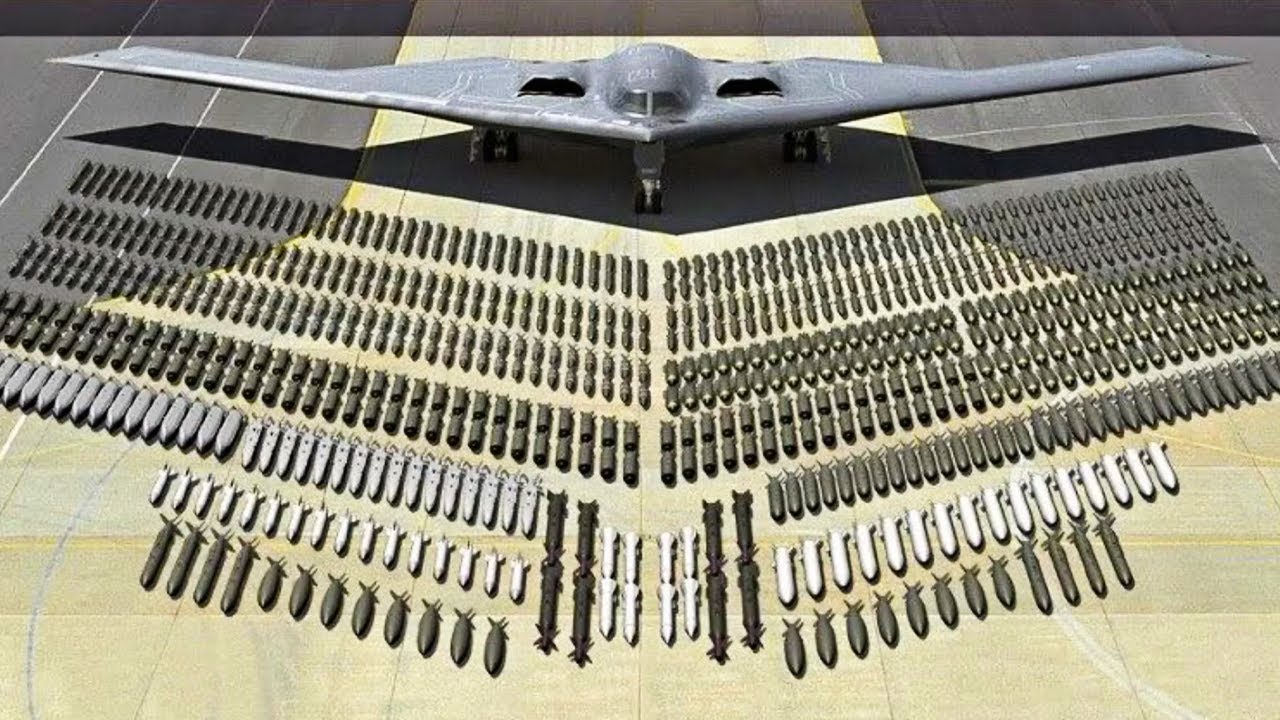
You’d think a billion-dollar warplane shaped like a futuristic boomerang would tear through the sky at Mach 3. Honestly, most people assume the speed of B2 stealth bomber is its main flex. It looks fast. It looks like it belongs in a sci-fi flick chasing down hypersonic missiles. But here’s the reality: your average Delta flight across the Atlantic isn't much slower than this legendary bird.
The B-2 Spirit is subsonic.
Basically, it doesn't break the sound barrier. While the sleek B-1 Lancer can kick in the afterburners to hit supersonic speeds, the B-2 stays quiet and "slow" by design. It tops out at roughly 628 miles per hour (about 1,010 kilometers per hour). If you're looking for Mach numbers, we're talking around Mach 0.85 to Mach 0.95 depending on the altitude and atmospheric conditions.
The Stealth vs. Speed Trade-off
Why didn't Northrop Grumman just make it go faster?
Physics is a bit of a buzzkill. When a plane goes supersonic, it creates a massive sonic boom and generates an incredible amount of heat due to air friction. For a stealth bomber, heat is a giant "here I am" sign for infrared sensors. The B-2’s four General Electric F118-GE-100 engines are buried deep inside the wing to hide their heat signature. Adding afterburners for extra speed would have made the plane glow like a torch on heat-seeking cameras.
It’s all about the "low observable" profile.
Engineers traded raw velocity for the ability to become a ghost. Every curve and edge on the B-2 is designed to bounce radar waves away from the source. If you add the jagged edges required for supersonic flight, you compromise that smooth, radar-evading shape. The Air Force basically decided that it's better to be a ninja than a sprinter.
High Subsonic Performance in the Real World
Don't let the "subsonic" label fool you into thinking it's a slouch. High subsonic means it cruises right on the edge of the sound barrier.
In a combat scenario, the B-2 doesn't need to outrun a missile. It needs to make sure the missile never sees it in the first place. By flying at altitudes of 50,000 feet, it stays far above most commercial traffic and a good chunk of standard air defenses.
A Few Surprising Stats
- Maximum Speed: ~628 mph.
- Cruise Speed: Roughly 560 mph.
- Range: 6,000 nautical miles without a gas station in the sky.
- Service Ceiling: 50,000 feet.
Think about the 44-hour missions these pilots pull. They fly from Whiteman Air Force Base in Missouri, all the way to the Middle East or the Pacific, and back. When you're in the air for two days straight, an extra 200 mph doesn't matter as much as fuel efficiency and staying hidden. The plane is literally a flying wing, which is the most aerodynamically efficient shape humans have ever stuck in the sky.
What People Get Wrong About Stealth Speed
There is a common myth that the B-2 is slow because it's old. That’s just not true. Even the brand-new B-21 Raider, which is currently undergoing flight tests to eventually replace the B-2, is widely expected to be subsonic.
The strategy hasn't changed.
If you're supersonic, you're loud. If you're subsonic and covered in radar-absorbent material (RAM), you can loiter. The B-2 is a master of loitering. It can hang out near a target area, wait for the perfect window, and drop a Massive Ordnance Penetrator (MOP) with terrifying precision. You can't do that if you're screaming past at Mach 2 and burning through your fuel in twenty minutes.
Practical Insights for Aviation Fans
If you're tracking the evolution of the speed of B2 stealth bomber, keep an eye on how the Air Force handles the fleet over the next few years. As of 2026, the B-2 is still getting major tech refreshes. We're talking 1,000x faster flight processors and new fiber-optic data buses.
They aren't making the plane faster, but they are making its brain faster.
For the average person, the takeaway is simple: in the world of strategic bombing, invisibility is the ultimate speed. If the enemy's radar screen is blank, it doesn't matter if you're moving at 600 mph or 1,600 mph. You've already won.
To see this tech in action, watch for local airshow schedules or flyovers during major stadium events. While you won't see it hit Mach 1, seeing that massive black silhouette bank silently over a crowd is enough to realize that speed is just one part of the equation.
Keep an eye on the B-21 Raider's progress if you want to see the next generation of this "slow but deadly" philosophy. The B-2 proved the concept, and for now, it remains the only aircraft on Earth that combines that specific level of range, payload, and ghostly silence.