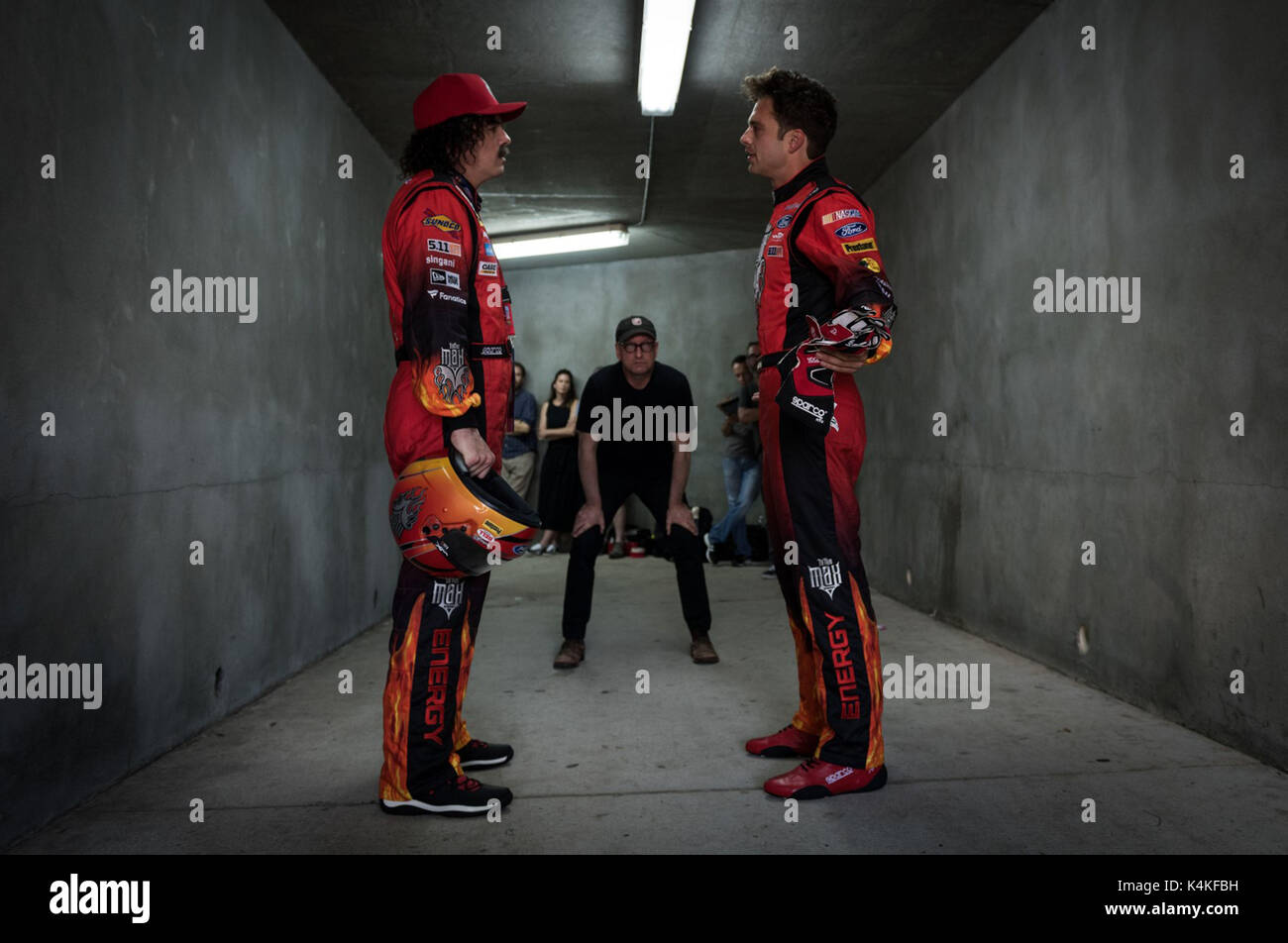
You know that feeling when you're watching a movie and someone shows up who just doesn't belong? Like they wandered in from a completely different set, maybe from a cartoon or a bad 90s sketch show?
That's exactly what happened in 2017. Steven Soderbergh, the guy who gave us Ocean’s Eleven, came out of "retirement" to give us Logan Lucky. It’s a brilliant, blue-collar heist movie. It’s gritty, it’s funny, and it’s surprisingly heartfelt.
Then there’s Seth MacFarlane.
He shows up with this curly wig, a handle-bar mustache that looks like it was glued on in a dark room, and an accent that can only be described as "British person as imagined by someone who has never been to England." Honestly, it’s jarring. People hated it. Critics went wild. Some called it the worst performance of the year.
But here’s the thing: Seth MacFarlane in Logan Lucky might actually be a stroke of genius, even if it makes your skin crawl.
The Weirdness of Max Chilblain
MacFarlane plays a guy named Max Chilblain. He’s an energy drink tycoon—the kind of "entrepreneur" who spends more time tweeting his follower count than actually doing work. He sponsors a NASCAR driver named Dayton White (played by Sebastian Stan), and he is, by design, the most punchable human being on the planet.
The first time we see him, he’s at a bar. He starts mocking Clyde Logan (Adam Driver), a veteran who lost his arm in the Iraq War. It’s not just mean; it’s that specific kind of arrogant, wealthy condescension that makes you want to throw a chair.
And that’s exactly what the Logan brothers do. Jimmy (Channing Tatum) starts a fight while Clyde literally firebombs Max’s fancy van.
Why the performance feels so "off"
If you’ve watched the movie, you know MacFarlane’s accent is all over the place. One second he sounds like a Cockney chimney sweep, the next he’s doing a bad Australian impression, and sometimes he just sounds like Stewie Griffin on a bender.
Usually, in a movie this grounded, that would be a disaster.
But Soderbergh isn’t a sloppy director. He’s meticulous. He reportedly told MacFarlane: "I don't care what you do with this guy, just know that he has to create instantaneous hatred by anybody who sees him."
Mission accomplished.
By making Max Chilblain feel like a cartoon character dropped into a world of real people with real problems, Soderbergh highlights the massive gap between the "elites" and the people in West Virginia just trying to survive. Max isn't just a villain; he's an alien. He doesn't speak the same language as the Logans, and his cartoonishness makes him feel even more offensive to the grounded reality of the film.
A Casting Gamble That Almost Failed
Let’s be real: casting the creator of Family Guy in a prestige heist movie was a massive risk. Most audiences can’t look at Seth MacFarlane without seeing Peter Griffin. When he puts on a wig and a fake accent, it feels like a "cutaway gag" that went on for two hours.
Reddit was particularly brutal. Fans of the movie still argue about whether he "ruined" the flow. One user famously said he looked like a "child in a Judas Priest Halloween costume."
It’s a valid criticism. In a cast where Daniel Craig is doing some of the best work of his career as "Joe Bang"—a bleach-blonde demolition expert who explains chemistry with a piece of chalk—MacFarlane’s performance feels thin. Craig is playing a character; MacFarlane feels like he's doing a bit.
The Contrast Factor
Think about the other actors in this movie:
- Channing Tatum: Quiet, limping, deeply soulful.
- Adam Driver: Stone-faced, methodical, tragic.
- Riley Keough: Sharp, cool, totally believable as a local mechanic.
Then you have Seth. He’s loud. He’s bright. He’s annoying.
If Max Chilblain had been played by a "serious" actor, he might have been a more effective antagonist, but he wouldn't have been as disruptive. Soderbergh wanted a disruptor. He wanted someone who didn't fit the color palette of the film. He wanted a guy who represented the shallow, brand-obsessed world that the Logans were trying to rob.
What Most People Get Wrong About the Role
People think MacFarlane was trying to be "good" and failed. I don't buy that. Seth MacFarlane is a professional voice actor; he knows what a British accent sounds like. He chose that accent.
He was leaning into the "ugly American" idea of a wealthy European. It’s a meta-commentary on fame. Max Chilblain is a man who has built a brand out of being a jerk. If he feels "fake" to the audience, it’s because the character himself is fake. He’s a walking billboard for a drink called "To the Max."
Dayton White, the driver he sponsors, eventually tells him off. He tells him that nobody is rooting for the brand; they're rooting for the person. That’s the core of the whole movie. The Logans are people. Max is just a brand.
How to Appreciate the Performance Now
If you haven't seen Logan Lucky in a while, it's worth a rewatch just to focus on how MacFarlane functions as a catalyst. Without him being a total jerk in that bar, the heist might never have happened. He is the spark that lights the fuse.
Is it a great acting performance? Honestly, probably not.
Is it a great piece of directing? Yeah, it kind of is. Using a celebrity’s existing public persona to create "instantaneous hatred" is a bold move. It’s the cinematic equivalent of a middle finger.
Next Steps for the Logan Lucky Fan:
- Watch the "Game of Thrones" scene again: It has nothing to do with MacFarlane, but it’s the funniest scene in the movie and features Dwight Yoakam as the most stressed-out warden in history.
- Check out Daniel Craig’s "Joe Bang" accent: If you found MacFarlane’s accent distracting, watch how Craig (a literal Brit) nails a Southern inmate. The contrast is wild.
- Look for the Jules Asner connection: Rumor has it the "Rebecca Blunt" credited with writing the script doesn't actually exist and is a pseudonym for Soderbergh’s wife, who is from West Virginia. It explains why the dialogue feels so authentic.