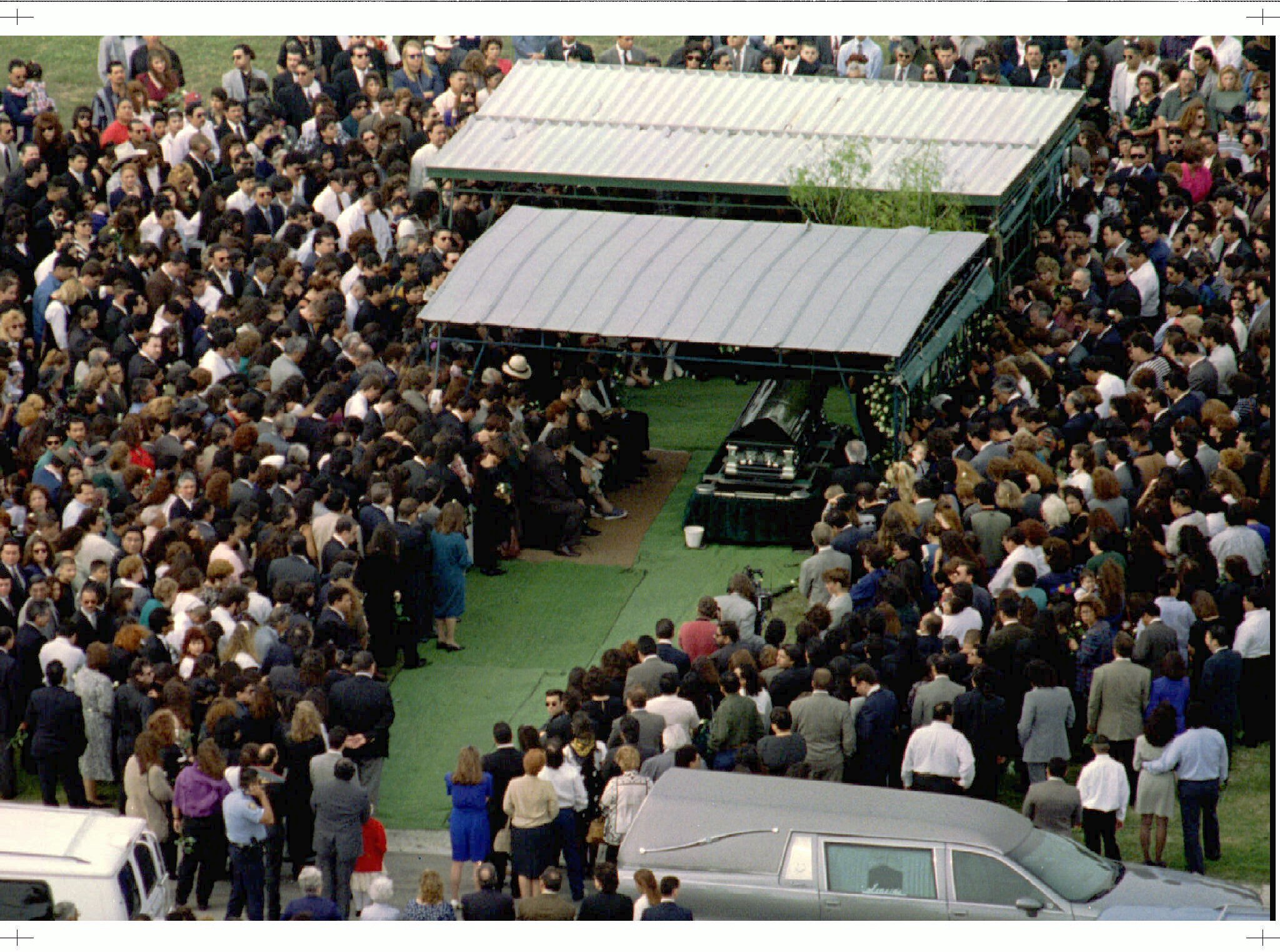
The morning of April 2, 1995, in Corpus Christi wasn’t just humid; it was heavy. Thousands of people—some who had driven all night from Mexico and others who lived just down the street—lined up outside the Bayfront Plaza Convention Center. They weren't there for a concert. They were there to say goodbye to the Queen of Tejano.
One image from that day remains burned into the collective memory of the Latino community: Selena Quintanilla in coffin. It was an open-casket viewing, a choice that still sparks debate and deep emotion decades later. Honestly, it's one of those moments that changed how we handle celebrity grief forever.
The Decision Most People Get Wrong
You've probably heard the rumors. People say the family wanted a spectacle or that it was just tradition. The truth is actually much more gut-wrenching. Abraham Quintanilla, Selena’s father, didn't initially plan on an open casket. He was forced into it by a cruel wave of denial.
Almost immediately after the news broke that Selena had been shot at the Days Inn, the conspiracy theories started. Remember, this was 1995. Information didn't move as fast, but rumors moved faster. People were saying it was a PR stunt. They said she was hiding in Mexico to escape the pressure of her English crossover album. They said the whole thing was a hoax to sell more records.
Proving the Impossible
Abraham saw the crowds and heard the whispers. He realized that if people didn't see her, they would never believe she was gone. "I decided to open the casket because so many people were saying it wasn't true," he later explained. It was a move born of desperation to give fans closure, but it's a decision he has openly regretted in the years since.
When the doors opened, the reality hit. There she was. Selena was dressed in the iconic purple sparked jumpsuit—the one from her final Houston Astrodome performance. Or at least, that's what many remember. Actually, she was buried in a beautiful, long-sleeved purple dress with a matching jacket, her hair styled in her signature look.
What Really Happened During the Viewing
The scale of the event was staggering. We’re talking about 60,000 people. The line stretched for miles along the seawall.
It wasn't just a funeral; it was a cultural earthquake. Inside the convention center, the atmosphere was a mix of silent weeping and the faint sound of her music playing in the distance. People were given white roses—her favorite—to place near the casket.
- The Crowd Size: Official estimates put the number at 60,000, but some locals swear it was closer to 100,000.
- The Security: It was tight, but couldn't stop everything.
- The Vibe: Exhaustion. People had been standing for 10+ hours just for a five-second glance.
But then, things got dark.
The Betrayal of Privacy
Despite the family’s pleas for no photography, some people couldn't help themselves. This is where the story of Selena Quintanilla in coffin turns from a tribute into a legal battle. A funeral home employee—later identified as Arnold Ortiz—took unauthorized photos of Selena while she was being prepared.
These weren't just "remembrance" shots. They were intrusive. They were allegedly being shopped around to tabloids and shown in local bars. The Quintanilla family eventually sued Seaside Memorial Park. They reached a settlement in 1997, but the damage was done. The idea that someone could violate her peace like that still makes fans' blood boil today.
The Mystery of the Missing Photos
If you go looking for those photos now, you’ll find a lot of low-quality grain and fake edits. The family fought tooth and nail to keep the most graphic images out of the public eye.
There was also a controversy involving The Globe, a tabloid that published color autopsy photos later that year. It felt like the world wouldn't let her rest. Abraham and Chris Perez (Selena's husband) reportedly took whatever photos they could find and burned them. They wanted the world to remember the girl with the laugh, not the victim in the morgue.
Why We Are Still Talking About This in 2026
It’s been over 30 years. Why does the search for Selena Quintanilla in coffin still trend?
Part of it is morbid curiosity, sure. Humans are wired that way. But for the Mexican-American community, it's deeper. Selena was "ours." She was the girl who spoke broken Spanish but sang like an angel. Seeing her in that casket was the moment a generation lost its princess.
The image of her resting became a symbol of a dream cut short. She was 23. She was about to become the biggest star in the world. When you look at those funeral videos, you aren't just seeing a body; you're seeing the end of an era for Tejano music.
The Burial at Seaside
After the public viewing, things moved to a private ceremony on April 3, 1995. She was buried at Seaside Memorial Park in Corpus Christi. If you visit today, it’s a quiet spot, often covered in fresh flowers and letters from fans who weren't even born when she died.
The grave has a large black plaque with her signature. It's much more peaceful than the chaotic scene at the convention center.
Essential Facts to Remember
If you're looking for the hard details, here’s the breakdown of what is actually confirmed:
- Date of Public Viewing: April 2, 1995.
- Location: Bayfront Plaza Convention Center, Corpus Christi, TX.
- The Outfit: A purple velvet dress, not the glittery jumpsuit (though they look similar in low-res photos).
- The Casket: It was a silver-toned, high-polished casket.
- The Aftermath: The family settled a lawsuit against the funeral home for privacy violations in July 1997.
Moving Toward Real Closure
Looking back, the open casket was a double-edged sword. It stopped the "Selena is alive" rumors, but it also opened the door for exploitation.
If you want to honor her memory, focus on the "Mirador de la Flor" monument in Corpus Christi instead of the grainy funeral footage. It's a life-sized bronze statue that captures her energy perfectly.
Next Steps for Fans:
- Visit the Selena Museum: Located at Q-Productions in Corpus Christi, you can see her actual stage outfits and her red Porsche.
- Support the Scholarship Fund: The Selena Foundation continues to help Latino students, which was her actual dream.
- Listen to the English Tracks: "Dreaming of You" and "I Could Fall in Love" were the songs she was working on when her life was taken.
Ultimately, the image of Selena in her coffin is a footnote in a much bigger, much brighter story. She didn't want to be remembered for how she died, but for how she lived—with a lot of "Bidi Bidi Bom Bom" and a heart that belonged to her fans.
Insights for the Modern Fan
If you're visiting Corpus Christi to pay your respects, keep in mind that Seaside Memorial Park is still a functioning cemetery. Be respectful of other families. Most fans find that visiting the "Paseo de la Flor" walkway provides a more uplifting connection to her legacy than seeking out funeral details. Honor her by keeping the music playing.