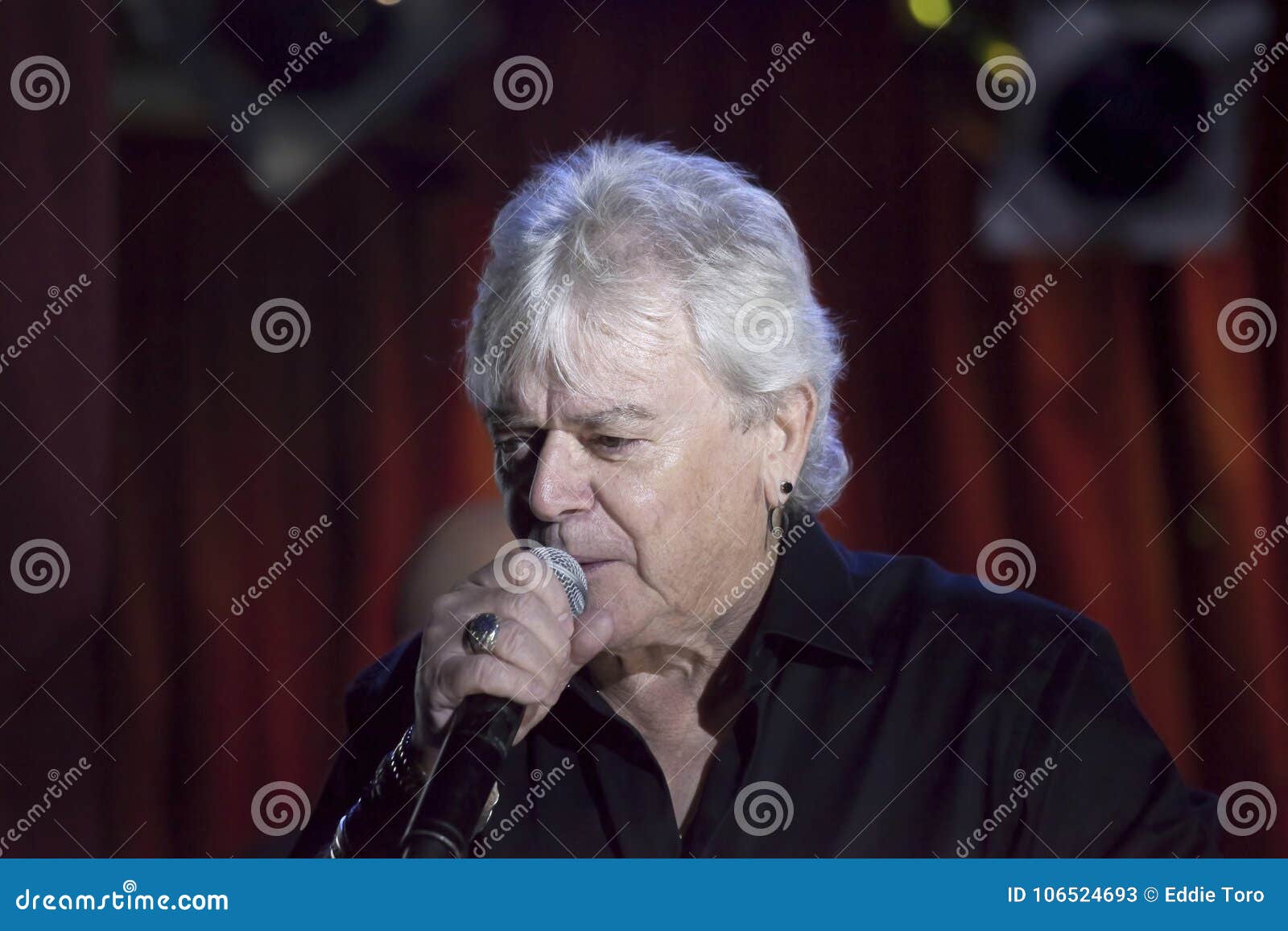
You know that feeling when a song starts and you immediately recognize the voice? It’s not just the melody. It’s that specific, soaring tenor that sounds like it’s piercing through the clouds. We’re talking about Russell Hitchcock, the iconic Air Supply lead singer who has spent the last five decades defining what a power ballad actually sounds like. Honestly, it’s wild to think that a chance meeting at a rehearsal for Jesus Christ Superstar in Sydney back in 1975 changed the trajectory of soft rock forever. If Russell hadn't met Graham Russell, the world might never have heard "All Out of Love."
Think about that for a second.
Most bands from the late 70s have long since swapped their lead singers for younger lookalikes or just stopped touring altogether. Not these guys. Hitchcock is still out there, hitting those glass-shattering notes at an age when most people are strictly sticking to the front porch. People often wonder how he does it. It’s not magic, but it is a masterclass in vocal preservation and a bit of genetic luck.
The Voice That Launched a Thousand Mixtapes
When you look at the charts between 1980 and 1983, Air Supply was everywhere. They tied The Beatles' record for five consecutive top-five hits. That’s a massive stat. But the engine behind those hits was always Russell’s voice. While Graham wrote the songs and played guitar, Russell was the one delivering the emotional payload.
His voice is technically a lyric tenor. It’s bright. It’s clear. It has this incredible "ping" that allows it to cut through a full orchestral arrangement without sounding like he's straining. Most singers lose their top end by their 40s. Hitchcock, somehow, kept his well into his 70s. It’s actually kinda legendary in the industry. Vocal coaches often point to him as an example of "placement." He doesn't sing from his throat; he uses his entire resonating cavity.
But it wasn't always easy. In the mid-80s, the band faced a bit of a decline as hair metal and synth-pop started taking over the airwaves. The industry shifted. Suddenly, "Lost in Love" felt like a relic from a different era. But they didn't quit. They just pivoted to where they were loved—specifically Asia and South America, where they are basically gods.
Why His Partnership with Graham Russell Works
Usually, bands break up because of ego. The lead singer wants the spotlight, or the songwriter wants more credit. With Air Supply, it’s different. They have one of the most stable partnerships in music history.
- Graham writes for Russell: He knows exactly where Russell’s "break" is in his voice.
- The Mutual Respect: There is zero competition.
- The Work Ethic: They play over 130 shows a year. Still.
It’s basically a bromance that has outlasted most marriages. They’ve even said in interviews that they’ve never had a serious argument. That sounds fake, right? In the world of rock and roll, it’s practically a miracle. But if you watch them interact on stage, you can see it’s real. There’s a shorthand they use, a way they lean into the harmonies that only comes from 50 years of shared stages.
What People Get Wrong About the Air Supply Lead Singer
There’s this misconception that the Air Supply lead singer is just a "soft" guy because the music is sentimental. If you’ve ever seen him live, you know that’s nonsense. The dude is a powerhouse. He’s a road warrior.
Living on a tour bus for half a century takes a toll. Hitchcock has been open about his struggles with the lifestyle, but he’s also incredibly disciplined. He doesn't drink or smoke, which is the secret sauce for that vocal longevity. You can’t smoke a pack a day and expect to hit the high C in "Making Love Out of Nothing At All." It just doesn't happen.
Jim Steinman, the legendary producer who wrote that song, specifically wanted Air Supply because he knew Russell was one of the few humans who could actually sing the bridge. It’s a vocal marathon. It’s loud, it’s high, and it requires immense breath control.
The Technical Side of Being a Tenor
Let’s get nerdy for a minute. Russell Hitchcock's range is roughly three octaves. However, it's not just the range—it's the tessitura. That's a fancy music term for where a singer feels most comfortable. Most men sit in a baritone range. Russell lives in the stratosphere.
When he sings "The One That You Love," he’s hovering around G4 and A4 for most of the chorus. For a normal guy, that’s a shout. For Russell, it’s a whisper. This ease is what makes his singing feel so effortless to the listener, even though it’s physically taxing. He uses a technique called "mixed voice," blending the power of his chest voice with the resonance of his head voice.
Preservation in the Modern Era
In 2026, we see a lot of artists using pitch correction or backing tracks. It’s become the industry standard. But the Air Supply lead singer has remained a bit of a purist. Sure, the keys of some songs might have been dropped a half-step over the years to accommodate the natural aging of vocal cords—that's just biology—but the soul is still there.
- Hydration: He drinks insane amounts of water.
- Silence: He often goes on vocal rest between shows.
- Warm-ups: His routine is longer now than it was in 1980.
It’s a job. He treats his vocal cords like an athlete treats their hamstrings.
The Impact on Pop Culture
You’ve heard them in Deadpool. You’ve heard them in The Lego Batman Movie. Air Supply has moved from being "uncool" in the 90s to being "ironically cool" in the 2000s, and now they are just straight-up "legendary."
There is a sincerity in Russell's delivery that defies the cynicism of the modern age. When he sings about being "all out of love," he isn't winking at the camera. He means it. That’s why these songs work at weddings, funerals, and graduations. They are the background noise of the human experience.
Honestly, it’s sort of refreshing. In a world of over-produced TikTok hits that last 15 seconds, a six-minute power ballad with a dramatic key change feels like a meal.
Navigating the Legacy
What happens next? Hitchcock has mentioned that as long as people show up, they’ll keep playing. They have a massive following in places like the Philippines and Brazil, where the fans are famously loud.
He also released solo work over the years, including the album Tennessee: The Nashville Sessions. It showed a different side of him—a bit more grounded, a bit more country. But let’s be real: people want the hits. They want to hear that voice soar. And he knows it. He’s never been one of those artists who resents his biggest songs. He embraces them.
Real-World Advice for Vocalists
If you’re a singer trying to emulate the Air Supply lead singer, there are a few things to keep in mind. First, don't push. Hitchcock’s power comes from relaxation, not tension. Second, focus on your vowels. He has a very specific way of rounding his vowels to maintain that "ping" in his tone.
- Listen to his live recordings from the 80s versus now.
- Notice how he handles the ends of phrases.
- Watch his posture; he stays very upright to keep his airway open.
It’s all about the breath. If you run out of air, you lose the tone.
The Staying Power of a Soft Rock Legend
Ultimately, Russell Hitchcock represents a specific era of music where the voice was the primary instrument. There were no flashy lights or complex dance routines. It was just two guys, some great songs, and a voice that could reach the back of the arena.
He’s managed to navigate the highs of superstardom and the lows of being "yesterday’s news" with a level of grace that’s rare in the music business. He’s still the same guy from Melbourne who just wanted to sing.
If you get a chance to see them live, do it. Even if you aren't a huge fan of soft rock, the technical proficiency of Hitchcock’s singing is worth the ticket price alone. It’s a reminder of what a human voice is capable of when it’s cared for and respected.
Practical Steps for Fans and Aspiring Singers
To truly appreciate the craft of Russell Hitchcock, start by listening to the Live in Hawaii recordings from the early 80s. Compare those to their more recent PBS specials. You’ll hear the subtle shifts in his technique that have allowed him to survive fifty years on the road. For singers, study his "attack" on high notes—he never scoops into them; he hits them dead center. This precision is why he’s still the Air Supply lead singer everyone recognizes.
Follow their official tour schedule to see them in smaller, intimate venues where the vocal clarity is best. Use high-quality headphones to listen to the isolated vocal tracks of "Sweet Dreams" available online; it's a revelation in phrasing. Finally, if you're a performer, adopt his "rest days" philosophy—longevity in any creative field is about what you do when you aren't on stage.