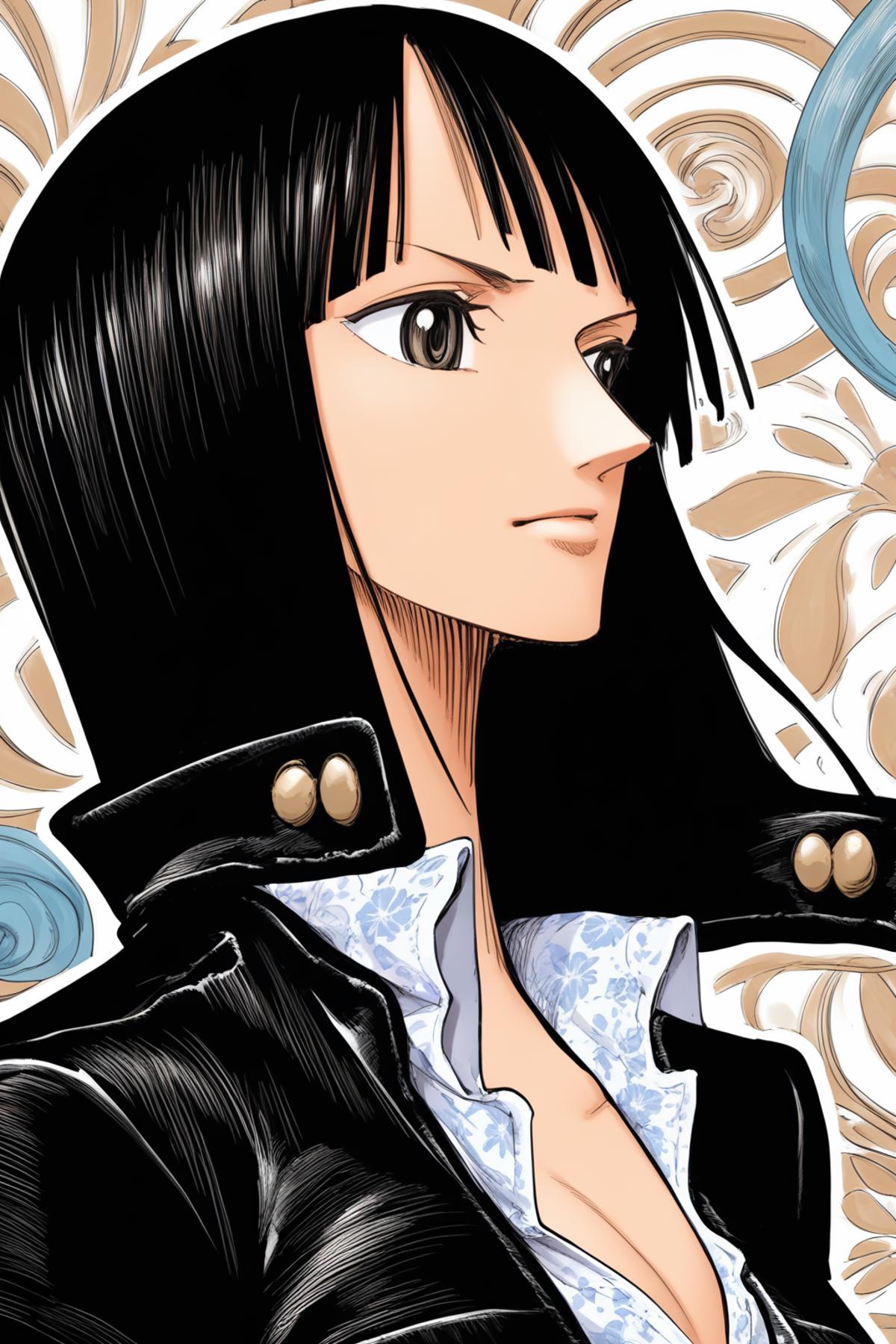
What Really Happened with the Devil Child?
Let’s be real. When the Straw Hats reunited at Sabaody after those two brutal years apart, most fans weren’t looking at Luffy’s new scar or Zoro’s missing eye first. They were looking at Nico Robin. Or rather, they were looking for her. The woman who showed up didn't exactly look like the one who left.
The transition for robin before and after timeskip is probably the most debated glow-up (or glow-down, depending on who you ask) in One Piece history. It wasn't just a change of clothes. Her skin tone shifted, her bangs vanished, and honestly, her entire vibe felt... different. Softer. Some say she lost her "edge." Others argue she finally found peace.
If you've spent any time on Reddit or Arlong Park forums, you know the "whitewashing" debate is a landmine. But before we get into the pixel-deep drama, we have to look at the facts of her evolution. Because Robin's change isn't just about aesthetics; it’s a direct reflection of her journey from a suicidal fugitive to the "Light of the Revolution."
The Skin Tone Controversy: Mystery Solved
If you only watch the anime, you probably had a mini-crisis when Robin reappeared. Pre-timeskip Robin had that iconic, sun-kissed tan. Post-timeskip? She's pale. Like, "spent two years in a basement" pale.
Here’s the thing most people get wrong: Nico Robin was never tan in the manga. Eiichiro Oda always drew her with fair skin on the volume covers. Toei Animation just... made a choice. They saw her in Alabasta—a desert—and figured, "Yeah, she'd be tan." It wasn't until the timeskip that the animators decided to align with Oda’s original vision. There's a common fan theory that she "lost her tan" because she spent two years in the snowy wasteland of Tequila Wolf and later the underground base of Baltigo with the Revolutionaries.
Kinda makes sense, right? If you move from a desert to a frozen bridge in East Blue, you aren't exactly maintaining a bronze glow. But officially? It was just a course correction for the anime’s art style.
The "Mother" Era vs. The "Miss All Sunday" Vibe
Honestly, the personality shift is what hits harder for long-time fans.
- Before the Timeskip: Robin was the "snappy older sister" or the "mysterious aunt" who might actually kill you. She was macabre, secretive, and kept everyone at arm's length. Even after Enies Lobby, there was a lingering shadow.
- After the Timeskip: She's basically the crew’s mom. She’s constantly smiling. She finds things like "Ryunosuke" (that poorly drawn dragon) adorable while the rest of the crew is just confused.
Some fans hate this. They think she's been "waifu-ified" or turned into eye candy. I get it. The loss of her signature cowboy hat and those sharp bangs—which gave her a unique, Egyptian-inspired look—was a blow to her character design. She went from looking like a high-fashion archaeologist to looking a bit like a Boa Hancock clone.
But look at her history. This woman spent 20 years being betrayed by everyone she met. She lived in the dark. The fact that she’s now "softer" and more expressive isn't bad writing; it's the result of her finally feeling safe. She doesn't need to be a cold-blooded assassin anymore because she has a captain who literally declared war on the world for her. She's happy. Let her be happy!
Power Creep: From Snap-Crackle-Pop to Demonio Fleur
While everyone was talking about her forehead, Robin was low-key becoming a monster.
Before the timeskip, she was a glass cannon. She could snap a thousand necks at once, but if someone got a hit in, she was done. Her limit was around 100 limbs. Fast forward two years, and she's sprouting entire giant torsos (Gigante Fleur) and even creating full-body clones.
The real game-changer? Fish-Man Karate. During her time with the Revolutionary Army, she didn't just hang out with Dragon. She trained with Koala and Sabo. She learned the fundamentals of Fish-Man Karate, which allows her to use "Palm Strikes" that send shockwaves through objects. This solved her biggest weakness: her inability to damage "hard" targets like pacifistas or armored enemies.
And don't even get me started on Demonio Fleur. In her fight against Black Maria, Robin literally embraced the "Devil Child" moniker the world gave her. She turned into a massive, black-winged demon. It was the most "metal" moment for her character in decades and a huge middle finger to everyone who said she’d become too passive post-timeskip.
Growth in Numbers
| Feature | Pre-Timeskip | Post-Timeskip |
|---|---|---|
| Limb Limit | 100 | Thousands (and full clones) |
| Fighting Style | Submission / Snapping | Submission / Fish-Man Karate / Giant Forms |
| Bounty | 80,000,000 | 930,000,000 |
| Role | Mysterious fugitive | The "Light" of the Revolution |
Why the Change Still Bothers People
Look, we have to acknowledge the elephant in the room. The "same-face" syndrome in One Piece got significantly worse after the skip. Nami and Robin started looking more and more alike. The exaggerated proportions—even for a manga—became a bit much for some viewers.
Pre-timeskip Robin felt like an outsider who chose to be there. Post-timeskip Robin feels like an integrated piece of the machine. While that's great for her character arc, it did sacrifice some of the tension that made her early scenes so electric. Remember when she just showed up on the Going Merry and everyone was terrified? We don't get that "dangerous" Robin as much anymore.
The Actionable Insight: How to Appreciate Both
If you're struggling with the "new" Robin, look at her actions rather than her outfits.
She is still the smartest person in the room. She is still the only person who can actually lead Luffy to the One Piece. Without her, the crew is literally just a bunch of strong people lost at sea.
If you want to see her best "new" moments, go back and watch the Wano Country Arc. That’s where the "Old Robin" (the strategist/assassin) and the "New Robin" (the protector) finally merged into one.
Next Steps for Fans:
- Compare the Manga Color Spreads from the Alabasta arc to the Fish-Man Island arc; you'll see the skin tone was always meant to be consistent.
- Re-watch the Black Maria fight (Episode 1044/1045) to see her power evolution in full glory.
- Keep an eye on her interactions with Dragon whenever the Revolutionaries reappear—there's still a lot we don't know about those two years.