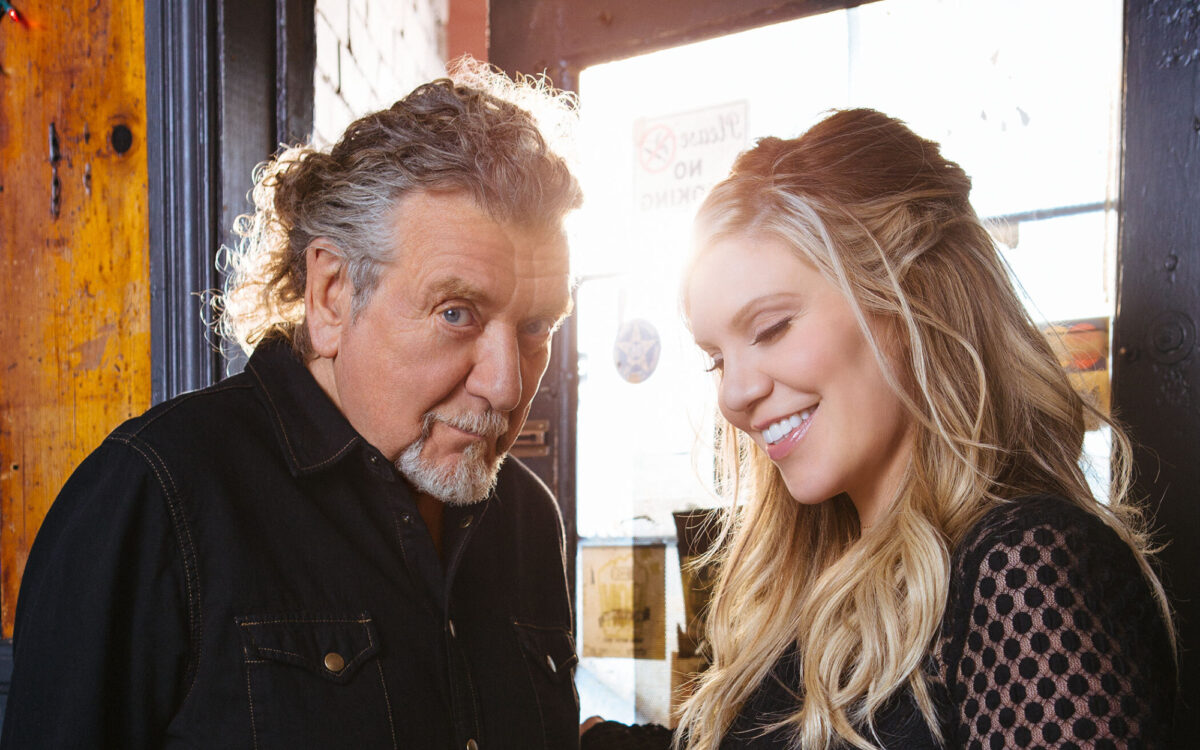
You’d think the guy who sang "Whole Lotta Love" and the queen of pristine bluegrass would have nothing to say to each other. On paper, it’s a disaster. Robert Plant is the "Golden God" of 1970s stadium rock—all hair, swagger, and bluesy howls. Alison Krauss is the fiddle-playing prodigy from Illinois with 27 Grammys and a voice that sounds like it was filtered through moonlight.
But then they sing together.
The first time I heard Robert Plant and Alison Krauss on Raising Sand, it didn't sound like a collaboration. It sounded like a secret. There’s this strange, ghostly hush to their music that defies everything we know about their solo careers. It turns out, that’s exactly what they were going for.
The Harmony Lesson That Changed Everything
Their origin story isn't some corporate boardroom deal. They met in 2004 at a tribute concert for the blues legend Lead Belly in Cleveland. Plant was already a fan; he’d famously pulled his car over in the English countryside years earlier just to write down her name after hearing her on the radio. He was intrigued, but the initial rehearsals were a train wreck.
They tried to sing "Black Girl," and it just didn't click. Plant, being a rock singer, was doing his usual thing—sliding around the notes, adding "twirly stuff," and changing the melody whenever he felt the spirit.
Krauss wasn't having it.
Honestly, she basically tutored him. She told him to stop. She looked at this rock icon and told him she couldn't harmonize if he didn't sing the same way twice. Plant later admitted that being lectured by Krauss on how to hold a note was a major breakthrough. He had to learn to sing in "straight lines." He had to back off the power and find a delicate, restricted place in his throat.
That 14-Year Gap Was No Accident
When Raising Sand dropped in 2007, it wasn't just a hit; it was a juggernaut. It swept the 2009 Grammys, winning Album of the Year and five other trophies. Most artists would have rushed a sequel out by 2010 to cash in.
They tried. It didn't work.
They actually went into the studio shortly after the first tour, but the spark wasn't there. Plant went back to his band, the Sensational Space Shifters, and Krauss returned to Union Station. They stayed friends, though. They’d text each other obscure R&B tracks and old folk songs.
It took a song by the band Calexico called "Quattro (World Drifts In)" to bring them back. Krauss heard it while driving through Nashville and immediately knew it was the "mood setter" they needed. That one song ended the 14-year hiatus and led to their 2021 follow-up, Raise the Roof.
The Gear and the "Quiet" Stage
If you’ve ever seen them live, you’ll notice something weird. The stage is incredibly quiet.
Their monitor engineer, Chris “Coz” Costello, has talked about how tricky this is. Plant likes "guitars in his face" and loud vocals. Krauss, on the other hand, wants to hear a pin drop. She doesn't even use a Direct Injection (DI) box for her fiddle; she plays it directly into her vocal mic because she wants that specific, organic tone.
They use T Bone Burnett as a sort of musical referee. He’s the one who brings the "distressed" sounds—the swampy tremolo guitars and those thudding, 1940s-style drums played by Jay Bellerose. It’s a mix of high-end precision and intentional grit.
Why the 2024-2025 "Can't Let Go" Tour Matters
As of 2026, we’re looking back on a massive touring cycle that proved this wasn't just a studio fluke. Their "Can't Let Go" tour saw them reimagining Led Zeppelin classics like "The Battle of Evermore" and "When the Levee Breaks."
But they don't play them like rock songs. They turn them into Appalachian dirges.
It works because they both respect the "genesis" of the music. Krauss has mentioned that we're losing the first generation of bluegrass and folk artists, and this project is their way of keeping those roots alive. They aren't trying to be "pop." In fact, during a Time interview, Plant joked that he doesn't know anything about the pop canon.
What You Should Listen For
If you’re just getting into the Robert Plant and Alison Krauss catalog, don't look for the "hits." Look for the textures.
- "Killing the Blues": This is the gold standard for their harmony work. It’s almost impossible to tell where one voice ends and the other begins.
- "High and Lonesome": A rare original track from Raise the Roof that feels like a haunted house in song form.
- "Gone Gone Gone (Done Moved On)": The closest they get to a "rocker," showing off that Everly Brothers-style synchronicity.
Moving Forward with the Music
To really appreciate what they've done, you have to stop thinking of them as a "rock star" and a "country singer." They’ve created a third entity that only exists when they stand three feet apart at their microphones.
Start by listening to the original versions of the songs they cover—artists like Anne Briggs, Geeshie Wiley, and Bert Jansch. It’ll give you a much deeper appreciation for how they’ve deconstructed these tracks. Also, keep an eye on their official site; while they haven't confirmed a third album yet, Plant has hinted that he "can't wait another 14 years" because, well, he isn't getting any younger.
Dive into the Digging Deep podcast by Robert Plant if you want to hear him geek out over the specific folk influences that Krauss helped him refine. It’s the best way to understand the "straight line" singing style that defined this era of his career.