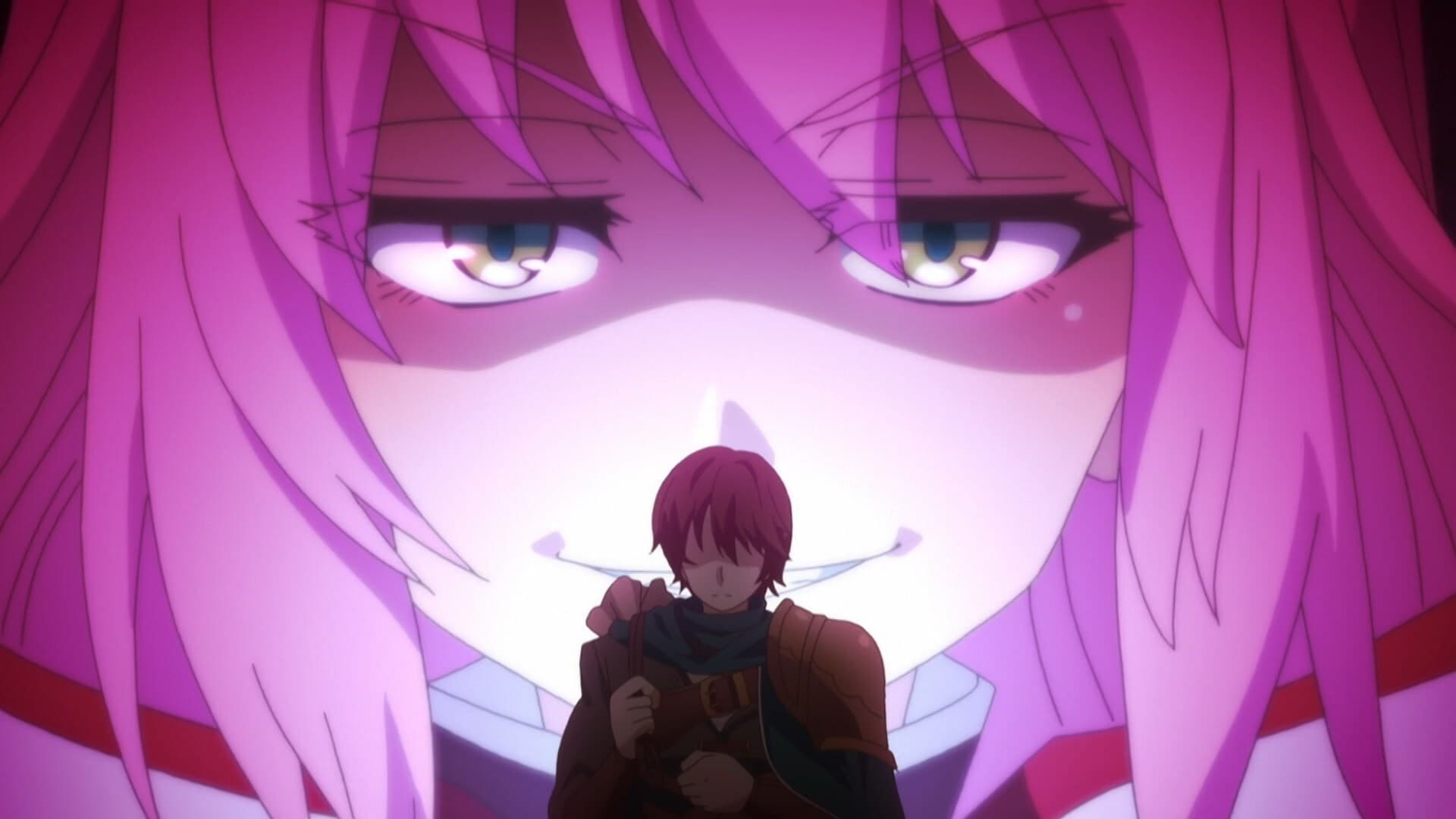
Honestly, it’s rare to find an anime that causes a total meltdown across the entire internet the second it premieres. We’re talking about a level of backlash that makes other "edgy" shows look like Saturday morning cartoons. When the Redo of Healer anime (known in Japan as Kaifuku Jashushi no Shinari) dropped in early 2021, it didn't just push the envelope. It shredded it. Produced by Studio TNK—the same folks who handled High School DxD BorN—this series became a lightning rod for debate about where the line between "dark fantasy" and "gratuitous" actually sits.
People were livid. Critics called for it to be banned. Yet, despite the protests, it stayed at the top of streaming charts in regions where it was actually allowed to air. Why? Because underneath the layer of extreme content, there is a very specific, very primal itch that the show scratches for a certain segment of the audience. It’s the ultimate "burn it all down" fantasy.
What Actually Happens in the Redo of Healer Anime?
If you’ve never seen it, the premise sounds like your standard isekai or fantasy setup, but it takes a sharp, jagged turn into a ditch almost immediately. Keyaru is our protagonist. He’s a "Healer Hero." In this world, being a healer is basically a curse because every time you heal someone, you experience all the physical and mental trauma they went through. It breaks him.
The "heroes" of the Kingdom of Jioral aren't noble. They are monsters. They drug Keyaru, abuse him, and treat him like a tool. Eventually, he realizes that the "Heal" magic he possesses is actually more powerful than anyone imagined—it can literally reshape the world and memories. He resets time, goes back to the beginning, and decides to get his revenge. This isn't a story about forgiveness. It’s a story about a guy who was broken by the world deciding to break the world back.
Keyaru becomes Keyarga. He adopts a cold, calculating persona. He tracks down the people who tortured him, specifically Princess Flare, and subjects them to the exact same horrors they inflicted on him. It’s brutal. It’s hard to watch. The show doesn't blink, and that’s why it’s so polarizing.
The Censorship Mess and Where It Aired
Most anime fans are used to a little bit of "light" censorship. A beam of light here, a conveniently placed steam cloud there. The Redo of Healer anime took that to a whole new level because there were actually three different versions of the show floating around.
First, you had the "Broadcast Version." This was what aired on most TV stations in Japan. It was heavily censored, often cutting entire scenes or using massive black bars. Then there was the "Redo" version, which was slightly less censored. Finally, the "Complete Recovery" version. That one was completely uncensored and was usually reserved for AT-X (a premium Japanese channel) and the Blu-ray releases.
Sentai Filmworks picked up the license for the West, streaming it on HIDIVE. Interestingly, Crunchyroll and Funimation stayed far away from it. This created a weird situation where the show was technically "underground" while being one of the most talked-about series of the season.
Why the Backlash Was Different This Time
We’ve had dark shows before. Goblin Slayer had a controversial first episode. Berserk is legendary for its grimdark tone. But those shows usually have a moral core or a sense of "the greater good." Redo of Healer doesn't care about any of that.
The main character is arguably a villain. He isn't trying to save the world; he's just trying to make his enemies suffer. This lack of a "heroic" moral compass is what really rattled people. It forces the viewer to confront a very uncomfortable question: if someone does something unspeakable to you, do you have the right to do it back? The show says "yes," and it does so with a grin.
The Author’s Perspective: Rui Tsukiyo
Rui Tsukiyo, the creator of the original light novels, has always been pretty vocal about the series. In interviews and on social media, Tsukiyo has mentioned that the story was born out of a desire to see a "revenge" story that didn't hold back. Most stories have the hero stop at the last second and say, "If I kill you, I’m no better than you."
Tsukiyo thought that was boring.
The light novels (published by Kadokawa Shoten) were already popular in the "naro" (web novel) scene before the anime even existed. The success of the Redo of Healer anime actually boosted the sales of the books significantly. It turns out there is a huge market for "unfiltered" revenge. Even if people claim to hate it publicly, the numbers suggest they are watching it privately.
Technical Merits vs. Narrative Choices
Let’s talk about the production for a second. If you strip away the controversy, is it a good show?
Visually, Studio TNK did a decent job. The character designs by Junji Goto (who worked on High School DxD) are polished. The animation isn't "Ufotable level" or anything, but it’s consistent. The voice acting is actually surprisingly good. Yuya Hozumi, who voices Keyaru, does an incredible job of switching between a pathetic, broken victim and a terrifying, smug psychopath.
The soundtrack, composed by Kenji Fujisawa, fits the dark fantasy vibe perfectly. It feels oppressive and tense.
The problem—or the draw, depending on who you ask—is the pacing. The show moves fast. It moves from one revenge target to the next with surgical precision. There isn't much "downtime." This makes it feel like a fever dream of violence and retribution.
The Problem of the "Hero" Archetype
Most people hate Keyaru. That's fine. You’re probably supposed to. He’s a victim who became a victimizer. But he also represents a rejection of the "perfect hero" trope that has dominated anime for decades.
Think about Kirito from Sword Art Online or any generic shonen protagonist. They are always pure. They always do the right thing. Keyaru is the antithesis of that. He’s messy, cruel, and deeply traumatized. For some viewers, seeing a character who is allowed to be "ugly" is more interesting than seeing another "saint" who saves the day.
Is There Ever Going to Be a Season 2?
This is the million-dollar question. Since the first season ended in 2021, fans have been scouring the internet for news. As of right now, there hasn't been an official announcement for a second season of the Redo of Healer anime.
However, we can look at the facts.
- The Blu-ray sales were surprisingly strong in Japan.
- The light novels are still ongoing and have plenty of material left to adapt.
- The show's popularity on streaming platforms (like HIDIVE) was massive.
Usually, when a show is this successful financially, a second season is inevitable. But the "cancel culture" around this specific title is so intense that production committees might be hesitant. There is also the fact that the later parts of the light novel get even weirder and darker. Adapting them might be even more difficult than the first season.
If it does happen, don't expect it to be any less controversial.
Actionable Insights for Navigating the Genre
If you're curious about this show or others like it, here is how you should approach the "Revenge Fantasy" sub-genre:
- Check the Version: If you decide to watch, realize that the "Broadcast Version" is basically a different show. It cuts so much that the plot barely makes sense. If you want the intended experience (for better or worse), you need the "Complete Recovery" version.
- Context Matters: Understand that this is a "dark fantasy." It is not meant to be a reflection of reality or a moral guide. It’s a "what if" scenario taken to its most extreme conclusion.
- Explore the Source Material: If you find the anime’s pacing too fast, the light novels provide a lot more internal monologue for Keyaru. It explains why he’s doing what he’s doing in much more detail, which makes his character slightly more three-dimensional.
- Look for Similar Titles: If the revenge aspect appealed to you but the sexual violence didn't, check out The Rising of the Shield Hero or Arifureta: From Commonplace to World's Strongest. They deal with similar themes of betrayal and "leveling up" for revenge but are much more "mainstream" and less graphic.
The Redo of Healer anime isn't for everyone. It probably isn't for most people. But it exists as a fascinating case study in how far the medium can go and how much controversy a single show can generate while still being a commercial hit. Whether you love it or think it should be erased from existence, you can't deny that it left a permanent mark on the industry.
To stay updated on any official announcements regarding a sequel, monitor the official Japanese Twitter account for the series or the Studio TNK website directly, as Western news outlets often lag behind on these specific types of niche, controversial releases.