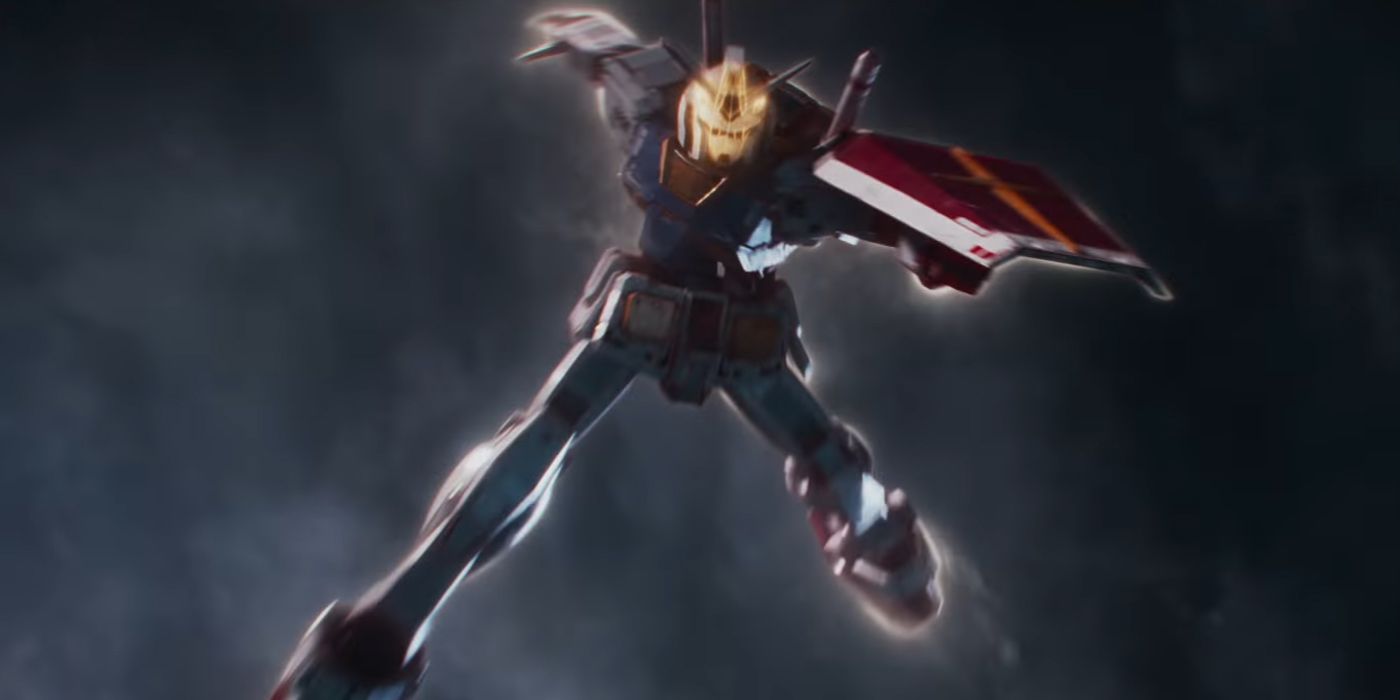
You remember the scene. The sky over Planet Doom turns dark with digital warriors. Then, out of nowhere, a sleek white-and-red silhouette drops from the atmosphere. It’s the RX-78-2, the "Grandpa" of all mobile suits. It doesn't just land; it makes an entrance that probably caused half the theaters in 2018 to erupt in cheering.
But here’s the thing: that Ready Player One Gundam moment almost didn't happen. If you’ve only seen the movie, you're missing the weird, legal-tangled backstory of why a Japanese robot from 1979 ended up fighting a Godzilla clone in a Hollywood blockbuster. Honestly, the real story is just as chaotic as the battle itself.
The Ultraman-Sized Hole in the Plot
In Ernest Cline’s original book, the Gundam isn't the star of that final showdown. That spot belonged to Ultraman.
Wade Watts (Parzival) was supposed to use a Beta Capsule to transform into the iconic silver-and-red giant. So why the swap? Basically, it came down to a massive, decades-long legal war over the international rights to Ultraman. At the time Steven Spielberg was filming, Tsuburaya Productions was locked in a bitter dispute with a Thai company called Chaiyo.
Spielberg is a powerful guy, but even he couldn't untangle a mess that had been rotting in courts since the '70s. Since they couldn't legally use Ultraman, the production team pivoted. They shifted the "giant hero" role to the Iron Giant and Daito’s RX-78-2 Gundam.
It worked out. Seeing the Gundam pull a beam saber on Mechagodzilla felt like a fever dream come true for anime fans. But for book purists, it was a massive "what if" moment.
Two Minutes of Glory (And Why It Was So Short)
If you felt like the Gundam was gone too quickly, you weren't imagining things. In the movie, Daito uses an artifact that allows him to transform for exactly 120 seconds.
Why two minutes?
- The Battery Problem: In the world of Mobile Suit Gundam, the RX-78-2 runs on an ultra-compact fusion reactor, but it’s not invincible. However, the time limit in the movie is likely a nod to the "3-minute rule" of Ultraman.
- The Power Scale: Let's be real. If Daito had stayed in that suit for ten minutes, the movie would have ended right there. The RX-78-2 is a walking tank.
- Visual Fatigue: CGI this complex is expensive. Every second that Gundam spent on screen cost a small fortune in rendering time at Industrial Light & Magic.
Daito’s transformation is a "super mode" mechanic. He yells a command, the avatar shifts, and for two minutes, he's the most dangerous thing in the OASIS. It’s a classic gaming trope—the ultimate move you save for the boss because you know it's going to run out right when things get hairy.
The Mechagodzilla Rivalry
The fight between the Ready Player One Gundam and Mechagodzilla is a masterclass in fanservice. But look closer at the design of the enemy. That isn't just any Mechagodzilla; it’s a custom design for the film that leans heavily into the 1974 original's aesthetic while adding modern, jagged edges.
The Gundam actually holds its own quite well. It uses the RX-78-2 shield to deflect the "Finger Missiles" and uses the Beam Saber to slice through the metal plating of the kaiju.
Most people missed the subtle animation detail: the Gundam moves with a weightiness that feels different from the other avatars. It doesn't move like a human in a suit; it moves like 60 tons of Lunar Titanium alloy. The animators at ILM reportedly studied the original 1979 anime and the "Real Grade" model kits to get the panel shifts and thruster movements just right.
Book vs. Movie: What Changed for the Gundam?
The differences are pretty wild. In the book, the Gundam is actually an item Aech (Helen) wins earlier in the story. It's a miniature gunpla-style toy that grows to full size. In the movie, it’s an "Artifact" used by Daito.
Also, in the novel, there isn't just one Gundam. Multiple characters end up piloting different mechs from various series, including Raideen and Minerva X. Spielberg simplified this to keep the focus on the Iron Giant and the RX-78-2. It was a smart move for the general audience, even if it meant cutting out some deeper cuts from mecha history.
Why the RX-78-2 Still Matters Today
You might wonder why they chose the "Grandpa" Gundam instead of something newer like the Wing Zero or the Barbatos.
It’s about the legacy. The RX-78-2 is the North Star of the entire mecha genre. Without this specific design, we don't get Transformers, we don't get Evangelion, and we certainly don't get Pacific Rim. It’s the "OG."
For a movie that is essentially a love letter to 1980s pop culture, using any other Gundam would have felt wrong. It had to be the one that started it all. The white, blue, and red color scheme is as recognizable in Japan as Mickey Mouse is in the US.
Making the Most of the Cameo
If you're a fan looking to relive that "Ready Player One Gundam" magic, you've actually got a few ways to dive deeper into the lore:
- Watch the Original 0079 Anime: If you haven't seen the source material, the movie's cameo is only 10% as cool as it should be. See Amuro Ray pilot the actual suit.
- The "Real Grade" Model Kits: The design used in the movie is heavily based on the 1/144 Real Grade RX-78-2 Gunpla. Building one is basically a rite of passage for mecha fans.
- Read the Book (Seriously): Even if you love the movie, the book's version of the final battle is on a completely different scale. You get to see how the Gundam was originally supposed to fit into the team dynamic alongside Ultraman.
The cameo might have been brief, but it remains one of the most technically impressive moments in modern sci-fi cinema. It proved that these old-school designs still have enough "cool factor" to dominate a screen, even when they're surrounded by thousands of other icons. Next time you watch that scene, keep an eye on the timer. It’s a frantic, two-minute race against the clock that changed how Western audiences view Japanese giant robots.
Check out the original Mobile Suit Gundam series or the 2024 RG 2.0 model kit releases to see how this design has evolved since its 1979 debut.