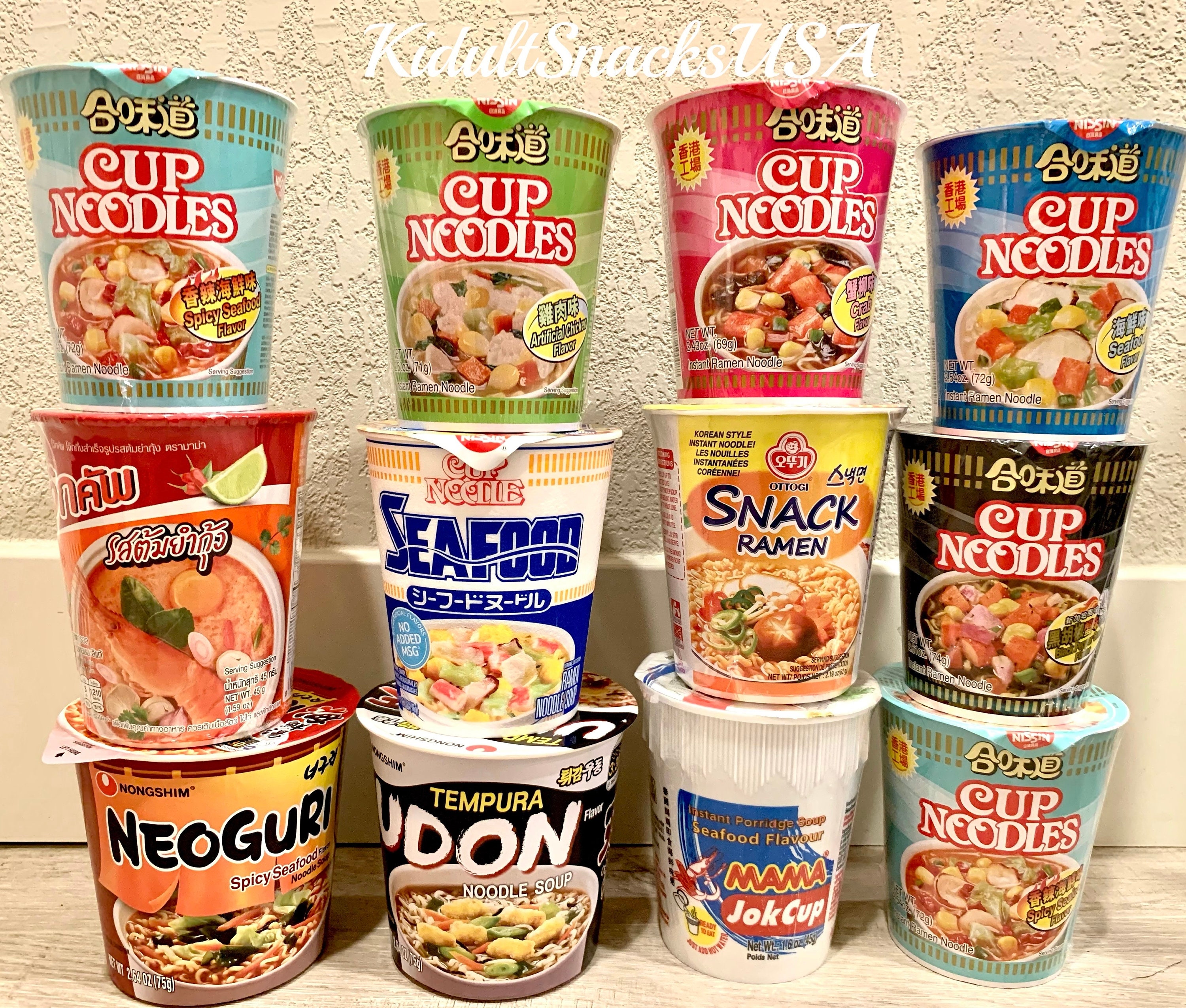
You're standing in the aisle, staring at a wall of Styrofoam. It's 11:00 PM, or maybe you're just on a tight budget, and you reach for that familiar white vessel. Ramen noodles in the cup are a global phenomenon, selling billions of units annually, yet most people treat them as a secondary, "lesser" version of the packet stuff. But here's the kicker: they are actually engineered differently. It isn't just a change in packaging.
Momofuku Ando, the founder of Nissin, didn't just stumble onto the cup design in 1971. He saw Americans breaking up ramen bricks to fit them into mugs because they didn't have the right bowls. The cup wasn't just a container; it was a revolution in thermal efficiency.
Honestly, the chemistry of a cup is fascinating. When you pour boiling water into that foam or plastic-lined paper, the heat is trapped far more effectively than in a ceramic bowl. This creates a pressurized "mini-steamer" environment. This is why cup noodles often feel "snappier" or sometimes more rubbery than the stovetop version. They have to be.
The Secret Science of the Flash-Fried Noodle
Most people think all instant ramen is the same. Wrong.
The noodles inside your cup are specifically formulated to rehydrate without a continuous heat source. On a stovetop, you're boiling the water, which provides constant kinetic energy to break down the starch. In a cup, the temperature is constantly dropping the moment you pour. To compensate, manufacturers like Maruchan and Nissin make the noodles thinner and more porous.
They use a process called "flash frying." The noodles are hit with high-heat oil, which blasts the moisture out and leaves behind microscopic holes. When you add water, these holes act like tiny sponges. If they didn't do this, you’d be chewing on a literal brick after three minutes.
Some high-end brands, especially the ones you see imported from Japan like Ichiran or certain Myojo variants, use "non-fried" noodles. These are air-dried. They take longer to prep—sometimes five or six minutes—but the texture is much closer to a restaurant experience. It’s a trade-off. Do you want speed, or do you want that authentic "bite"?
Why the Broth Hits Differently
Have you noticed the powder in a cup is often saltier or more intense than the packet version?
It has to do with the water-to-noodle ratio. In a pot, people usually over-pour water, diluting the soup. In a cup, the "fill line" is mathematically calculated to create the perfect concentration of MSG, maltodextrin, and dehydrated aromatics.
The inclusion of "bits"—those tiny cubes of mystery meat or dehydrated shrimp—is also a structural necessity. They provide a variance in texture that distracts your brain from the fact that you’re eating 300 calories of processed wheat. Those shrimp? They’re real, by the way. They are freeze-dried, a process that preserves the protein structure while removing nearly all weight.
The MSG Myth and Modern Health Realities
Let's talk about the elephant in the room. MSG.
For decades, "Chinese Restaurant Syndrome" was a cloud hanging over ramen noodles in the cup. But the science has largely moved on. Monosodium glutamate is just a sodium salt of glutamic acid, an amino acid that occurs naturally in tomatoes and parmesan cheese. The FDA has classified it as "generally recognized as safe" for years.
The real health concern isn't the "chemicals." It's the sodium and the fats.
A single cup can contain 60% to 80% of your daily recommended sodium intake. That's the real reason your face feels puffy the next morning. It’s a massive hit of salt that causes your body to retain water. Furthermore, the noodles are often fried in palm oil, which is high in saturated fats.
If you're worried about the health aspect, you don't necessarily have to quit the cup. You just have to be smarter than the packaging.
- Don't drink all the broth. Most of the sodium lives in the liquid, not the noodles.
- Add a handful of frozen spinach. It wilts instantly in the boiling water and adds actual fiber.
- Drop in an egg. If you put a raw egg in right after the boiling water and cover it tightly, the residual heat will poach it to a soft-set consistency.
The Proper Way to Prepare a Cup (No, You're Doing it Wrong)
Most people just pour water in and wait. That's fine if you're starving, but if you want the best version of ramen noodles in the cup, there is a technique.
First, temperature matters. Don't use lukewarm "hot" water from a water dispenser. It needs to be rolling boiling—212°F. If the water is at 180°F, the starch won't gelatinize properly, and you’ll end up with a chalky center.
Second, the "flip." About halfway through the three-minute wait, open the lid slightly and use chopsticks to flip the entire block of noodles over. The bottom of the block is always more hydrated than the top. Flipping ensures even texture.
Third, the steam seal. That little foil lid never stays down. Use a heavy plate or even the "cup noodle weight" figurines that are popular in Japan. Keeping that steam locked in is the difference between a hot meal and a lukewarm disappointment.
Elevating the "Poverty Meal"
You can make a $1.00 cup taste like a $15.00 bowl with three ingredients usually found in a fridge door:
- Toasted Sesame Oil: Just a half-teaspoon at the very end. The aroma changes everything.
- Rice Vinegar: A tiny splash cuts through the heavy fat of the fried noodles.
- Chili Crisp: Brands like Lao Gan Ma have become the gold standard for a reason. The umami depth is incredible.
The Environmental Cost of the Cup
We have to be honest here. The convenience comes at a price.
Styrofoam (polystyrene) is a nightmare for the planet. It doesn't biodegrade. It breaks down into microplastics that end up in the ocean. While Nissin announced a move toward "Eco-style" paper cups a few years ago, a huge portion of the market still uses the old-school foam.
If you're a daily consumer, consider buying the "refill" packs or just the blocks of noodles and using your own insulated mug. It keeps the heat better anyway, and you aren't contributing to the landfill every single lunch break.
Why We Keep Coming Back
There is a psychological comfort to the cup. It’s nostalgic. For many, it represents university late-nighters or a quick meal during a double shift. It’s one of the few foods that tastes exactly the same in London as it does in Tokyo or New York.
That consistency is a marvel of food engineering. Every batch of flour is tested for protein content, and every spice mix is calibrated to account for the way our taste buds dull slightly when we eat very hot foods.
Actionable Steps for Your Next Cup
If you’re going to eat ramen noodles in the cup, do it with intention.
- Check the "Manufactured" date. While they last forever, the oil in fried noodles can go rancid after a year, giving them a "cardboard" aftertaste. Fresher is better.
- Control the salt. Use only half the flavor packet, then add your own soy sauce or sriracha. You’ll get more flavor with less total sodium.
- The "Nutrient Boost." Keep a bag of frozen peas or corn in the freezer. A small handful adds texture and vitamins without any extra prep time.
- Upgrade your hardware. If you’re a regular, buy a dedicated "ramen mug" with a ceramic lid. It holds heat better than the paper or foam ever could.
Ultimately, the cup is a tool. It's a miracle of 20th-century design that still holds up today. Just remember to flip your noodles halfway through and maybe throw in a vegetable once in a while. Your body—and your taste buds—will thank you.