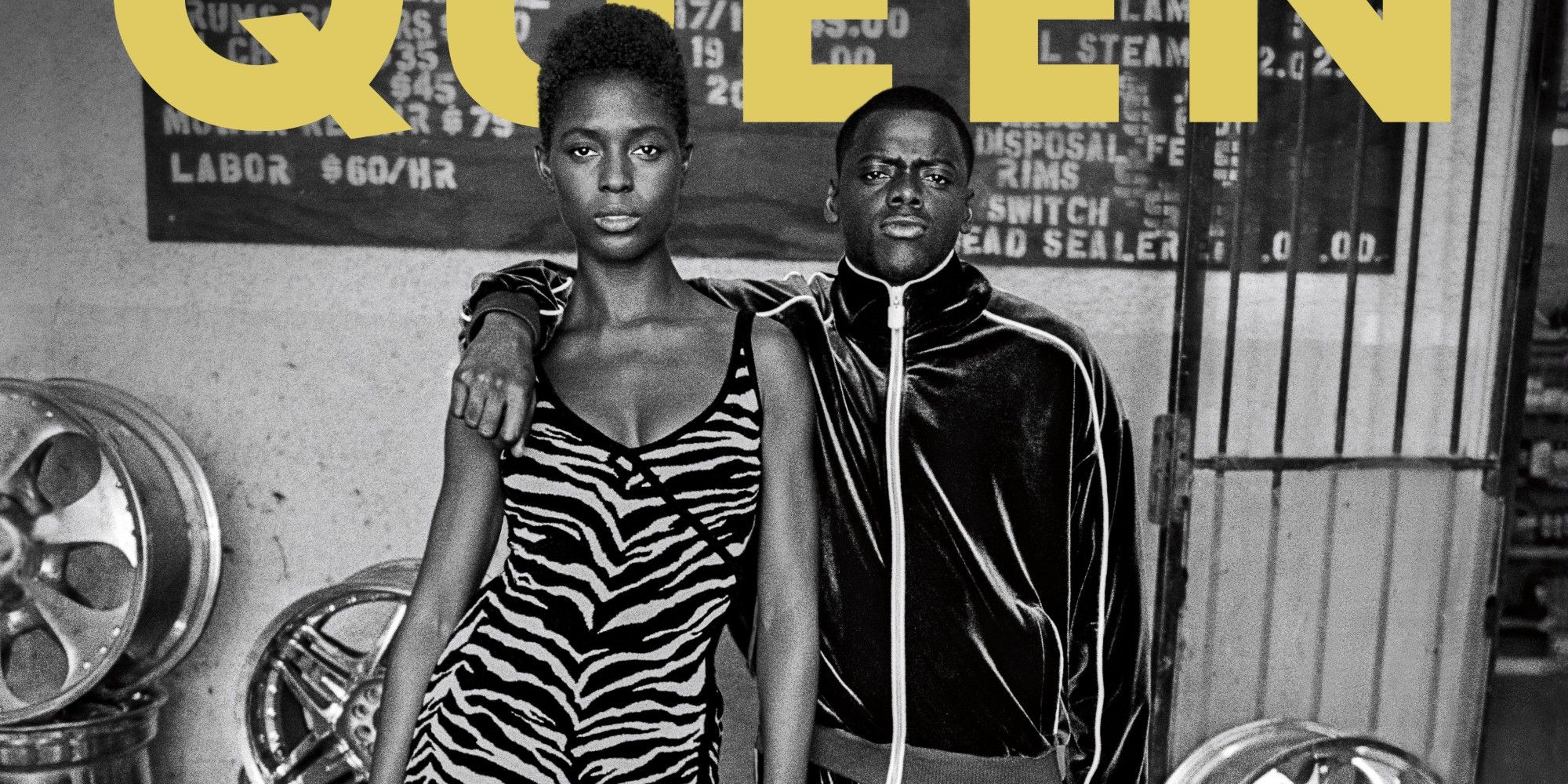
It stays with you. You know that feeling when the credits roll and you just sit there in the dark, staring at the screen, wondering how a movie could be so beautiful and so incredibly cruel at the same time? That is the Queen and Slim ending. It isn't just a plot point; it is a visceral, gut-punching statement that refuses to give the audience the easy out they’ve been praying for throughout the entire two-hour runtime.
If you’re looking for a happy ending, you’re watching the wrong film. Honestly, from the moment Slim (Daniel Kaluuya) pulls the trigger on that aggressive cop in self-defense, the clock starts ticking. We want them to make it. We want them to reach that plane in Florida and disappear into the sunset. But director Melina Matsoukas and writer Lena Waithe didn't make a movie about a getaway; they made a movie about a legacy.
What actually happens at the end of Queen and Slim?
The finale is a brutal sequence of betrayal and inevitability. After a cross-country odyssey that turns Queen and Slim into folk heroes, they finally arrive at the tarmac where a man named Junior—someone they believe is an ally—is supposed to fly them to safety.
They’re so close. They are literally walking toward the plane.
Then the sirens start.
It turns out Junior sold them out. The betrayal feels personal because, by this point, the audience is fully invested in their survival. They’ve become "Black Bonnie and Clyde," though they never asked for that title. As the police swarm the airfield, Queen (Jodie Turner-Smith) realizes there is no escape. She looks at Slim and says, "Can I be your legacy?" It’s a heartbreaking request for immortality through memory rather than a long life.
She walks toward the officers with her hands up. She isn't armed. She isn't a threat. But a nervous officer fires anyway, hitting her square in the chest. Slim, devastated, picks up her limp body and carries her toward the line of police. He knows what's coming. He isn't reaching for a weapon; he’s reaching for her. They open fire on him too. They die together on that tarmac, riddled with bullets, while a crowd of onlookers records the whole thing on their phones.
Why the betrayal by Junior matters
A lot of people get hung up on why Junior would do it. Was it the money? Was it the pressure? In the context of the film, it serves a specific purpose: it highlights the fragility of the "underground railroad" they were traveling on.
Throughout the movie, we see different reactions to their flight. Some people see them as symbols of resistance. Others see them as a payday. By having a Black man be the one to betray them, the film avoids a simplistic "us versus them" narrative. It suggests that the system is so pervasive that it can turn people against their own in the name of self-preservation or greed. It's a bitter pill to swallow. It complicates the myth-making.
The Queen and Slim ending as a commentary on viral trauma
The final shots of the movie are arguably more important than the shooting itself. We see the aftermath. We see the photos of Queen and Slim—real names Angela Johnson and Ernest Hines—plastered everywhere. They’ve become icons. Murals are painted in their honor. Kids wear shirts with their faces on them.
This is where the film gets really meta.
Think about how we consume tragedy today. We see a video of a police shooting on Twitter, we share it, we turn the victim into a hashtag, and then we move on to the next one. The Queen and Slim ending forces us to reckon with the fact that these two people had to die to become "heroes" to the public. To the world, they are symbols. To each other, they were just two people who had a really bad first date and fell in love while running for their lives.
Matsoukas uses the ending to show the disconnect between the "legend" and the human beings. The photos used in the news reports are the ones taken by the various people they met on the road—the hitchhiker, the garage owner. These moments of vulnerability were captured and then weaponized into a narrative of martyrdom.
Comparing the ending to Bonnie and Clyde
You can't talk about this movie without mentioning Bonnie and Clyde (1967). Both films end in a hail of bullets. Both films feature protagonists who become folk heroes despite their "crimes."
However, there is a fundamental difference. Bonnie and Clyde were actual outlaws. They robbed banks. They chose that life. Queen and Slim were forced into it. Their "crime" was surviving a traffic stop that went south because of a cop’s ego. The tragedy of the Queen and Slim ending is that they never wanted to be icons. They just wanted to go home.
The film subverts the romanticism of the outlaw. While Bonnie and Clyde's death feels like the inevitable end of a spree, Queen and Slim’s death feels like a systemic failure. It’s the difference between a self-inflicted wound and an execution.
The significance of the names Angela and Ernest
Waithe waits until the very end to reveal their real names. Throughout the film, they are just "Queen" and "Slim"—archetypes. By revealing their names on their headstones and in news reports after they die, the film restores their humanity at the exact moment the world tries to turn them into ghosts.
- Angela Johnson: A lawyer who fought for the underdog but couldn't save herself.
- Ernest Hines: A guy who worked hard, believed in God, and just wanted a second date.
Names have power. By withholding them, the movie makes us feel the loss more acutely when they are finally spoken. They aren't just "The Fugitives" anymore. They are people with families, histories, and unfulfilled potential.
Did they have to die?
Artistically? Yes.
If they had made it to Cuba, the movie would have been a fantasy. It would have provided a sense of relief that doesn't exist for many people in the real world who find themselves in similar situations. The ending is a reflection of a harsh reality. It’s meant to make you angry. It’s meant to make you feel uncomfortable.
Some critics argued that the ending was "trauma porn," a term used to describe media that exploits Black suffering for emotional impact. But others, like many who saw it in theaters in 2019, felt it was an honest, if painful, depiction of the stakes. The film doesn't celebrate their death; it mourns the fact that their death was so predictable.
The visual language of the final scene
Pay attention to the colors in that final scene. The bright, harsh light of the morning on the tarmac. It's a sharp contrast to the warm, bluesy, and saturated tones of the rest of the film. The "dream" is over. The cinematic beauty of their road trip is replaced by the cold, clinical reality of a crime scene.
The use of the song "The Night We Met" by Lord Huron (the version featuring Phoebe Bridgers) in the soundtrack—or the haunting score by Devonté Hynes—adds to the sense of mourning. The music doesn't pump you up for a final stand. It weeps.
Understanding the legacy of the film
Years after its release, Queen and Slim remains a polarizing but essential piece of cinema. It sparked massive conversations about the "Black Lives Matter" movement and how Hollywood portrays police violence.
The ending ensures the film isn't forgotten. If they had escaped, it would be a fun action-romance. Because they died, it’s a protest. It’s a eulogy. It’s a reminder that for some, the "pursuit of happiness" is a race against a clock they didn't even know was running.
Next Steps for Deeper Insight:
- Watch the "making of" features: Melina Matsoukas discusses the specific choice of the airfield location to symbolize a failed "flight to freedom."
- Analyze the clothing: Notice how their outfits change from their own clothes to "costumes" provided by others, symbolizing how they lost control of their own identities as the journey progressed.
- Read the script: Compare the final scene's dialogue to the filmed version; the subtle changes in how Slim carries Queen speak volumes about their bond.
- Explore the soundtrack: Devonté Hynes (Blood Orange) crafted a score that mirrors the emotional arc from fear to love to tragedy. Listening to it separately provides a different perspective on the film's pacing.