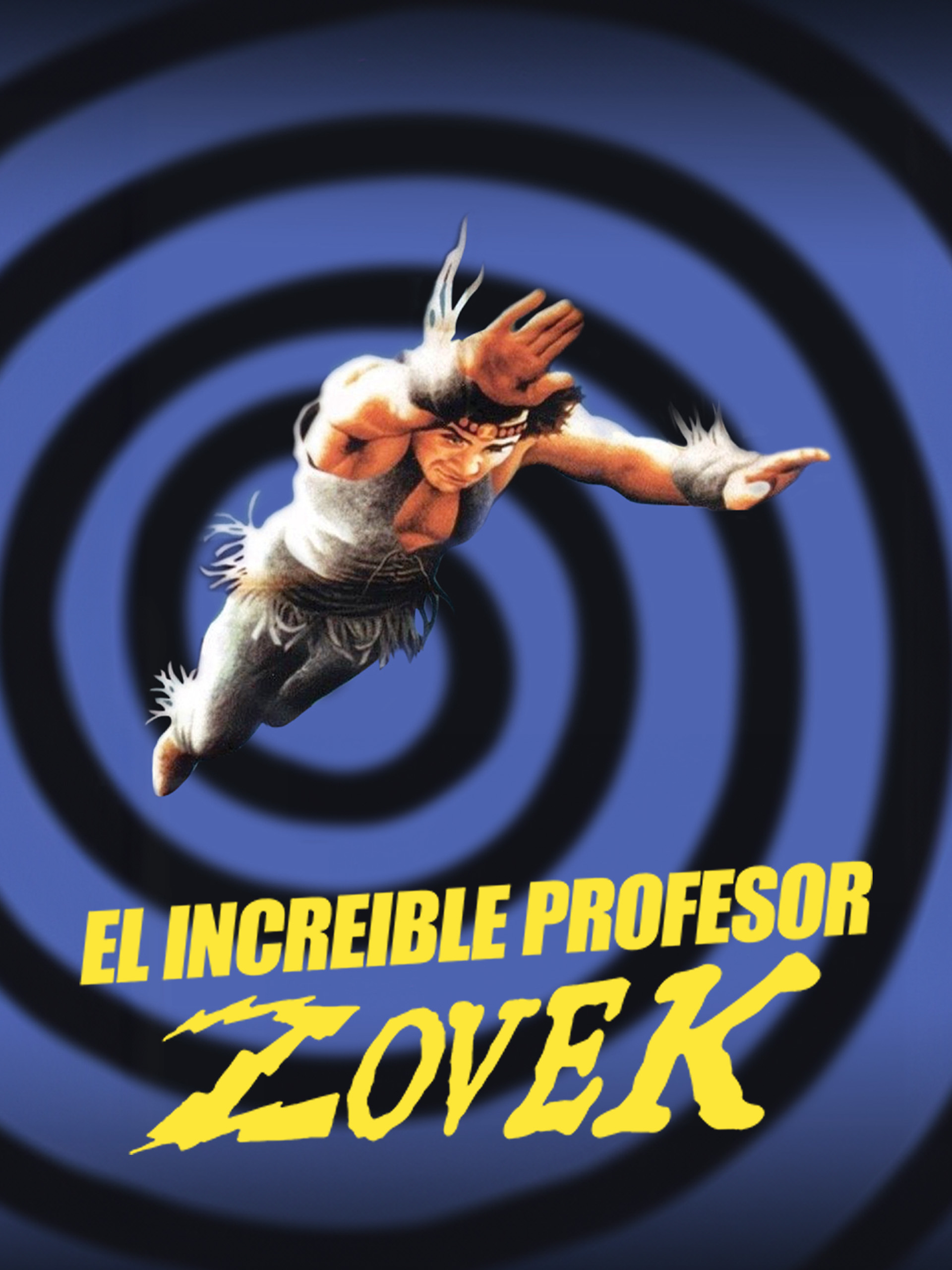
You’re watching Roma, Alfonso Cuarón’s black-and-white masterpiece, and suddenly the screen is filled with a bizarre, charismatic man leading a massive crowd of impoverished youth in eccentric physical exercises. Most international viewers probably thought, "That’s a weird cult leader." But for Mexicans of a certain age, that scene was a jarring lightning bolt of nostalgia. That man represents the Professor Zovek Pelicula Roma connection—a tribute to Francisco Xavier Chapa del Bosque, a real-life escapologist, mentalist, and fitness fanatic who was essentially Mexico’s version of Harry Houdini and Bruce Lee rolled into one.
He was a legend. A total enigma.
In the film, Zovek is played by Latin Grammy-winning actor Victor Manuel Reséndiz Ruiz, better known as the luchador Latin Lover. It’s a bit of meta-casting that works perfectly. Zovek appears in a dusty, barren field in Nezahualcóyotl, demonstrating his "extraordinary" powers to a group of young men recruited for the Halcones—a paramilitary group. This isn't just a random cameo; it is a meticulously placed piece of historical texture that anchors the film’s 1971 setting to the surreal reality of Mexican pop culture and dark political undertones.
Who Was the Real Professor Zovek?
Before we get into the movie specifics, you have to understand the man. Zovek wasn't just a character. He was a national phenomenon. He claimed he could stop his heart. He said he could escape any set of chains. He even claimed to have mastered "telepathic" powers. Honestly, he was a marketing genius who managed to convince an entire country that he was more than human.
By the early 70s, Zovek was everywhere. He had his own comic books. He appeared on the hit variety show Siempre en Domingo with Raúl Velasco. He even starred in cult films like El increíble profesor Zovek. People genuinely believed he possessed secret ancient knowledge. He was a symbol of physical perfection and mental discipline. But behind the spandex and the TV appearances, there was a darker intersection with the Mexican government.
The Surreal Training Scene in Roma
Cuarón uses the Professor Zovek Pelicula Roma sequence to bridge the gap between the mundane domestic life of Cleo and the violent political eruption about to happen. The scene is shot with a wide lens, capturing the sheer scale of the training camp.
Zovek challenges the crowd to perform a simple balance exercise: standing on one leg with eyes closed and hands held at the chest. Hundreds of young men—men who are being trained as state-sponsored thugs—wobble and fall. They can’t do it. Then there’s Cleo. She’s standing in the background, distracted, carrying things, and she just... does it. She balances perfectly.
It’s a quiet, powerful moment. It suggests that her inner strength and balance, forged through a life of service and hardship, far exceed the performative "masculinity" and discipline Zovek is selling to the future oppressors. It’s one of the most brilliant ways Cuarón highlights the silent resilience of the indigenous working class.
The Dark Reality of the Halcones
Here is where the movie gets heavy. The young men Zovek is training in that scene weren't just fitness enthusiasts. They were the Halcones (The Hawks). This was a real paramilitary group funded by the Mexican government to suppress student movements.
The film culminates in the Corpus Christi Massacre, also known as El Halconazo, which occurred on June 10, 1971. In the movie, we see the tragic intersection of Cleo’s personal life and this national trauma when she encounters Fermín during the riot. The fact that Zovek—a beloved children’s hero—was used to train these killers is a historical detail that still makes many Mexicans uncomfortable.
- Zovek's Role: He was hired to provide physical training and "mental conditioning" to the Halcones.
- The Contrast: A man who preached self-improvement was inadvertently (or perhaps knowingly) sharpening the tools of state repression.
- Cuarón’s Lens: By putting Zovek in the film, Cuarón isn't just being nostalgic; he's exposing how the government co-opted pop culture icons to mask their darker agendas.
The Mystery of Zovek’s Death
Zovek’s life ended as strangely as it was lived. In March 1972, not long after the events depicted in Roma, Zovek died in a tragic helicopter accident in Cuautitlán Izcalli. He was performing a stunt where he was supposed to climb a rope hanging from a helicopter. Something went wrong. The pilot allegedly began to circle or fluctuate in height, and Zovek fell to his death in front of a horrified crowd.
Rumors have swirled for decades. Was it an accident? Was it sabotage because he knew too much about the government's ties to paramilitary groups? We’ll probably never know. But his death cemented his status as a legendary figure of Mexican "weird" history. His unfinished movie, La invasión de los muertos, had to be completed using a body double and was released posthumously. It’s a bizarre film involving zombies and blue-skinned aliens, which only added to the "Professor Zovek" mystique.
Why This Connection Matters for SEO and Discovery
When people search for Professor Zovek Pelicula Roma, they are usually looking for one of two things: "Is that guy real?" or "What was the point of that scene?"
The "point" is the juxtaposition of purity and corruption. Cleo represents a pure, unstudied grace. Zovek represents a manufactured, performative power that ultimately serves a violent end. If you want to understand the deeper layers of Roma, you have to look past the beautiful cinematography and see the historical ghosts Cuarón is conjuring. Zovek is the most colorful, yet most haunting, of those ghosts.
Understanding the Visual Language
Cuarón chose the 65mm format for Roma, which gives the Zovek scene an incredible depth of field. You can see the tiny figures in the distance just as clearly as you see Zovek in the foreground. This "democratization" of the frame means that the domestic worker (Cleo) and the superstar (Zovek) occupy the same importance in the eyes of the camera.
When Cleo mimics the exercise, she isn't trying to be a superhero. She just has the balance. It’s a subtle slap in the face to the "macho" energy of the training camp.
Actionable Insights for Cinephiles and History Buffs
If you’re interested in this weird pocket of history, don't stop at Roma. There’s a whole world of Mexican "exploitation" cinema and political history to dig into.
- Watch the real Zovek: Look for El increíble profesor Zovek (1972) on YouTube or specialized streaming services. It’s a wild trip. You’ll see the actual man in action, and it makes the Roma portrayal even more impressive.
- Research El Halconazo: To truly understand the stakes of the film, read up on the June 10, 1971 massacre. Understanding that the men in that field were about to go murder students changes the entire vibe of the scene.
- Analyze the "Balance" Motif: Next time you watch Roma, pay attention to how many times characters lose their physical or emotional balance compared to Cleo. It’s a recurring theme that peaks with the Zovek scene.
- Explore Mexican Psychotronia: Zovek belongs to a lineage of Mexican pop culture that includes luchadores like El Santo and Blue Demon. These weren't just "actors"; they were living myths.
Ultimately, Professor Zovek remains one of the most fascinating "Easter eggs" in modern cinema. He’s a reminder that even in a quiet, intimate story about a nanny in Mexico City, the weird, loud, and often dangerous world of national politics and pop culture is always lurking just off-camera—or, in this case, standing in a dusty field, balancing on one leg.
The inclusion of Zovek isn't just a quirky detail. It's a vital piece of the puzzle that makes Roma one of the most authentic portraits of 1970s Mexico ever put to film. It captures a moment when the country was caught between the mystical and the modern, the peaceful and the paramilitary, the hero and the henchman.