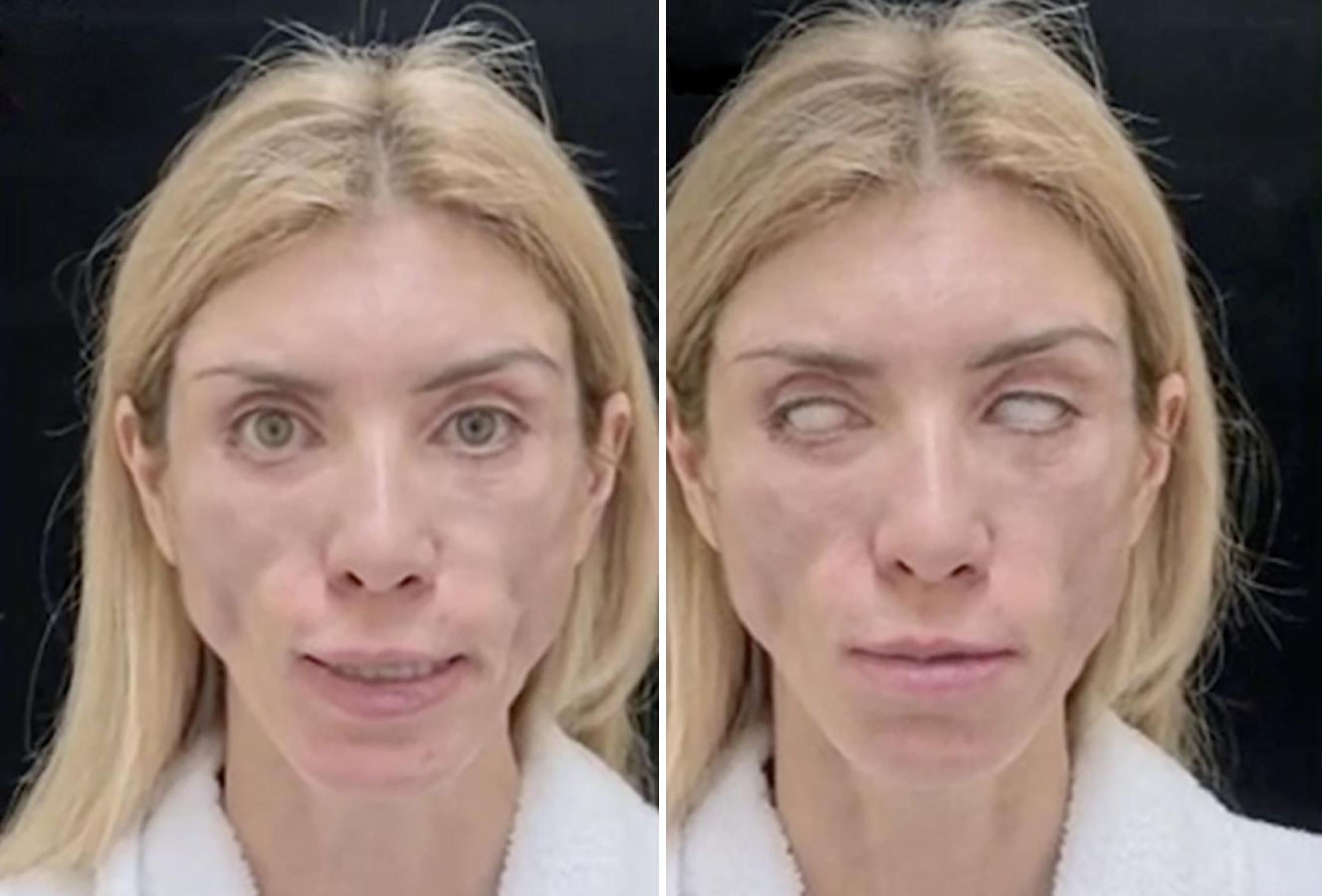
We’ve all seen it. You’re scrolling through a feed or walking down a busy street in Miami or LA, and you see someone whose face just looks... off. It’s not that they look "old." In fact, they might not have a single wrinkle. But something about the proportions feels alien. The cheeks are too high. The lips don't move when they talk. It’s the phenomenon of plastic surgery faces gone wrong, and honestly, it’s becoming an epidemic in the world of modern aesthetics.
People used to fear looking like a wind tunnel. Now? They look like pillows.
The industry has shifted. We moved away from the pulled-tight look of the 90s and right into the era of "filler fatigue." This isn't just about bad luck. It’s about a fundamental misunderstanding of how the human face ages and how medical injectors use—or misuse—the tools at their disposal. When you see plastic surgery faces gone wrong today, you’re usually looking at a combination of body dysmorphia, over-eager practitioners, and the relentless pursuit of a filtered, digital reality that simply cannot exist in three dimensions.
The Rise of "Pillow Face" and Filler Overload
Fillers were supposed to be the "liquid facelift." A miracle in a syringe. For a while, they were. But then things got weird.
Hyaluronic acid (HA) fillers like Juvéderm and Restylane are marketed as temporary. The pitch is simple: your body dissolves them in six to twelve months. Except, as many top-tier surgeons like Dr. Gavin Chan and Dr. Ben Talei have pointed out, that’s not always the case. MRI scans have shown filler sticking around for years—sometimes decades—longer than the manufacturers claim.
What happens when you keep "topping up" every six months because you think the filler is gone? You get volume displacement. The filler doesn't just disappear; it migrates. It spreads. It settles into the lower face, creating that heavy, jowly look that people were trying to avoid in the first place. This is a primary driver behind plastic surgery faces gone wrong. The face becomes wider. The eyes look smaller because the cheeks are pushing up against them. It’s a distorted geometry that the human brain recognizes instantly as "uncanny."
When the "Cat Eye" Goes Too Far
The "Fox Eye" or "Cat Eye" lift became a massive trend thanks to models like Bella Hadid. Everyone wanted that snatched, upward-tilting lateral brow. But the methods used to get there—specifically PDO threads—have led to a surge in plastic surgery faces gone wrong.
Threads are basically barbed sutures pulled through the skin to yank it upward. The problem? They are temporary, prone to snapping, and can cause significant internal scarring. We’re seeing patients with visible puckering on the sides of their temples or, worse, permanent nerve damage. When a surgical blepharoplasty (eyelid lift) is done poorly, or a brow lift is over-extended, the person ends up in a state of permanent surprise. It looks aggressive. It looks harsh.
Real beauty is usually found in soft transitions. When you create a sharp, vertical line where there should be a gentle curve, the "wrongness" is glaring.
The Celebrity Effect and the "Uncanny Valley"
Celebrities are often the face of this issue, literally. We’ve watched stars go from being the most beautiful people on earth to becoming cautionary tales of plastic surgery faces gone wrong. Think about the public discourse surrounding stars like Zac Efron or Madonna. While some changes can be attributed to health issues or necessary surgeries, the public reaction stems from a loss of "facial identity."
We are biologically wired to recognize faces. When a person’s distinct features—the slight bump on a nose, the specific shape of a smile—are erased and replaced with "standardized" features (the same nose, the same lips, the same chin), our brains reject it. This is the Uncanny Valley. It’s why people get so unsettled by overdone work. It’s no longer a human face; it’s a mask of a human face.
The "Instagram Face" Trap
Social media is the biggest culprit. Filters offer a version of yourself with a tiny nose, massive eyes, and zero pores. People take these filtered selfies to surgeons and say, "Make me look like this."
A good surgeon will say no. A "yes" leads straight to plastic surgery faces gone wrong.
Why? Because a filter is two-dimensional. It doesn't account for how skin moves when you laugh or how shadows hit your face when you aren't in a ring-light environment. When you try to recreate a 2D filter with 3D fillers and scalpels, the results are often disastrous. You end up with "Chipmunk Cheeks"—the result of trying to create a contour that only looks good from one specific angle on a phone screen.
The Health Risks Nobody Mentions
It’s not just about looking bad. There are real, scary complications.
- Vascular Occlusion: This is the nightmare scenario. If a needle hits an artery and filler is injected into the bloodstream, it can block blood flow. This leads to skin necrosis (the skin literally dying and falling off) or even blindness if the filler travels to the ophthalmic artery.
- Biofilms: This is a low-grade, chronic infection that can form around the filler months or years later, causing hard lumps and swelling that won't go away.
- Bone Erosion: Recent studies suggest that heavy chin or cheek implants, or even massive amounts of dense filler, can put pressure on the underlying bone, causing it to slowly recede over time.
How to Avoid Ending Up as a Headline
How do you keep your face from going wrong? It’s surprisingly simple, yet hard to follow in an age of "more is more."
1. Dissolve, Don't Build
If you’ve been getting filler for years, stop adding. Talk to a professional about using Hyaluronidase to dissolve the old, migrated product before even thinking about adding more. Starting from a clean slate is the only way to avoid the "bloated" look.
2. Choose the Surgeon, Not the Price
Plastic surgery is the one thing you should never "deal hunt" for. Most plastic surgery faces gone wrong come from med-spas where an injector might have only done a weekend course, or from "medical tourism" where patients fly to countries with lower regulations to save a few thousand dollars. You aren't just paying for the procedure; you’re paying for the surgeon’s ability to handle a complication if things go south.
3. Focus on Skin Quality First
A lot of people think they need a facelift or filler when they actually just need better skin. Lasers, chemical peels, and a solid medical-grade skincare routine can do more for "youthfulness" than a syringe ever will. When the skin is healthy, you need less structural work.
4. The "10% Rule"
The best work is invisible. If people can tell you "had work done," it’s already bordering on the plastic surgery faces gone wrong category. Aim for a 10% improvement, not a 100% overhaul.
Moving Toward "Quiet Aesthetics"
The trend is finally starting to shift. We’re seeing a move toward "Quiet Aesthetics"—a focus on regenerative medicine like PRF (Platelet-Rich Fibrin) or micro-coring that helps the body heal itself rather than stuffing it with foreign substances. The goal is to look like a well-rested version of yourself, not a different person entirely.
If you’re considering a procedure, look in the mirror and ask: Am I trying to fix a flaw, or am I trying to hide from myself? The most successful surgeries are the ones that preserve the "you" in your face. Anything else is just a slow walk toward a result you’ll eventually regret.
Actionable Steps for Safe Results
- Vet your provider: Use the American Board of Plastic Surgery (ABPS) website to ensure your surgeon is actually board-certified in plastic surgery, not just "cosmetic surgery" (there is a massive legal difference).
- Ask for the "Bad" Photos: Any surgeon can show you their ten best results. Ask to see how they’ve handled complications or "corrective" surgeries.
- Wait 30 Days: If you want a major change, wait a month. If the desire is driven by a breakup or a bad week, it will fade. Surgery is permanent; moods are not.
- Request a "Conservative First" Approach: Tell your injector you want the bare minimum. You can always add more in two weeks, but getting it out is a much bigger headache.