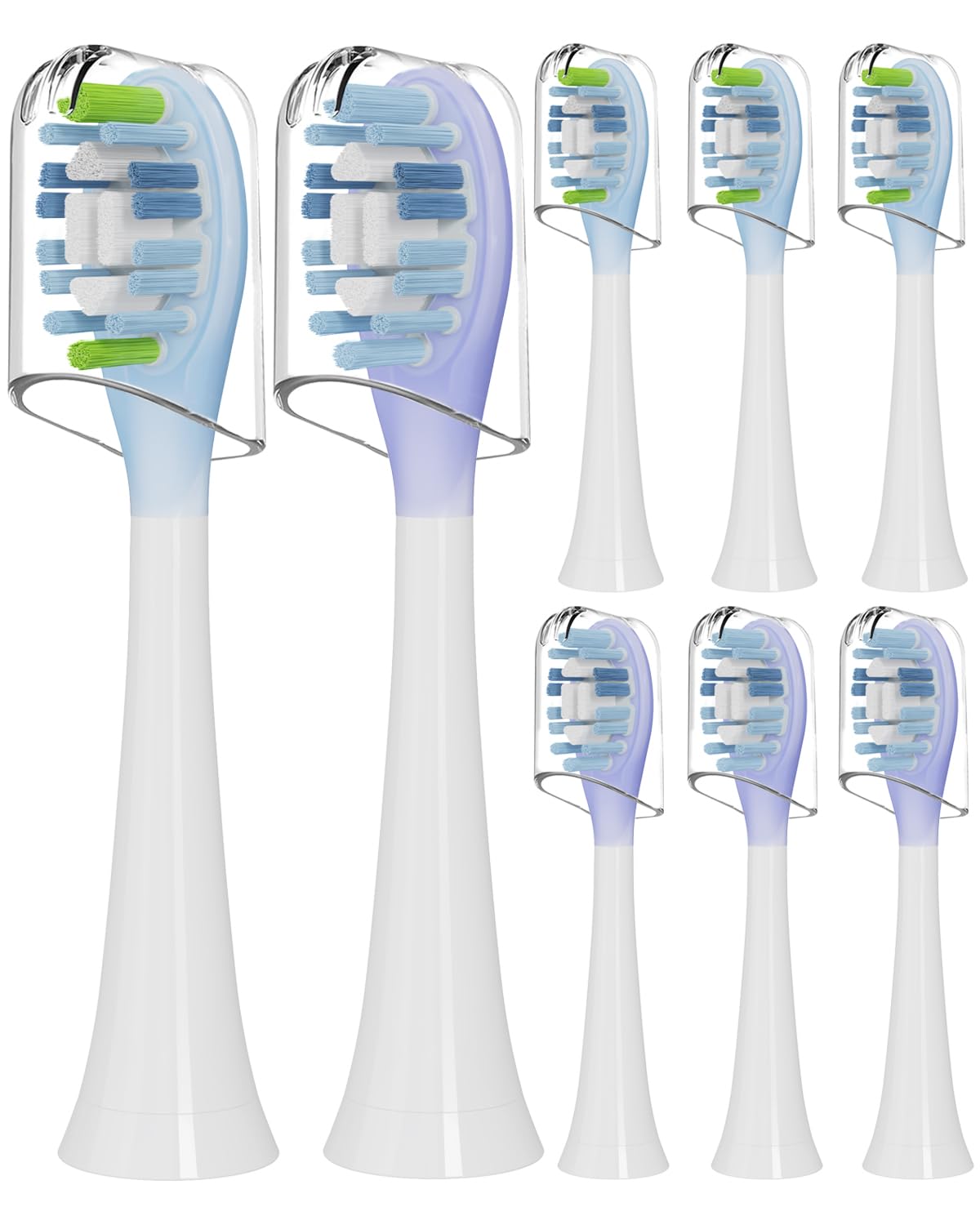
You’ve probably been there. You’re standing in the dental aisle, staring at a wall of plastic-wrapped brush heads that all look identical. Or worse, you’re scrolling through an endless list of "compatible" knock-offs online that cost a quarter of the price. It’s tempting to just grab whatever is cheapest. But if you’re using a high-end power handle, the Philips Sonicare C3 replacement heads are usually the specific component doing the heavy lifting.
Honestly, the handle is just a motor. The brush head is the actual technology.
Most people think a brush head is just a bunch of nylon bristles glued to a plastic stick. With the C3—officially known as the Premium Plaque Control—that's not really the case. It’s designed with these weirdly soft, flexing rubber sides. Philips claims this gives you 4x more surface contact than a standard brush head. Does that actually matter? Yeah, it kinda does. When the bristles can wrap around the curve of a molar instead of just bouncing off the surface, you're getting into the nooks and crannies where cavities actually start.
Why the C3 is different from those cheap knock-offs
I’ve seen a lot of people complain that genuine Philips heads are a "rip-off." I get it. They aren't cheap. However, there is a massive engineering gap between a genuine Philips Sonicare C3 replacement head and a $2 generic version from a random warehouse.
The C3 uses something called "adaptive cleaning technology." Basically, the sides of the brush head are flexible. If you press too hard—which almost everyone does—the head absorbs that pressure. This protects your gums. Generic heads are usually rigid. If you press too hard with a stiff, cheap head, you’re essentially sandpapering your enamel and receding your gum line.
- Plaque Removal: The C3 is rated to remove up to 10x more plaque than a manual brush.
- Surface Contact: Because it’s flexible, it covers more area per stroke.
- The Power Tip: The bristles at the very top are longer and stiffer to reach behind your back molars.
Most people don't realize their toothbrush has a "brain," but if you have a BrushSync-enabled handle, the C3 talks to it. It tells the handle, "Hey, I'm a C3, set the mode to Plaque Control." It also tracks exactly how long you've been brushing.
Comparing the C3 to the C2 and A3
It’s easy to get lost in the "Letter-Number" soup. You’ve got the C2 (Optimal Plaque Defense), the G3 (Premium Gum Care), and the fancy new A3 (All-in-One).
The C2 is the "budget" authentic option. It’s a solid brush, but it’s smaller and doesn’t have the flexible rubber sides. It’s a "hard" head. The Philips Sonicare C3 replacement heads are the mid-to-high tier upgrade. They feel softer on the gums but actually clean deeper because of that flexing motion.
Then there’s the A3. The A3 is the "luxury" version that tries to do everything—whitening, gum care, and plaque removal—all at once. It’s great, but it’s significantly more expensive. For most people, the C3 is the "sweet spot." It focuses on the one thing that actually saves you money at the dentist: stopping plaque buildup before it turns into tartar.
The science of the 3-month rule
We’ve all done it. You use a brush head until the bristles look like a physical representation of a bad hair day. You think, "It still vibrates, so it's fine."
It’s not fine.
Studies show that after about 90 days, the bristles lose their "flick." Sonicare technology relies on high-frequency vibrations to create microbubbles that get between teeth. When the bristles get soft and splayed, they stop vibrating correctly. You’re basically just vibrating a limp piece of plastic against your teeth.
The blue "reminder" bristles on the Philips Sonicare C3 replacement heads aren't just a marketing gimmick. They are dyed to fade at a specific rate. When they turn white, the structural integrity of the nylon is gone. If you have a BrushSync handle, a little light will also flash on the base. Don't ignore it.
Compatibility: Will it fit your handle?
One of the best things Philips did was standardize the "click-on" system.
If you bought a Sonicare in the last 10 years—whether it's a 4100, a ProtectiveClean, or a DiamondClean—the C3 will fit. The only exceptions are the old "screw-on" Essence models (the ones that look like a giant wand from the 90s) and the battery-powered Philips One.
If your handle has a metal pin sticking out the top, the C3 clicks right on.
Common myths about replacement heads
- "Harder bristles clean better" — Absolutely false. Hard bristles damage your gums. The C3 uses medium-soft bristles because the speed of the vibration (62,000 movements per minute) does the work, not the stiffness of the hair.
- "I can just soak them in mouthwash to make them last longer" — This might kill some bacteria, but it won't fix splayed bristles. Once the nylon is bent, it's done.
- "The C3 is only for people with bad teeth" — It's actually a preventative tool. If you have crowded teeth or tend to get "coffee stains" between your teeth, the C3 is much better than the standard heads at getting into those tight gaps.
How to spot a fake C3 head
Since these are popular, the market is flooded with counterfeits that look 99% like the real thing. Here is what to look for:
The Metal Ring: Genuine Philips Sonicare C3 replacement heads usually have a high-quality metal ring at the base where it connects to the handle. Fakes often use painted plastic.
The Logo: On a real head, the "Philips Sonicare" logo is crisp. On fakes, the font often looks slightly blurry or can be scratched off with a fingernail.
The Gap: There should be a tiny gap between the brush head and the handle. This is necessary for the head to vibrate. If it fits perfectly flush or is impossibly tight, it's probably a knock-off that could eventually burn out your toothbrush motor.
Actionable Steps for Better Oral Health
If you're ready to actually get the most out of your C3 heads, stop "scrubbing." The most common mistake people make when switching from a manual brush to a Sonicare is moving their hand back and forth.
- Angle it right: Hold the brush at a 45-degree angle toward the gum line.
- Let it glide: Just move the head slowly from tooth to tooth. The C3's flexible sides will do the contouring for you.
- Don't push: If the motor changes sound or your handle vibrates differently, you’re pressing too hard. The C3 is designed to flex, but it can’t perform if you’re crushing it against your enamel.
- Dry it off: After brushing, pull the head off and rinse the inside. Moisture trapped in the base is how you get that gross black gunk inside the handle.
Investing in genuine heads is basically an insurance policy against expensive fillings. While the upfront cost feels high, the C3 remains one of the most effective tools for maintaining a professional-level clean at home.
To keep your routine consistent, check the base of your current brush head today. If those blue bristles are starting to look pale or the edges are splayed, it's time to swap it out. You can find multi-packs of the C3 in white or black to match your handle, often at a lower price-per-head when buying in sets of four or six.