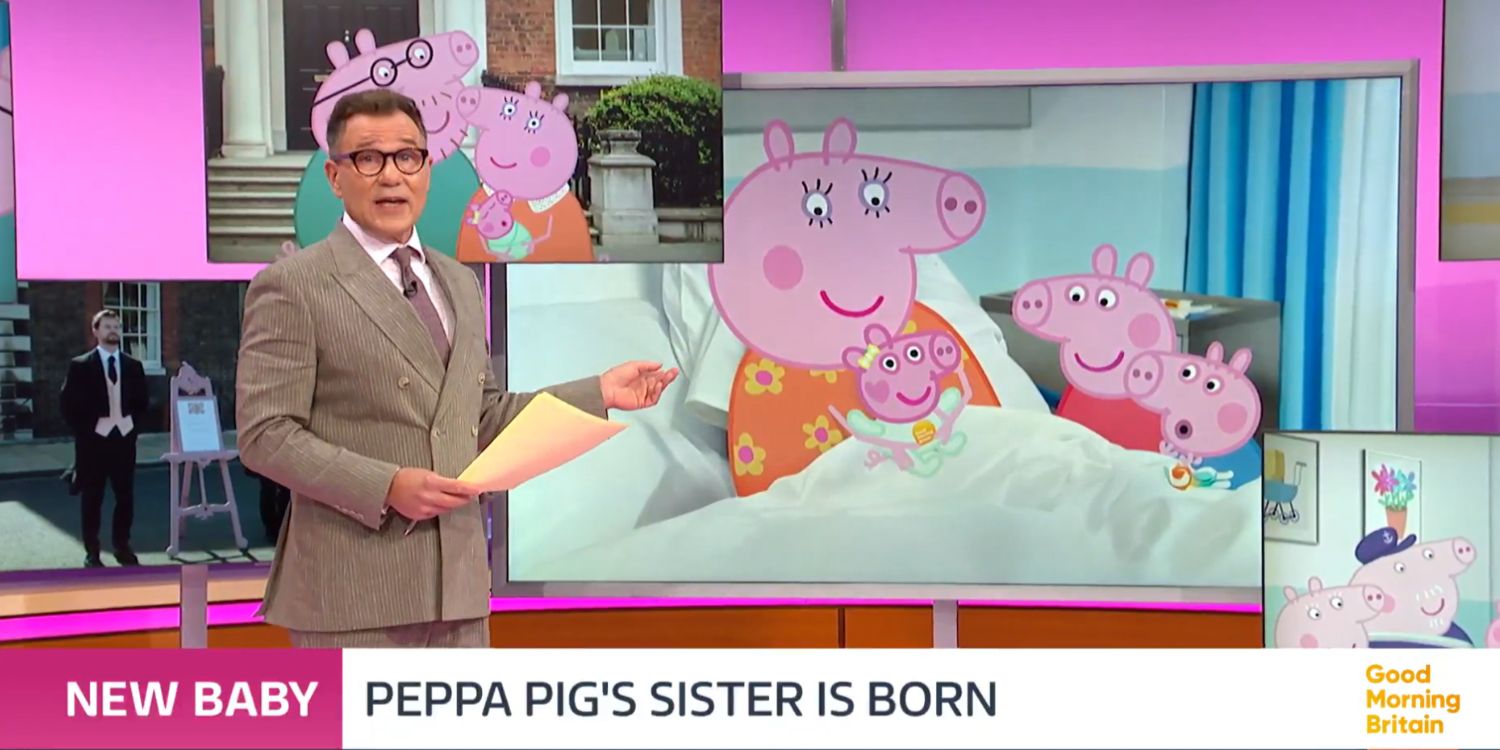
You’ve probably seen the thumbnails. Maybe you were scrolling through YouTube or TikTok and saw a bright, colorful image of a piglet that looked suspiciously like Peppa, but with a different colored dress and a name you didn't recognize: Peppa Pig sister Evie. It’s one of those things that sticks in your brain. You start wondering if you missed an entire season or if there's some "lost media" secret buried in the archives of British animation.
Honestly, the internet is a weird place for kids' shows.
If you’re looking for the short answer, here it is: Peppa Pig does not have a sister named Evie. She has one brother, George. That’s it. But the story of why thousands of people are searching for "Evie" is actually a fascinating look at how modern fan culture, "creepypasta" (scary internet stories), and algorithmic chaos collide to create facts out of thin air.
Where did the Peppa Pig sister Evie rumor actually come from?
The "Evie" phenomenon didn't just appear out of nowhere. It’s a byproduct of the massive "fanon" (fan-made canon) wikis that live on the edges of the internet. On sites like the Peppa Pig Fanon Wiki, users create elaborate backstories, new characters, and entire "episodes" that never actually aired on Nickelodeon or Channel 5.
In these digital playgrounds, Evie is often described as Peppa's long-lost sister, or sometimes a cousin.
Some versions of the story get pretty dark. There are "lost episode" narratives where Evie was supposedly erased from the show's history because she was "too rebellious" or because of some tragic accident. It’s basically the kids' show version of an urban legend. People love a mystery. When you take a show as wholesome and repetitive as Peppa Pig and inject a "secret family member," it triggers a massive amount of curiosity.
The problem is that YouTube's algorithm often picks up these fan-made characters.
Creators make parody videos or "storytime" animations featuring Peppa Pig sister Evie, and because the SEO (Search Engine Optimization) is so strong, these videos end up in the recommended feeds of unsuspecting parents and kids. It’s a cycle. A kid sees a video about Evie, asks their parent who she is, the parent Googles it, and suddenly "Evie" is a trending search term.
The family tree as it actually exists
Let's look at the actual facts of the show created by Neville Astley and Mark Baker. The Pig family is intentionally small. It’s designed to reflect a very standard, relatable nuclear family structure for preschoolers.
- Peppa Pig: The 4-year-old protagonist.
- George Pig: The 2-year-old brother who loves dinosaurs.
- Mummy Pig: Working from home on her computer.
- Daddy Pig: An expert in structural engineering (though he loses his glasses a lot).
That is the entire household. There is no hidden room for Evie. There are no deleted scenes from 2004 showing a third child. Even the extended family—Granny and Grandpa Pig, Uncle Pig, Auntie Pig, and cousins Chloe and Alexander—is very strictly defined. Adding a sister named Evie would fundamentally break the dynamic that has made the show a multi-billion dollar franchise.
Why the internet loves "hidden" characters in kids' shows
It’s not just Peppa. There are "lost" characters rumored for Bluey, Paw Patrol, and Spongebob. Why?
Because it’s fun.
Adults who grew up with the internet love the "Iceberg Theory" of media—the idea that what we see on screen is just 10% of the actual story. When people talk about Peppa Pig sister Evie, they aren't usually talking about the actual show; they're participating in a collective piece of fiction. It’s a digital campfire story.
However, there’s a slightly more "corporate" reason these names pop up. Often, toy companies or bootleg merchandise manufacturers will create "friend" characters that look like Peppa to avoid direct copyright strikes while still selling to the same audience. If you buy a generic "Pig Family" set from a discount site, you might find a stray piglet in the box. Fans give these toys names. Sometimes, that name is Evie.
The impact of fan-made content on real-world perception
We live in an era where "fanon" often feels as real as "canon."
If you spend enough time on TikTok, you’ll see "fan edits" that look incredibly professional. They use the same art style, the same voice-over patterns, and the same music. For a five-year-old, there is no difference between a real episode of Peppa Pig and a well-made fan video about Peppa Pig sister Evie.
This creates a weird challenge for parents. You're trying to monitor what your kid watches, but then they start talking about characters that don't exist. It’s harmless, mostly. But it highlights how easily misinformation—even the cute, pink, cartoon kind—spreads when there's no central "truth" filter on social media platforms.
Sorting through the "Lost Episode" myths
You might find articles or videos claiming that Evie was "removed for being too scary" or "voiced by a celebrity who quit." These are 100% fabricated.
The production history of Peppa Pig is actually very well-documented. Produced by Astley Baker Davies (and later by Entertainment One after a massive acquisition), the show has a very tight-knit creative team. They don't just "lose" characters. Every frame of that show is expensive to produce and strictly vetted for the age group.
- Fact: There is no record of a character named Evie in any official script.
- Fact: No voice actor has ever been credited for the role of a sister other than Peppa.
- Fact: The show’s creator has never mentioned a "middle child" or "third child" in interviews.
If you see a "screengrab" of Peppa Pig sister Evie, look closely at the line work. Usually, it's just a recolored version of Peppa or her cousin Chloe. The "Evie" look typically involves a purple or turquoise dress—colors that Peppa herself rarely wears, which makes the fake character stand out.
Is there any character that sounds like "Evie"?
Sometimes, rumors start from a simple misunderstanding. While there isn't an Evie, there are plenty of characters with "E" names or similar sounds that might get scrambled in a toddler's brain.
- Emily Elephant: She’s one of Peppa’s best friends. The names "Emily" and "Evie" are phonetically close.
- Edmond Elephant: Emily’s clever younger brother.
- Chloe Pig: Peppa’s older cousin. Some fans speculate that younger viewers might mistake the older cousin for a sister.
But really, the name Evie likely stuck because it’s a popular, modern name that fits the "alliteration" or "vibe" of the show without actually being in it.
How to handle "Fan-Fiction" characters with your kids
If your child starts asking for Peppa Pig sister Evie toys or episodes, you don't need to give them a lecture on the dangers of internet misinformation.
It’s actually a great teaching moment about imagination. You can explain that some people love the show so much that they make up their own stories and characters to live in that world. It’s like drawing a picture of yourself standing next to Peppa. It’s not "real" in the show, but it’s real in your mind.
However, keep an eye on the source.
A lot of the "Evie" content lives in the darker corners of YouTube Kids—the "Elsagate" style videos where characters are put into weird or slightly inappropriate situations. If the "Evie" story your kid is seeing involves Peppa crying, characters getting hurt, or strange medical procedures, shut it down. That’s not fan-fiction; that’s "content farm" trash designed to farm views from toddlers through shock value.
What should you do next?
If you're a parent, teacher, or just a curious person who fell down this rabbit hole, here is how you can set the record straight:
- Stick to official sources: If it’s not on the official Peppa Pig YouTube channel or a major streaming service like Paramount+ or Netflix, it’s not canon.
- Check the credits: If you’re truly unsure about a character, IMDB is your friend. It lists every voice actor and character for all 7+ seasons.
- Report the "weird" stuff: If you find a video about Peppa Pig sister Evie that feels "off" or scary, report it. These videos often bypass filters by using popular keywords to reach kids.
- Use the Fanon Wiki for what it is: If you visit a wiki and see a character you don't recognize, check the top of the page. It usually says "This is a Fanon wiki," meaning everything on it is made up by fans.
The legend of Peppa Pig sister Evie is a classic example of how the internet creates its own reality. While she might not be a real part of the Pig family, she’s a very real part of internet history. She represents the bridge between a simple kids' cartoon and the complex, often confusing world of online content creation.
The next time you see a "secret" character pop up in your feed, just remember: if Daddy Pig didn't mention it while losing his car keys, it probably didn't happen. Stick to the official episodes, and you’ll avoid the headache of trying to find toys for a pig that doesn't exist.
To ensure your child is watching legitimate content, always look for the "Verified" checkmark on YouTube channels. Official Peppa Pig content is strictly moderated and safe for all ages. Avoid clicking on "compilation" videos from unrecognized channels, as these are the most likely places to find misleading fan-made characters and unofficial lore that can confuse young viewers.