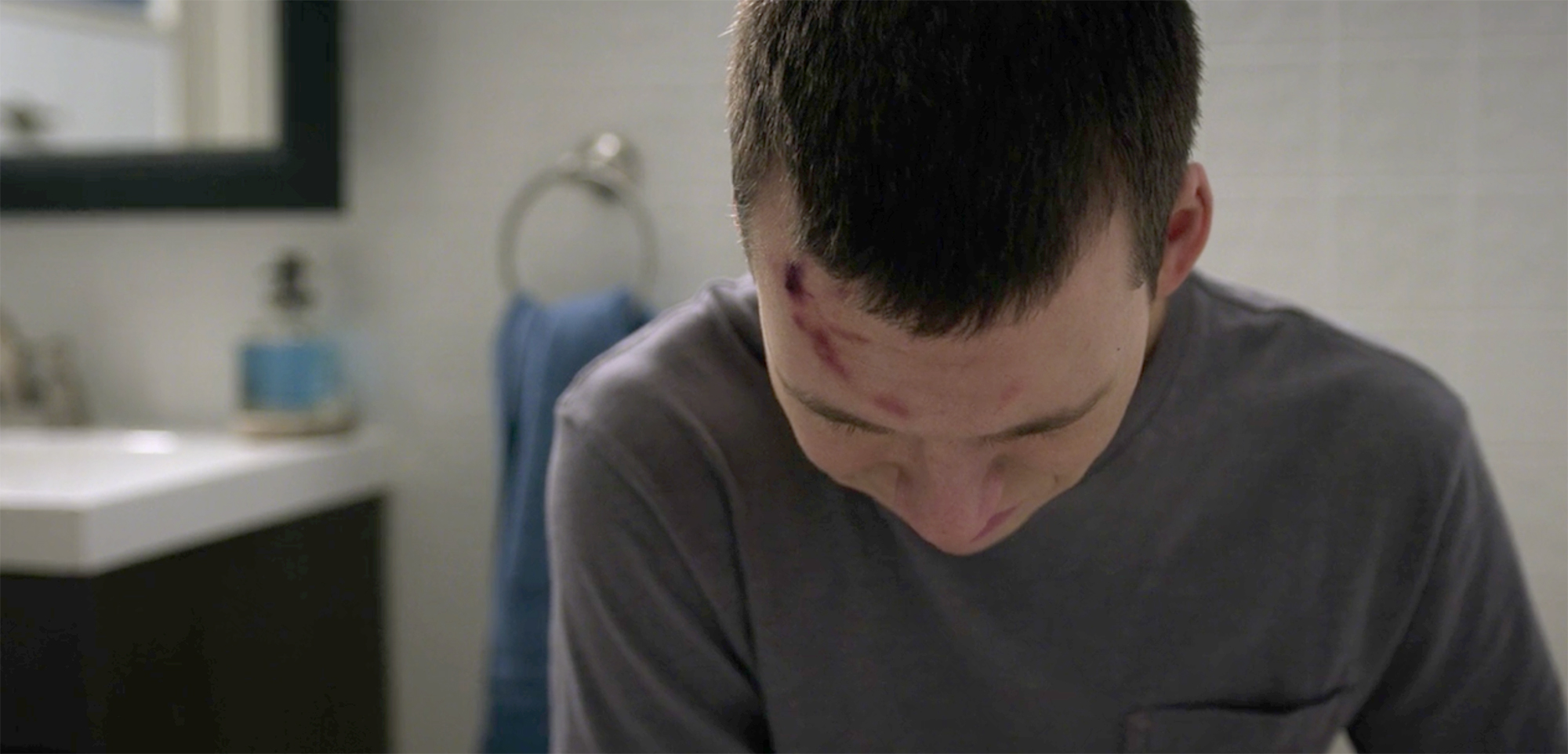
It was the scene that launched a thousand think-pieces. If you were on the internet in March 2017, you basically couldn't escape the noise surrounding the original 13 reasons why hannah bathroom scene. It wasn't just another TV moment; it was a cultural flashpoint that fundamentally changed how streaming platforms handle "triggering" content.
Honestly, the version you see on Netflix today is a ghost of the original.
If you watch the Season 1 finale, "Tape 7, Side A," right now, it feels abrupt. One second, Hannah is looking in the mirror, and the next, her parents are discovering her. There’s a massive gap there. A three-minute gap, to be exact. That missing footage is what sparked years of medical debate, school board meetings, and eventually, a total scrub of the platform’s most controversial sequence.
What actually happened in the unedited footage?
The show's creator, Brian Yorkey, has gone on record saying the intent was to show the "ugly, painful reality" of suicide to make sure nobody would want to emulate it. But for many, the execution went way past "informative" and straight into "instructional."
In the original 13 reasons why hannah bathroom scene, the camera didn't blink. Katherine Langford’s character, Hannah Baker, is shown sitting in a bathtub full of water. The scene is quiet, which somehow makes it worse. She takes a single-use razor and deliberately cuts into her left forearm.
You see the reaction—the immediate, visceral pain. Then she does the same to her right arm.
The most haunting part for many viewers wasn't just the blood (though the tub turns bright red remarkably fast), but the realism of her physical reaction. Her breathing slows, she gasps for air, and eventually, she goes still. It lasted roughly three minutes. It was meant to be a deterrent, but many experts argued it served as a "how-to" guide for vulnerable kids.
The major differences between the novel and the show
Interestingly, the book by Jay Asher handled this totally differently. In the 2007 novel, Hannah swallows a handful of pills. The TV producers decided to change the method to something more "graphic" because they felt a pill overdose looked too much like "falling asleep." They wanted it to look like a tragedy, not a peaceful exit.
Why Netflix finally hit the delete button
It took over two years for Netflix to actually remove the scene. For a long time, they stood by the "artistic vision" of the creators. They added warning cards and "Strength in Solidarity" montages at the start of episodes, but the scene stayed.
So, what changed in July 2019?
Basically, the data became too hard to ignore. A study published in the Journal of the American Academy of Child and Adolescent Psychiatry suggested a 28.9% increase in suicide rates among U.S. youth (ages 10-17) in the month following the show's release. While you can't prove direct causation, the "association" was enough to panic the higher-ups.
Netflix worked with Dr. Christine Moutier from the American Foundation for Suicide Prevention to figure out a way to keep the story intact without the graphic imagery.
- The Original Cut: Shows the act, the method, and the immediate physical aftermath.
- The Current Cut: Shows Hannah's reflection in the mirror, then cuts to the sheer agony of her parents finding her.
The edit shifted the focus from the act of dying to the impact on those left behind. It’s a subtle shift, but it changed the entire vibe of the finale.
The "Werther Effect" and the danger of graphic media
Psychologists often talk about the "Werther Effect," which is a fancy term for copycat suicides. It’s named after an 18th-century novel by Goethe that allegedly caused a rash of deaths across Europe.
The fear with the original 13 reasons why hannah bathroom scene was that it glamorized the tragedy. By making Hannah a narrator from beyond the grave, the show gave her a "voice" after death that many teenagers found alluring. Seeing the exact method on screen was the tipping point for mental health advocates.
The Parents Television Council (PTC) was one of the loudest voices calling for the removal. They argued that "Netflix has finally acknowledged the harmful impact that explicit content... is capable of inflicting on children."
Is the unedited version still out there?
Technically, no. Not officially.
If you’re watching on a legitimate streaming service anywhere in the world, you’re seeing the edited version. Netflix did a global sweep. However, because the internet is what it is, physical DVD copies of Season 1 still contain the original footage. Early "fan edits" and pirated versions from 2017 also keep it alive in the dark corners of the web.
But honestly? Most people who saw it once don't want to see it again. It’s a tough watch. It’s meant to be.
Lessons for future creators
The fallout from this scene basically rewrote the rulebook for Hollywood. Shows like Euphoria or Skins (the UK version) have always pushed boundaries, but 13 Reasons Why was the moment the industry realized that "realism" has a price.
If you're looking for the show's message now, you'll find it in the "Beyond the Reasons" specials that Netflix released. They shifted the narrative toward resources and conversation starters.
Actionable Next Steps
If you or someone you know is struggling, the landscape has changed significantly since 2017. You don't have to navigate this alone.
- Use the 988 Lifeline: In the U.S., you can call or text 988 anytime for confidential support.
- Check the "Talk Away the Dark" resources: The American Foundation for Suicide Prevention (AFSP) has specific guides on how to talk to friends who might be showing warning signs.
- Vet your media: If you're a parent or a sensitive viewer, sites like Common Sense Media provide detailed breakdowns of graphic content so you aren't blindsided by a "bathroom scene" ever again.
The removal of that scene wasn't about censorship; it was about the realization that some "truths" are too dangerous to show in high-definition to an audience of millions.