Filler is usually the bane of any anime fan's existence. You’re riding the high of a massive story arc, the stakes are astronomical, and then suddenly—bam. The protagonist is stuck helping a random village find a lost goat. It’s frustrating. But One Piece G-8 is the exception that proves the rule.
Honestly, most people don’t even realize G-8 is filler the first time they watch it. That’s because it doesn't feel like a distraction. It feels like a natural extension of the Skypiea saga.
When the Going Merry falls from the sky and lands smack-dab in the middle of a heavily fortified Marine base, the tension is real. This isn't just some side quest. It’s a survival horror story played for laughs, and it works better than almost anything else in the franchise's long history.
What Actually Happens in the G-8 Arc?
The setup is brilliant. The Straw Hats have just finished their adventure in the clouds. They’re exhausted. Their ship is beat up. Instead of landing in the open ocean, they drop into the "Great Lock," the high-walled harbor of the G-8 Marine Base, also known as Navarone.
They are surrounded. There’s no easy escape.
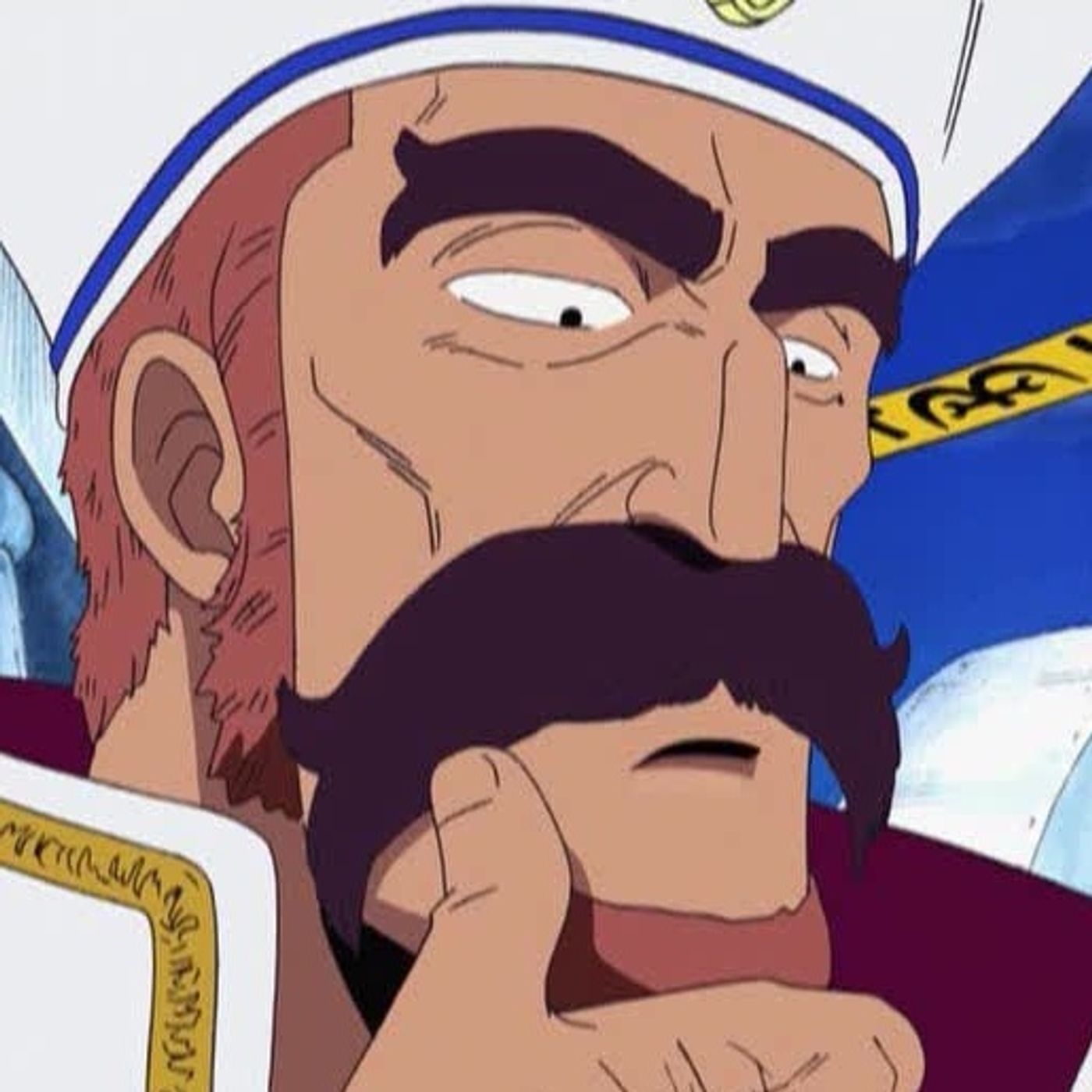
What makes the One Piece G-8 arc special is how it handles the power scaling. In most filler, the villains are just weaker versions of previous bosses. Here, the primary "antagonist" isn't a brawler. Vice Admiral Jonathan doesn't want to trade punches with Luffy. He wants to outthink him.
Jonathan is a tactical genius who enjoys fishing and good food. He’s probably the most relatable Marine in the entire series. He knows he can’t just charge in and arrest everyone, so he plays a game of cat and mouse, closing off exits and waiting for the pirates to make a mistake. It’s a battle of wits, which is a refreshing change of pace for a series that usually relies on who can yell the loudest before punching a hole through a building.
The Sanji and Zoro Dynamic at Its Peak
If you want to see the Straw Hat crew's personalities shine, this is the arc for you. Because they get separated almost immediately, each character has to find their own way to survive inside a base crawling with thousands of Marines.
Sanji’s subplot is legendary. He ends up disguised as a chef in the Marine kitchen. Does he poison the food? No. He’s Sanji. He gets offended by how much food the Marine chefs are wasting and gives them a masterclass on how to cook gourmet meals using scraps and leftovers. It’s a perfect character beat. It reinforces his code of ethics as a cook while providing some of the funniest moments in the show.
Then you have Zoro. He gets lost. Obviously. But he gets lost in a way that actually moves the plot forward, eventually ending up in a brig where he has to figure his way out without just cutting through every wall in sight.
Even Chopper and Nami get great moments. Nami has to disguise herself as a nurse, and Chopper has to deal with the moral dilemma of helping injured Marines. This is the "secret sauce" of G-8. It treats the crew as people with specific skills, not just combat units.
Vice Admiral Jonathan: A Different Kind of Villain
We need to talk about Jonathan. Most Marine fillers give us a guy who is just "Evil Captain #4." He’s usually corrupt, cruel, and ultimately forgettable.
Jonathan is none of those things. He’s a veteran. He’s calm. He loves his wife, Jessica, who happens to be the head chef Sanji is impressing. The stakes aren't about saving a kingdom; they're about the Straw Hats trying to get their gold and their ship back while Jonathan tries to prove that a strategic mind is more dangerous than a Devil Fruit.
He’s the kind of guy you’d actually want to grab a drink with. By the time the arc ends, you almost feel bad for him when the Straw Hats finally make their escape. He isn't disgraced by the loss, though. He views it as a learning experience. That kind of nuance is rare in any long-running shonen, let alone in a filler arc produced by Toei Animation to let the manga get ahead.
Why G-8 Beats Most Canon Arcs
It sounds like heresy, but G-8 is arguably better paced than some of the official canon material. Because it’s only 11 episodes (Episodes 196 to 206), there is zero bloat. Every scene serves a purpose.
Compare this to the Long Ring Long Land arc that follows it. Long Ring Long Land is canon (mostly), but it feels significantly more "filler-y" than G-8 does. G-8 captures the spirit of adventure and the specific chemistry of the pre-timeskip crew in a way that feels essential.
- Atmosphere: The base feels claustrophobic.
- Comedy: The Condoriano gag is arguably the funniest joke in One Piece. If you know, you know.
- Animation: For a 2004 production, the quality is remarkably consistent.
The "Condoriano" bit involves Usopp convincing the Marines that a random inspector is actually a member of their crew named Condoriano. It’s a ridiculous, low-stakes lie that spirals out of control. It works because it relies on the characters' established traits—Usopp’s lying and the Marines' occasional incompetence.
The Cultural Impact of Navarone
For years, fans have lobbied for Jonathan to become a canon character. While Oda hasn't officially brought him into the manga, the impact of the One Piece G-8 arc is undeniable. It’s often the first thing fans mention when a newcomer asks, "Can I skip the filler?"
The answer is always: Skip everything else if you want, but do not skip G-8.
It serves as a bridge. It transitions the crew from the whimsical, high-fantasy world of Skypiea back to the grounded, gritty reality of the "Blue Sea" and the upcoming Water 7 saga. It reminds us that the Marines are a massive, organized force. They aren't just fodder; they are a functioning bureaucracy with logistics, hierarchies, and genuinely smart leaders.
How to Get the Most Out of the Watch
If you’re revisiting the series or watching for the first time, pay attention to the background details in Navarone. The layout of the base is actually consistent. The way the Straw Hats move through the ducts and hallways makes sense geographically.
Also, watch the interaction between Jonathan and his subordinate, Drake. It’s a great look at the internal politics of the Marines. Jonathan’s laid-back attitude clashes with the more rigid, "by the book" expectations of the World Government, which foreshadows the internal rifts we see later in the series with characters like Aokiji and Fujitora.
Navarone isn't just a prison; it's a character in itself. The way the tide affects the escape plan is a classic One Piece trope—using nature as both an obstacle and a tool.
Technical Details and Production
Directed by Kenji Yokoyama and written by Hirohiko Kamisaka, the G-8 arc was a gamble. Toei needed to fill time, but they clearly put the "A-team" on this project. They understood that after the heavy emotional weight of the Enel fight, the audience needed a "breather" arc that still maintained a sense of danger.
The music choices here are also top-notch. Using the classic One Piece motifs during the stealth sequences adds a layer of "heist movie" energy that the show rarely taps into. It’s less "superhero battle" and more "Ocean’s Eleven with pirates."
Common Misconceptions About G-8
- "It’s in the manga." No, it isn't. Not a single panel. It’s purely an anime invention.
- "It’s mandatory for the plot." Technically, no. You can skip from Episode 195 to 207 and not miss a single beat of the main story. But you’d be missing some of the best character writing in the series.
- "The villains are weak." Jonathan would lose in a fistfight to almost any Straw Hat. But he’s the only villain who actually managed to "trap" the entire crew through sheer planning.
Actionable Steps for One Piece Fans
If you've been skipping filler based on online guides, go back and give this one a chance. It’s a masterclass in how to expand a universe without breaking the established rules.
For those who have already seen it, re-watch it with an eye for the foreshadowing of the crew's roles. You can see how much Nami has grown as a navigator and how much Sanji values the sanctity of the kitchen—themes that become massive pillars during the Whole Cake Island arc years later.
Don't treat it as "fake" content. In the hearts of most fans, the One Piece G-8 arc is as canon as it gets. It captures the soul of the series: a group of weirdos using their unique talents to survive in a world that doesn't want them to exist.
Check out the "Condoriano" scene on YouTube if you need a reminder of why this arc is a comedic goldmine. Then, set aside a weekend to binge these 11 episodes. It’s the best "non-story" story you’ll ever watch.
Stop thinking of filler as a waste of time. When it's done this well, it's just more time spent with characters we love. Navarone is the gold standard, and frankly, no other anime filler has ever come close to touching it.