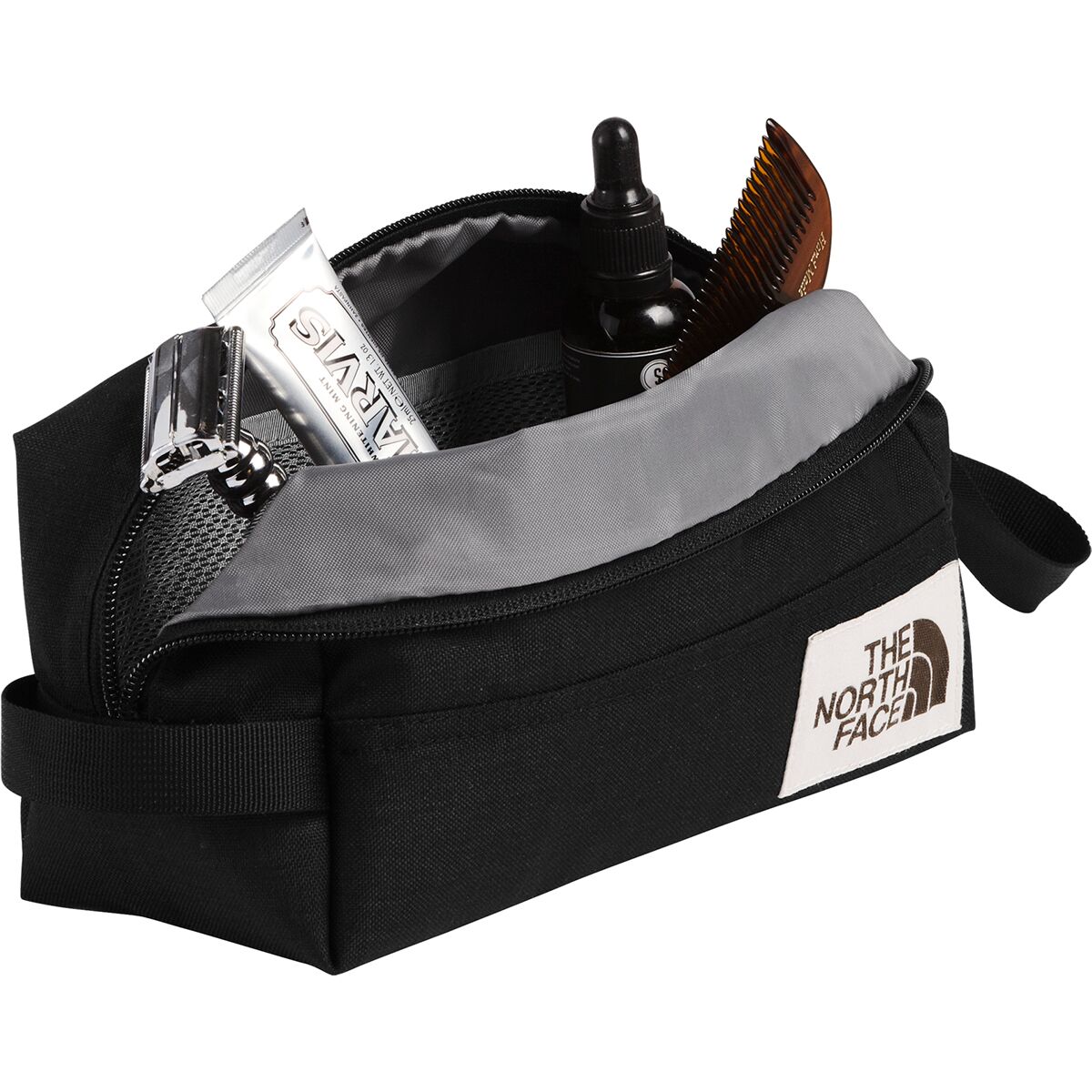
You’re standing in a cramped hostel bathroom in Bogotá or maybe a damp tent in the High Sierras. Your toothbrush is touching something sticky. Your expensive moisturizer just leaked all over your clean socks because the cheap zipper on your old kit gave up the ghost. It’s a mess. Most people think a toiletry bag is just a pouch, but if you actually travel, you know it’s the most high-stakes piece of gear in your carry-on. That’s where the North Face toiletry kit—specifically the legendary Base Camp series—comes into play.
People buy these things because they look cool. Honestly, though? You should buy them because they are essentially indestructible.
The North Face doesn’t just make one "kit." They have a whole ecosystem of organizers, but the standout is the Base Camp Voyager Toiletry Kit. It’s built from the same recycled polyester tarpaulin as their massive duffel bags. If you’ve ever seen those duffels being tossed off the roof of a bus in Nepal, you know the material. It doesn't care about rain, mud, or a leaking bottle of Dr. Bronner’s.
The Design Philosophy of the North Face Toiletry Kit
Structure matters. Most kits are either too floppy or too rigid. If it’s floppy, your glass cologne bottle breaks. If it’s too rigid, it takes up half your suitcase even when it's empty.
The North Face found a middle ground here.
The Voyager kit uses a three-fold design. You unroll it, and suddenly everything is visible. No digging. No "where did the floss go?" moments. It has this clever internal hook. You find a towel rack, a tree branch, or a shower curtain rod, and you hang it up. Your toiletries are now at eye level. It’s basically a portable medicine cabinet.
Why the Material is Overkill (In a Good Way)
The fabric is a 300D recycled polyester with a TPU coating. It feels rubbery and tough. It’s water-resistant, not waterproof—don’t go swimming with it—but it handles a wet bathroom counter like a champ.
I’ve seen people complain that the material is "stiff." It is. Especially when it’s brand new. But that stiffness is what protects your gear. You want that barrier when your bag is being crushed in an overhead bin.
What Most People Get Wrong About Sizing
There is a massive trap here. The North Face makes a "Small" and a "Large" version of their classic Base Camp Canister.
The Small is tiny. It’s about 3.5 liters.
The Large is 5.7 liters.
Most people see "Large" and think it’s for a family. Wrong. If you use full-sized shampoo bottles or a bulky electric toothbrush like a Philips Sonicare, the Small will frustrate you. It’s better for the minimalist—the person who depants their liquids into 3oz travel bottles. If you’re a "pack everything just in case" person, the Large is actually the standard size you're looking for.
Don't ignore the Voyager version either. While the classic "Canister" is a cylinder, the Voyager is a rectangle. Rectangles pack better. Squares and rectangles fit into the corners of a suitcase. Cylinders create "dead space." If you’re a "One Bag" traveler trying to maximize every cubic inch, the Voyager is the superior North Face toiletry kit for your layout.
The "Secret" Features You’ll Actually Use
There’s a small mirror inside.
Is it a high-definition vanity mirror? No. It’s a piece of reflective plastic. But when you’re shaving in a dark tent or trying to get a contact lens in at 3 AM in a train station, that little mirror is a lifesaver. It’s velcroed in. You can rip it out and hold it closer to your face. It’s a small detail that proves the designers actually travel.
Then there’s the daisy chain.
On the outside of the bag, there’s a strip of webbing. You can clip a carabiner to it. Why? Because sometimes the bathroom is so gross you don’t even want your bag touching the wall. You clip it to your backpack or a pipe. It stays off the floor.
Let's Talk About the Zippers
YKK zippers are the gold standard. The North Face uses beefy ones. They don’t snag on the lining, which is a common death sentence for cheaper bags from Amazon. If you overstuff the bag—and you will—the zippers can handle the tension.
Comparing the Canister vs. the Voyager
If you're stuck between the two, here is the breakdown.
The Base Camp Canister is a tank. It’s round, has a mesh pocket under the lid, and a single hanging clip. It’s classic. It looks like a miniature version of the duffel bag. It’s iconic.
The Base Camp Voyager Kit is the modern evolution. It has more organization. It has a dedicated "dry" pocket and a "wet" mesh area. It lays flat. Honestly, the Voyager is the smarter buy for 90% of travelers. The only reason to get the Canister is if you love that heritage look or if you literally need to throw your toiletries into a wet environment where the cylindrical shape helps shed water better.
Real World Durability: The 5-Year Test
Most gear reviewers get a product, play with it for a weekend, and write a "best of" list. That’s useless.
I’ve seen these kits after five years of heavy use. The TPU coating might get some scuffs. The logo might fade a bit. But the seams don't pop. The fabric doesn't tear. Unlike leather kits that stain or nylon kits that fray, the North Face toiletry kit just gets a "patina" of adventure. You can literally wipe it down with a damp cloth and it looks 95% new.
There’s a downside to this durability, though. It’s heavy.
If you are an ultralight hiker counting every gram, this isn't your bag. A Ziploc bag is lighter. A sil-nylon pouch is lighter. This kit is for the traveler who values protection and organization over shaving off two ounces of weight.
Is it Worth the Price?
You’re looking at $30 to $50 depending on the model and size.
You can find a generic toiletry bag at a big-box store for $12. Is the North Face worth three times the price?
Think about it this way: how much is the stuff inside worth? If you have an electric razor, expensive skincare, and a bottle of cologne, you’re carrying $200+ of stuff in that bag. Spending an extra $20 to ensure those things don't get crushed or soaked is just good insurance. Plus, you won't be buying a new one in two years. It's a "buy it once" item.
How to Pack Your Kit Like a Pro
- Heavy stuff at the bottom. When the bag is hanging, gravity is your enemy. Put the heavy bottles in the secure loops at the bottom of the main compartment.
- Use the mesh for "breathing." If your toothbrush is slightly damp, put it in the mesh section, not the sealed plastic one. Mildew is real, and it’s gross.
- Decant. Don't bring the full bottle of mouthwash. Buy some high-quality silicone squeeze bottles. The North Face kit works best when it's filled with medium-sized items rather than a few huge ones.
- The "External" Hack. If your kit is full but you forgot your sunscreen, use the external daisy chain. Clip the sunscreen to the outside.
Final Insights for the Frequent Traveler
The North Face has a reputation for "lifestyle" gear now, but their equipment roots still show in these kits. They are over-engineered for a weekend at a Marriott, which makes them perfect for everywhere else.
If you want the best organization, go for the Voyager.
If you want the most durable, "bombproof" feel, go for the Base Camp Canister.
Avoid the "Small" size unless you are a true minimalist.
Your Next Steps
Stop using the free pouch that came with your suitcase. It’s probably flimsy and lacks a hanging hook.
Go to a local outdoor retailer and actually touch the material of the Voyager kit. Feel the thickness. Test the zipper. Once you realize how much abuse these can take, you’ll understand why they’ve become a staple in the kits of professional photographers, field researchers, and long-term backpackers.
Check your current "liquids" footprint. If you have more than five full-sized items, you need to either downsize your bottles or commit to the Large size.
Pack it. Zip it. Toss it in your bag. Forget about it. That’s the goal of good gear—it should be the last thing you have to worry about when you're navigating a new city or a remote trail.