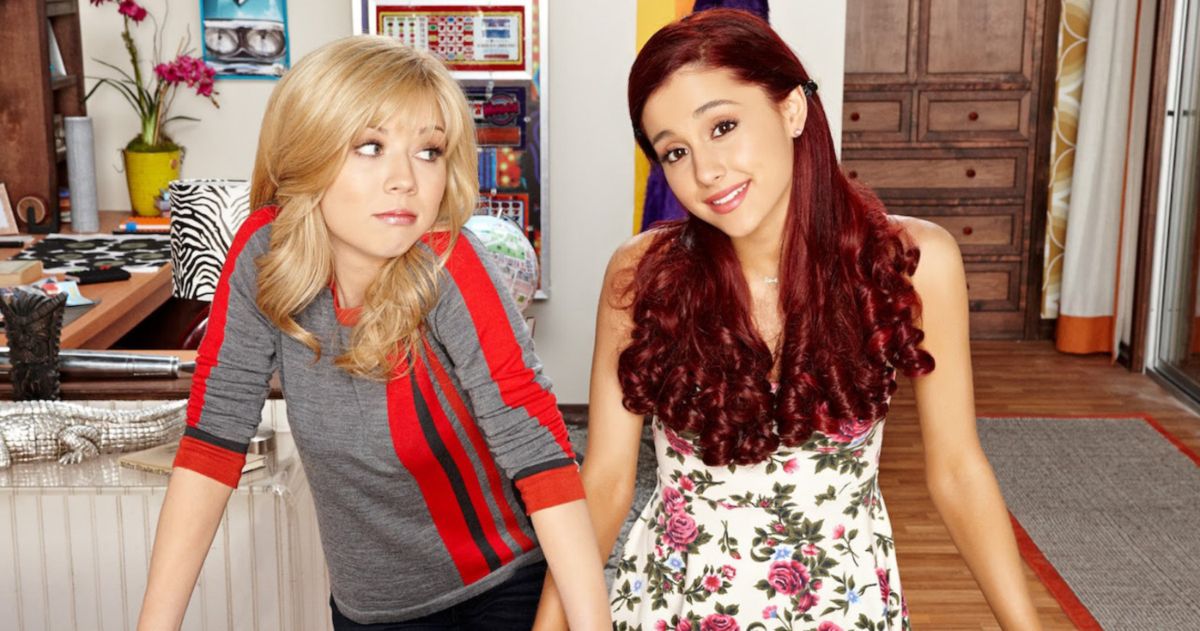
When Nickelodeon announced a crossover spin-off featuring Jennette McCurdy’s Sam Puckett and Ariana Grande’s Cat Valentine, fans lost their minds. It was a massive deal. Think about it. You’re taking the two most popular sidekicks from iCarly and Victorious—the network's biggest titans—and smashing them together into a buddy comedy. On paper, it was a guaranteed decade-long run.
Instead, it crashed. Hard.
People still talk about why Sam & Cat disappeared after just 35 episodes. It wasn't because of low ratings. In fact, the numbers were huge. The show was basically the crown jewel of Nickelodeon's 2013-2014 season. But behind the neon sets and the "Goomer" gags, the production was a total pressure cooker. If you want to understand the modern history of kids' TV, you have to look at this specific show as the turning point where the "old Nick" started to fracture.
The Massive Success That Nobody Predicted
Most spin-offs fail. Usually, they feel like a cheap cash grab. But Sam & Cat had this weird, chaotic energy that actually worked. Sam was the aggressive, fried-chicken-loving rebel; Cat was the dim-witted, sweet, high-pitched optimist. It’s the classic "odd couple" trope, but refined for a generation that grew up on Dan Schneider’s specific brand of fast-paced, surreal humor.
The premise was simple. The girls meet in the back of a garbage truck—classic Nick—and start a babysitting business in Los Angeles. It sounds mundane, but the show thrived on the bizarre. We're talking about a world where kids are trapped in boxes and a guy named Dice sells weird hair products.
Ratings-wise, the premiere pulled in roughly 4.8 million viewers. That’s huge even by today’s standards. For a cable network in 2013, it was a gold mine. Kids loved the slapstick. Parents tolerated it because the leads were charming. Honestly, the chemistry between McCurdy and Grande was undeniable on screen, even if things were getting messy off-camera.
When the Two Worlds Collided and Cracked
Here is the thing about Sam & Cat that most people forget: the timing was a nightmare.
While the show was filming, Ariana Grande’s music career didn't just "start." It exploded. She released Yours Truly right around the time the show launched. Then came "Problem" with Iggy Azalea. Suddenly, Nickelodeon didn't just have a TV star; they had a global pop icon who was topping the Billboard Hot 100.
This created a massive logistical headache.
Reports from that era suggest that Ariana was often late to set or had to miss filming for music obligations. Imagine being Jennette McCurdy in that situation. You've been a loyal Nickelodeon star for years. You’re the co-lead. But your partner is becoming a superstar and the schedule is bending over backward to accommodate her. It’s a recipe for resentment.
Jennette has since been very open about her experiences at the network. In her memoir I'm Glad My Mom Died, she didn't hold back. She described the "The Creator" (widely understood to be Dan Schneider) and the toxic environment she felt trapped in. She specifically mentioned feeling like she was being treated differently than Grande, particularly regarding career opportunities outside the show.
The Infamous Kids' Choice Awards No-Show
The breaking point for the public was the 2014 Kids' Choice Awards. Jennette McCurdy was conspicuously absent.
She took to social media to explain that she was "put in an uncomfortable, compromising, unfair situation" by the network. She clarified it wasn't about her fans, but about how she was being treated. Rumors flew about pay disparities. People speculated that Ariana was making significantly more money. Ariana later denied this on Facebook, claiming they were both paid equally, but the damage was done. The "feud" was the only thing anyone talked about.
Why the Show Was Actually Cancelled
Nickelodeon officially put the show on "hiatus" in April 2014. By July, it was cancelled.
It wasn't just the alleged tension between the leads. It was a perfect storm of three things:
- The Leads Wanted Out: Ariana was ready to be a full-time pop star. Jennette was disillusioned with acting and the specific environment at Nickelodeon.
- The Dan Schneider Era Was Shifting: While he wouldn't officially part ways with Nick until 2018, the cracks were showing. The frantic production schedule of a 40-episode first season (which was unheard of) burnt everyone out.
- The "Sexy" Photo Scandal: Around the same time, some private photos of Jennette were leaked online. In the world of 2014 kids' TV, the network was terrified of any "adult" controversy. They didn't stand by her the way many felt they should have.
Honestly, the show couldn't survive that much drama. You can't make a fun, lighthearted show about babysitting when the two leads aren't speaking and the network is in damage control mode.
The Legacy of Sam & Cat in Pop Culture
Despite only lasting one season, Sam & Cat lives on in a weird state of digital purgatory. It’s a staple on Netflix and Paramount+. New generations of kids discover it every day, completely unaware that the production was a total fire skip.
It also served as the final chapter for two iconic characters. Sam Puckett’s journey, which started in a school hallway in Seattle, ended in a colorful LA apartment. Cat Valentine’s evolution from the quirky girl at Hollywood Arts to a business owner (sort of) was completed.
But more importantly, the show’s demise marked the end of an era for Nickelodeon. It was the last time the network tried to build a "super-show" around established stars. After Sam & Cat, they pivoted toward younger, unknown casts and moved away from the star-power model that defined the 2000s.
What We Can Learn From the Fallout
If you look at the career trajectories of both women now, the cancellation was probably the best thing that could have happened. Ariana Grande is one of the most successful artists of the 21st century. Jennette McCurdy became a New York Times bestselling author and a powerful voice for survivors of child stardom.
They both outgrew the "orange couch."
The show is a time capsule. It’s a glimpse into that weird transition period between cable TV dominance and the rise of social media stardom. It’s also a reminder that what we see on screen—the laughter, the bright colors, the jokes—is often a mask for a much more complicated reality.
How to Revisit the Series Today
If you're feeling nostalgic or just curious about what the fuss was about, here is how you should approach Sam & Cat now:
- Watch the "The Killer Tuna Jump": It’s a one-hour special that brought back characters like Jade West and Freddie Benson. It is arguably the peak of the "Schneider-verse" crossovers.
- Read "I'm Glad My Mom Died": To get the full context of what was happening during the filming of this show, McCurdy’s book is essential reading. It changes how you see every "Sam" joke.
- Check the Credits: Notice how many people involved in this show went on to work on Henry Danger or Game Shakers. It was a massive training ground for the next decade of Nick talent.
There won't be a reboot. There won't be a "ten years later" special. The bridges weren't just burned; they were vaporized. But as a standalone piece of entertainment history, Sam & Cat remains a fascinating look at what happens when lightning in a bottle gets too hot to hold.
To get a true sense of the show's impact, compare the episode "Blue Dog Soda"—which deals with a fictional soda ban—to the real-life regulations being discussed at the time. The show often snuck in weirdly relevant social commentary under the guise of nonsense.
If you're diving back in, look for the subtle shifts in the final five episodes. You can actually see the energy change. The sets look a little lonelier. The plots get a little more disjointed. It's the sound of a show ending before it was ready.
To better understand the evolution of these characters, you might want to re-watch the final season of iCarly alongside the first season of Victorious. This provides the necessary background on why their pairing was so jarring yet successful. Additionally, researching the production cycles of 2010s sitcoms reveals how the 40-episode order for Sam & Cat was a nearly impossible task for any cast, regardless of their personal relationship.