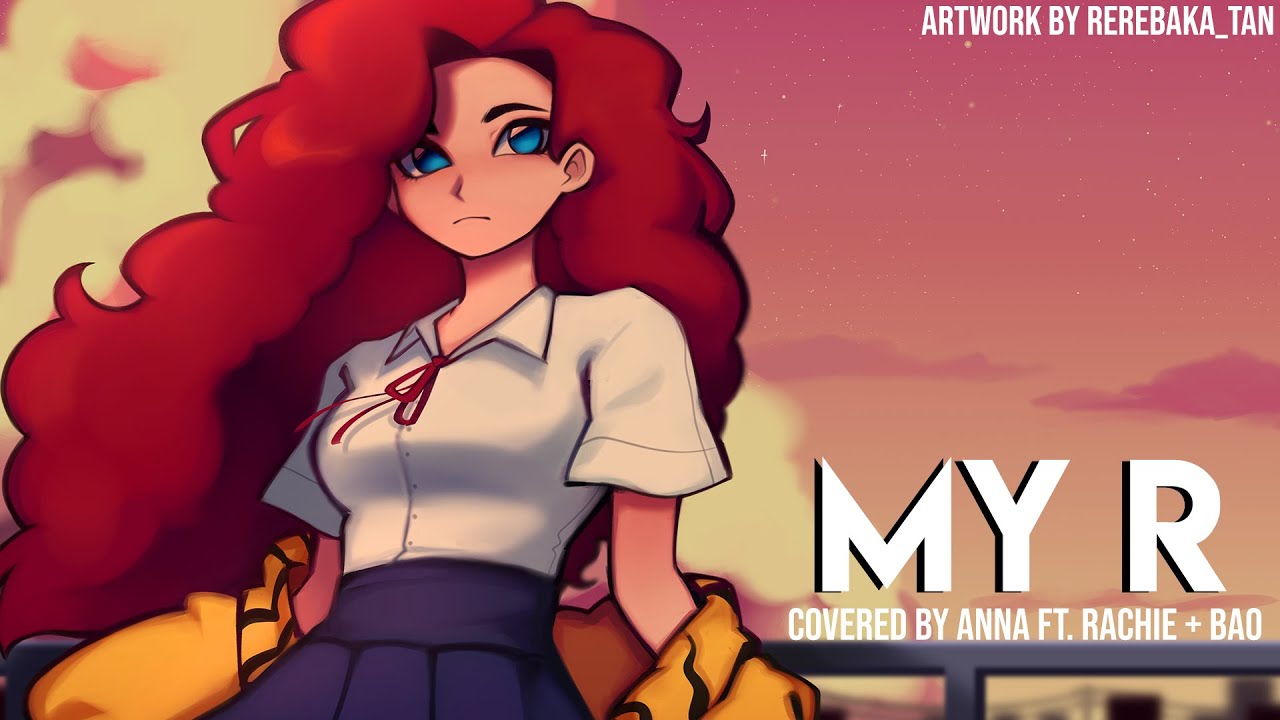
You've probably heard it on a TikTok loop or stumbled across a fan-animated MV on YouTube late at night. The piano kicks in, upbeat but slightly off-kilter, and then the lyrics start. It feels like a gut punch. My R (originally Watashi no R) isn't just another catchy Vocaloid track from the mid-2010s; it’s a heavy, layered narrative about the cycles of pain we keep hidden. If you're looking for the My R song meaning, you have to look past the bright melody and focus on the girl on the roof.
She’s about to jump. But then, she isn't alone.
Created by the Japanese producer Kurage-P (also known as Wada Takeaki), the song features the voice of Hatsune Miku, though many fans associate it more strongly with the various "utaite" covers that brought more raw, human emotion to the performance. It was released back in 2016, yet it trends every single year. Why? Because it captures a very specific, very painful kind of empathy that most "sad" songs completely miss.
The Rooftop Encounters: Breaking Down the Script
The structure of the song is a series of interruptions. We meet our protagonist—often called "R-ko" by the Japanese fandom—as she prepares to end her life. She’s stopped by three different girls, each presenting a different reason for their own despair.
First, there’s the girl with the braided hair. She’s been robbed of a chance at love. R-ko listens to her story and, in a moment of strange, defensive frustration, tells her she’s being "silly" because she isn't actually suffering that much. She tells the girl to go home. The girl disappears.
Then comes the girl with the short hair. She’s been ostracized and ignored at school. Again, R-ko dismisses her. She basically says, "Everyone hates you? So what? At least you have a home."
The third is the girl in the oversized cardigan. She’s struggling with something much deeper, something involving her family and a sense of "lost things." R-ko sends her away too.
On the surface, it feels like R-ko is being mean. You might think she's just a cynical person who doesn't care about others. But that's where the My R song meaning gets complicated. She isn't being cruel; she’s projecting. She is trying to convince herself that her own reasons for being on that roof are more "valid" or "heavy" than theirs, while simultaneously trying to save them from making the mistake she’s about to make.
Who Are the Three Girls?
This is the big theory that almost every long-time fan agrees on: The girls aren't real.
They are fragments.
If you watch the original PV (promotional video), notice the subtle visual cues. The girls represent different stages or different aspects of R-ko’s own trauma.
- The girl with braids represents romantic heartbreak.
- The girl with short hair represents social isolation.
- The girl in the cardigan represents domestic or internal grief.
By telling them to go away, R-ko is trying to suppress these parts of herself. She’s telling her own memories to "get lost" because she can't handle the weight of them anymore. It’s a psychological defense mechanism played out on a literal ledge. When she tells the braided girl that "everyone loves her," she’s actually grieving the fact that she feels unloved. It’s a conversation with a mirror.
The Final Twist and the Yellow Cardigan
The song reaches its peak when a fourth girl appears. This time, it’s different.
The fourth girl is wearing a yellow cardigan. She doesn't have a specific "problem" like the others. She just looks tired. She looks like she’s already given up. In the lyrics, R-ko realizes she can't talk this one out. She can't dismiss her.
This is the "R" in the title. Some suggest "R" stands for "Rooftop," others say it stands for "Repeat," or even "Regret." But in the context of the story, the girl in the yellow cardigan is the current version of the protagonist. She is the one who has run out of excuses to stay.
Honestly, the way Kurage-P composed the ending is terrifyingly brilliant. The music swells, the "don't do it" refrain repeats, and then... silence. The perspective shifts. We realize that the narrator we've been following wasn't just a witness. She was the one the girls were trying to stop. Or rather, she was the one trying to stop herself until she simply couldn't anymore.
Why People Misunderstand the Message
A lot of people think My R is a "pro-life" anthem. They see it as a song about helping others.
That’s a bit of a stretch.
If you look at the lyrics objectively, it's actually a very dark depiction of the "crabs in a bucket" mentality of depression. R-ko keeps saying, "Stop, you don't have it as bad as me." That’s a toxic thought process! It’s called "comparative suffering." We do it all the time. We tell ourselves we shouldn't be sad because someone else has it worse, or we tell others their problems are small because we’re drowning in bigger ones.
The song isn't necessarily a "message of hope." It’s a portrait of a breaking point. It captures that moment when you’re so overwhelmed by your own pain that you start to resent the pain of others.
Cultural Context: The "Vocaloid Sad Song" Era
You have to remember that when this song came out, the Vocaloid community was obsessed with "dark" themes. Tracks like Rolling Girl or Lost One's Weeping were already staples. Kurage-P took that energy but added a narrative sophistication that made My R stand out. He didn't just use Miku to scream about being sad; he used her to tell a non-linear story about dissociation.
In Japan, the "rooftop" is a massive cultural trope in anime and music. It’s the place of confession, but also the place of finality. By setting the entire song there, Kurage-P tapped into a very specific aesthetic of teenage melancholy that resonates globally.
The Sound of Dissociation
Musically, the song is a paradox. It’s fast. It’s almost "bouncy."
That’s intentional. It reflects the "manic" side of a mental health crisis. When you’re at that level of stress, your brain doesn't always sound like a slow, dragging violin. Sometimes it sounds like a racing heartbeat. It sounds like a piano being played too fast. The contrast between the upbeat tempo and the devastating lyrics is exactly what makes the My R song meaning so haunting. It feels like someone trying to stay "composed" while their world is ending.
How to Actually Process the Song
If you're listening to this song and feeling seen, that’s okay. It’s a powerful piece of art. But it’s also a warning.
The tragedy of the narrator is that she spent all her time comparing her pain to others' instead of seeking help for her own. She spent the whole song "winning" the suffering Olympics. And in the end, that didn't save her.
Actionable Insights for Fans and Listeners:
- Stop Comparing Scars: The song shows that dismissing someone else's pain (or your own) because it’s "not as bad" as someone else's is a dead end. Pain is not a competition.
- Look for the "Yellow Cardigan" Signs: In real life, people who are struggling often hide behind "smaller" problems before they reach their limit. Pay attention to the subtle shifts in friends' behavior, not just the big outbursts.
- Engage with the Community Covers: If the original Miku version feels too "robotic," check out the covers by Lollia or Rachie. They offer different vocal interpretations that highlight the "human" aspect of the lyrics.
- Use it as a Gateway: If you're moved by this, look into the works of other producers like PinocchioP or Maretu. They deal with similar themes of social anxiety and internal struggle but from different stylistic angles.
The "R" might stand for a lot of things, but for the listener, it should stand for Reflection. Take the time to understand that everyone on that "rooftop"—whether literal or metaphorical—deserves to be heard, including yourself.