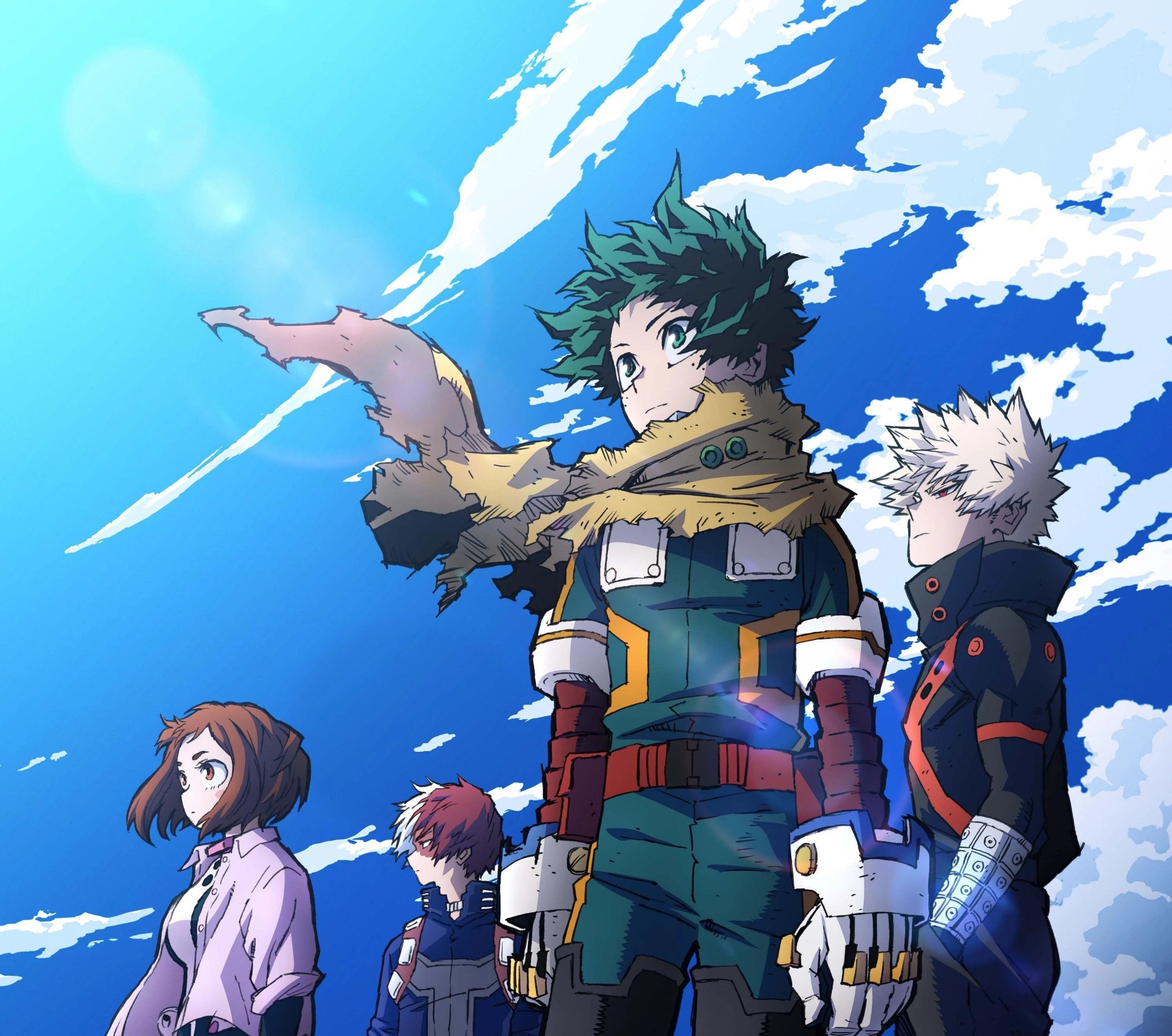
Honestly, if you ask any long-time fan where the series really "found its soul," they aren't going to point to the first few episodes. They’re pointing straight at My Hero Academia Season 2. This is the stretch of the story where Kohei Horikoshi stopped just introducing a world of "Quirks" and started actually interrogating what it means to live in a superhuman society. It’s messy. It’s loud. It’s emotionally exhausting in the best possible way. While the first season was a standard "boy meets hero" setup, the second season is where the stakes stop being about just passing a test and start being about the weight of legacy.
Izuku Midoriya is still our focal point, sure. But this season is where the supporting cast stops being background noise.
We’re talking 25 episodes that aired back in 2017, produced by Studio Bones, covering two of the most critical arcs in the entire manga: the UA Sports Festival and the Vs. Hero Killer arc. It’s rare for an anime to maintain such a high level of animation quality across two consecutive cours, but Season 2 somehow pulled it off. You can see the shift in the color palette and the choreography. It’s sharper. It’s meaner.
The Sports Festival: More Than Just a Tournament
Most shonen anime have a tournament arc. It’s a trope. You know how it goes—characters fight, they get power-ups, and someone wins a trophy. But the My Hero Academia Season 2 approach to the UA Sports Festival is different because the "prize" isn't just a medal. It’s visibility. In a world where being a Hero is a literal career path with rankings and endorsements, this festival is a job interview. It’s a ruthless meat grinder where 15-year-olds are forced to market their trauma for the sake of a "Pro Hero" internship.
Think about Shoto Todoroki.
Up until this point, we just knew he was the "strong guy" with the ice powers. Season 2 rips that open. We see the domestic abuse, the eugenics-based "Quirk marriage," and the sheer psychological damage inflicted by Endeavor. When Midoriya screams "It’s your power, isn't it?" during their fight, it’s not just a cool shonen moment. It’s a rejection of biological determinism. It’s heavy stuff for a show about kids in spandex.
The animation during the Todoroki vs. Midoriya fight remains some of the best work Studio Bones has ever put on screen. Director Kenji Nagasaki and lead animator Yutaka Nakamura used a "thick line" style for the impact shots that made every explosion feel like it was cracking your own screen. It wasn't just pretty; it was violent. It showed the physical toll of One For All in a way that felt visceral. Midoriya’s fingers weren't just "hurt"—they were purple, shattered, and ruined.
Stains and the Deconstruction of Heroism
Once the confetti from the festival clears, the show takes a dark, sharp turn. We move into the "Vs. Hero Killer" arc. This is where Chizome Akaguro—better known as Stain—enters the fray.
Stain is arguably the most important villain in the entire franchise. Not because he’s the strongest, but because he’s right. Sorta.
He looks at a society full of "heroes" who are only in it for the paycheck or the fame and calls them out as fakes. He wants a world of true altruism, like All Might. The irony is that his method of achieving this "pure" world is through cold-blooded murder. When he hunts down Iida’s brother, Tensei, it shatters the illusion of safety that UA provides.
Tenya Iida’s character arc here is incredible. He’s the class rep, the rule-follower, the straight-edge kid. And yet, in the face of tragedy, he becomes a vigilante driven by pure, blinding rage. It’s a cautionary tale. It shows that the line between a "Hero" and a "Villain" is often just a matter of who you're angry at and why. The fight in the Hosu City alleyway—Midoriya, Todoroki, and Iida against Stain—is a masterclass in tactical combat. It’s not about who has the biggest laser beam; it’s about positioning, timing, and psychological warfare.
Breaking Down the Production
You can’t talk about this season without mentioning the music. Yuki Hayashi is a genius. The track "You Say Run" is iconic, but Season 2 introduced "Jet Set Run" and the various themes for the villains that added a layer of tension the first season lacked.
The pacing is also surprisingly tight.
- Episodes 1-13: The UA Sports Festival (Introduction of Hitoshi Shinso and the "Quirkless" struggle).
- Episodes 14-20: The Hero Killer Stain arc (The shift from school life to real-world danger).
- Episodes 21-25: Final Exams (Pairing students against teachers to expose their weaknesses).
Compare this to later seasons where the pacing can sometimes feel dragged out by flashbacks. In Season 2, every episode feels like it's pushing the plot or the character development forward. There’s almost no "fat" on this season. Even the "filler" episode about Tsuyu’s internship feels like it builds the world by showing what the Coast Guard equivalent of heroes looks like.
What Most People Get Wrong About Bakugo
A lot of viewers finish My Hero Academia Season 2 thinking Katsuki Bakugo is just an unredeemable jerk. He wins the Sports Festival, but he’s literally chained to the podium. He’s furious. People think he’s mad because he didn't "win enough," but that’s a misunderstanding of his character.
Bakugo is obsessed with a "complete victory."
To him, winning because Todoroki held back is a personal insult. It means he wasn't worth the full effort. Season 2 sets the stage for his eventual realization that strength isn't just about blowing things up—it's about earning the respect of your peers. His "victory" is a hollow one, and the show handles that nuance beautifully. It refuses to give him the easy "hero" moment.
The Lingering Legacy of Season 2
Why does this season still matter in 2026? Because it established the rules of the world. It taught us that being a hero is a burden. It showed us that villains aren't just "evil" for the sake of it; they are often the byproducts of a flawed system.
The "Final Exams" arc at the end of the season is often overlooked, but it’s crucial. Seeing Yaoyorozu struggle with her self-esteem or Mineta actually stepping up (as annoying as he is) adds layers to the class. It’s not just the "Midoriya and Friends" show. It’s a story about an entire generation trying to fill the shoes of a god-like figure (All Might) who is slowly fading away.
If you’re rewatching the series or jumping in for the first time, pay attention to the background characters. Keep an eye on the way the Pro Heroes react to the kids. There’s a subtle cynicism under the surface of the bright colors that pays off massively in the later, darker arcs of the manga.
Key Takeaways for Fans and New Viewers
If you want to truly appreciate the depth of this season, look beyond the fights.
1. Watch the Todoroki vs. Midoriya fight for the subtext, not just the sakuga. It’s a conversation about identity and breaking the cycle of abuse. Midoriya is literally breaking his body to save a rival's soul.
2. Analyze Stain’s ideology. Most of the villains who appear in later seasons (like the League of Villains) are actually inspired by Stain's "will," not Shigaraki's desire for destruction. Stain is the ideological catalyst for the entire series' conflict.
3. Observe the "Quirk Registry" implications. The Sports Festival shows how society labels people based on their utility. Characters like Hitoshi Shinso, whose Quirk is "villainous," highlight the systemic prejudice within the hero world.
4. Appreciate the internship phase. This is the only time we see the "mundane" side of being a hero—patrolling, cleaning up, and dealing with the public. It grounds the fantasy in a relatable reality.
5. Re-evaluate the Bakugo/Midoriya dynamic. Their match in the final exams against All Might is the first time they are forced to actually communicate. It’s the beginning of a very long, very painful bridge-building process between two childhood friends who became enemies.
The best way to experience Season 2 is to watch it with an eye for the "cracks" in the hero society. The show wants you to cheer for the heroes, but it also wants you to question why they exist in this specific way. It's a complicated, thrilling, and ultimately human story that remains the high-water mark for the entire franchise. If you've only seen it once, go back. You'll find things in the dialogue that you completely missed the first time around.
Next, you should look into how the "Hero License Exam" in the following season actually changes the legal landscape for these students, as the transition from Season 2 to Season 3 is arguably one of the most seamless shifts in modern anime history. Stick with the subtitled version if you can—the vocal performances by Daiki Yamashita (Deku) and Yuki Kaji (Todoroki) during the Sports Festival are career-defining work.