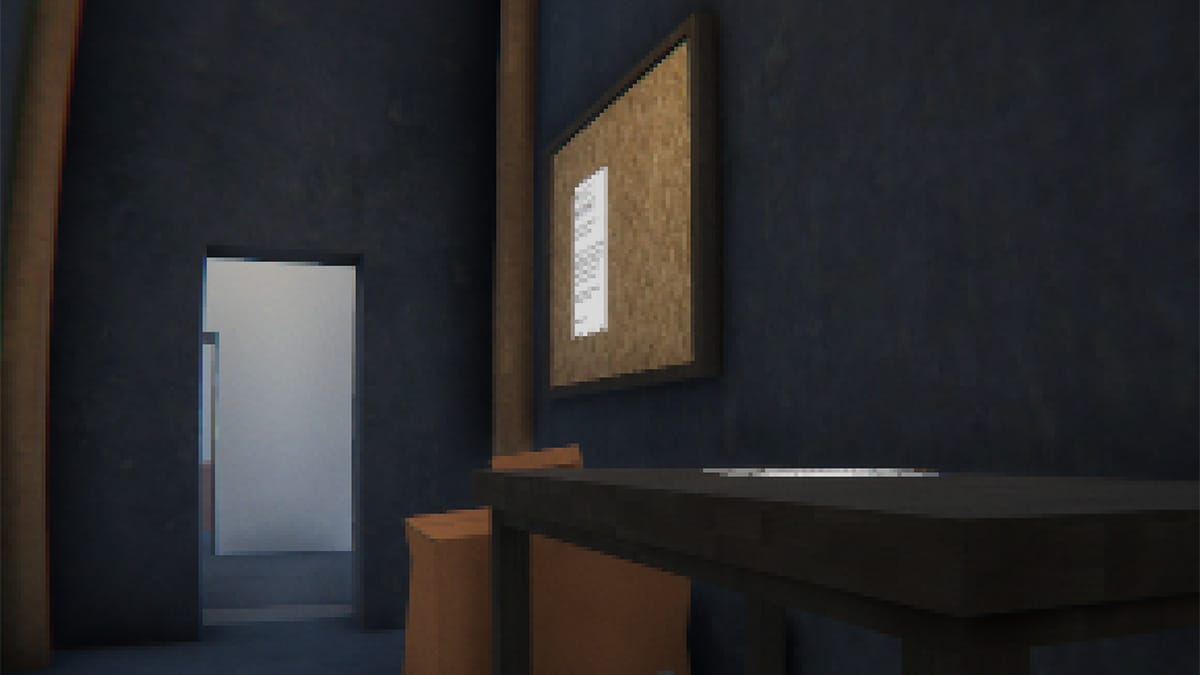
You’re sitting in a basement. It is dark, cramped, and the air feels heavy. Your dad—or at least the man you call Papa—tells you the world outside has ended. He says the air is poison. He says he’s the only one keeping you safe. This is the suffocating premise of My Eyes Deceive, a lo-fi indie horror game that has been haunting players and driving intense discussion across Reddit and YouTube. Honestly, it’s one of those games that sticks to your ribs long after you turn off your monitor.
The game is short. You can beat it in under an hour. But the psychological weight it carries is massive. It’s a masterclass in unreliable narration and the "gaslighting" simulator genre. People are constantly looking for My Eyes Deceive game explained because the ending doesn't just give you a neat little bow; it leaves you questioning every single interaction you had with Papa.
What Is Actually Happening in My Eyes Deceive?
To get the My Eyes Deceive game explained properly, we have to look at the perspective. You play as a young girl. You have lived in this shelter for as long as you can remember. Your entire reality is curated by Papa. He gives you pills. He tells you stories. He warns you about the "monsters" outside.
But the game drops breadcrumbs that something is deeply, horribly wrong.
You find a diary. You see things that don't match his stories. The "medicine" he gives you isn't for your health; it’s for his control. The horror here isn't a jump scare or a monster with too many teeth. It’s the realization that the person you trust most is the very person destroying your life. It’s a simulation of grooming and systemic abuse wrapped in a retro, PS1-style aesthetic.
The developers, Hat-Sama, use the low-fidelity graphics to their advantage. The blurriness makes you squint. You’re literally trying to see through the fog of the protagonist’s brain. It’s uncomfortable. It’s meant to be.
The Ending and the Choice
The climax of the game hits like a freight train. You eventually get the chance to see the "outside." Papa has been telling you the sky is red and the trees are dead. When you finally look through the small opening or manage to break the cycle, the reality is jarring.
There are two main paths.
In one, you stay. You succumb to the "eyes deceive" mantra. You accept the lie because the lie is safe. It’s a tragic ending that highlights how victims of long-term isolation often find it impossible to leave their captors.
In the other, you see the truth. The world is fine. The air is breathable. The monsters Papa talked about? Those were just people. Normal people. This realization is devastating because it reframes every "kind" gesture Papa made as a calculated move to keep you imprisoned.
Why the Game Is Specifically Titled My Eyes Deceive
The title is the key. It’s a directive. Papa constantly tells the protagonist that her eyes deceive her. If she sees something that contradicts his narrative—like a leaf that looks green or a person who looks kind—he tells her she’s hallucinating.
This is a real-world psychological tactic. It’s called gaslighting, though that word gets thrown around a lot these days. Here, it’s depicted in its purest, most toxic form. By convincing the victim that their own senses are lying, the abuser becomes the only source of truth. If you can't trust your eyes, you have to trust Papa.
The Symbolism of the Pills
The pills are a huge point of contention in the community. Some players think they are literal hallucinogens designed to make the outside world look scary. Others believe they are just sedatives to keep the girl compliant.
Honestly? It’s probably both.
The game uses the visual distortion of the screen to show the effects of these medications. When you're "medicated," the edges of the screen warp. The colors bleed. It creates a physical sensation of being trapped inside a failing mind.
The Real-World Inspiration (The Dark Part)
While My Eyes Deceive is a work of fiction, it draws heavily from horrific real-life cases of abduction and long-term confinement. It’s impossible to play this without thinking of the Natascha Kampusch case or the Turpin family. These aren't just "spooky stories"—they are reflections of the terrifying reality that some people live in total isolation right in the middle of a neighborhood.
The game handles this with a surprising amount of nuance. It doesn't rely on gore. It relies on the dread of a closing door. It relies on the sound of footsteps coming down the stairs.
How to Get the Secret Ending
Most people finish the game once and think they've seen it all. They haven't. To truly get the My Eyes Deceive game explained, you have to pay attention to the small interactions during the daily chores.
- Read everything. There are notes tucked away that provide context for Papa's past.
- Question the routine. Sometimes, doing exactly what you're told leads to the "bad" ending where you stay trapped forever.
- The Window. Paying attention to the changes in the window view is essential for understanding the timeline of your captivity.
The "True" ending requires you to resist the conditioning. It’s difficult. The game makes you feel guilty for disobeying. That’s the brilliance of the design—it manipulates the player just as Papa manipulates the girl.
Final Takeaways on the Mystery
My Eyes Deceive isn't a long game, but it’s a deep one. It’s a commentary on the power of narrative. Whoever controls the story controls the person.
The "monsters" aren't outside. They are sitting right across from you at the dinner table.
If you’ve finished the game and feel a bit sick to your stomach, that means it worked. It’s a reminder that our perception is fragile. It’s a reminder to trust your gut, even when the person you love is telling you that your gut is wrong.
Actionable Insights for Players:
- Look for environmental storytelling: Don't just rush through the chores. Look at the labels on the food cans and the dates on the papers. The world-building is in the trash piles.
- Play with headphones: The sound design in this game is subtle. The way Papa’s voice changes depending on your obedience is a major clue to his mental state.
- Compare the endings: To fully grasp the themes, you need to see both the "Compliance" and "Escape" endings. One shows the tragedy of a broken spirit; the other shows the terrifying cost of freedom.
- Support the dev: Hat-Sama has created a unique niche in the "dread-horror" genre. Check out their other projects on Itch.io if you want more games that prioritize atmosphere over jump scares.
The next step is to re-play with the knowledge that Papa is lying from second one. Watch how his dialogue shifts when you start showing agency. It’s a completely different experience the second time around.