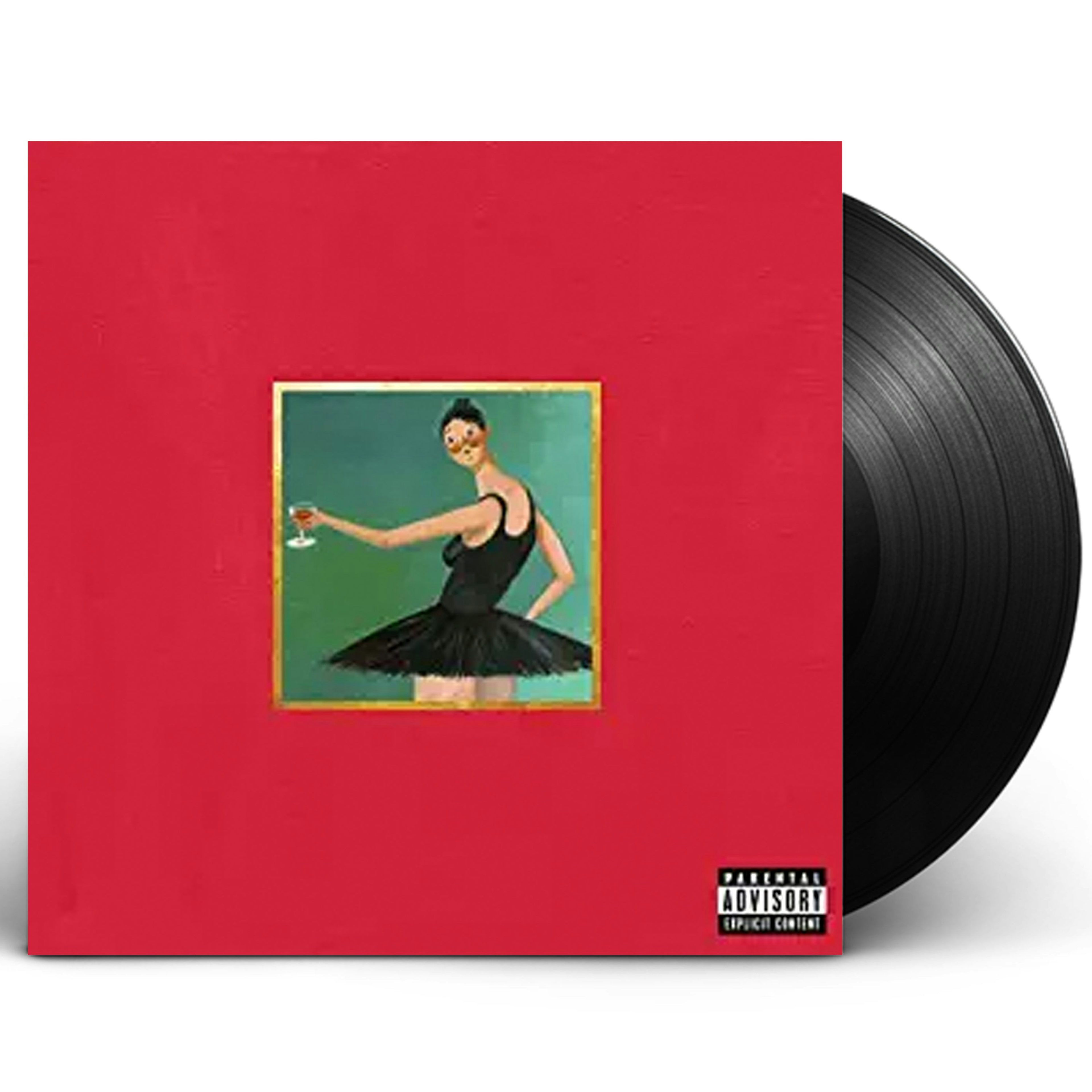
Kanye West was basically finished. Or so everyone thought back in 2009. After the Taylor Swift VMA incident, he was public enemy number one. Even the President called him a "jackass." He retreated to Hawaii, essentially going into a self-imposed exile to rebuild his life from the ground up. What came out of those sessions wasn't just a comeback; it was My Beautiful Dark Twisted Fantasy, a record so maximalist and expensive it basically broke the bank and the critics' brains at the same time.
Honestly, we don't see albums like this anymore.
It cost roughly $3 million to make. Def Jam was sweating. Kanye was block-booking three different rooms at Avex Recording Studio in Honolulu 24 hours a day. If he hit a wall on one track, he’d just walk across the hall and start on another. It was a "rap camp" atmosphere. Legends like RZA, Q-Tip, and Pete Rock were just hanging out, eating breakfast together, and then heading to the gym to play basketball before hitting the boards. It sounds like a fever dream because it was.
The Hawaii Sessions: A "Music by Committee" Masterpiece
Most people think of solo albums as one person’s vision, but My Beautiful Dark Twisted Fantasy was more like a massive collaborative art project. Kanye was the director, but he had a whole cast of geniuses. Q-Tip famously described the process as "music by committee." Kanye would play a beat, ask everyone in the room what they thought, and then tweak it based on their gut reactions.
He was obsessive.
Pusha T once mentioned how they’d be working on a specific song, and then Kanye would hear a sound Jeff Bhasker was messing with and completely pivot. It was alchemy. You had Justin Vernon of Bon Iver singing next to Rick Ross. You had Nicki Minaj delivering what many still consider the best guest verse of all time on "Monster."
- The Rules of the Studio: No tweeting. No hip-hop "yes men." Everyone had to be dressed in suits or formal wear sometimes just to keep the "vibe" professional.
- The Routine: Wake up, eat, exercise at the YMCA, then 14 hours of pure creation.
- The Goal: Perfection. Nothing less.
Why My Beautiful Dark Twisted Fantasy Still Hits Hard
The album is a "maximalist" wet dream. It’s got everything: cellos, distorted guitars, 40-person choirs, and samples that cost more than most people's houses. Take "Power," for instance. That song is built on a King Crimson sample that feels like a massive, looming shadow. It’s a track about having everything and realizing it’s making you lose your mind. "No one man should have all that power," he raps, and you can tell he actually believes it.
Then there’s "Runaway."
That nine-minute epic starts with a single piano note. Just one. Plink. It’s iconic. It’s a toast to the "douchebags" and the "assholes," basically Kanye admitting he’s a difficult person while simultaneously making the most beautiful music of his career. The second half of the song is just his voice distorted through a vocoder, sounding like a dying cello. It’s haunting, weirdly vulnerable, and totally unapologetic.
The album cover art by George Condo was another layer of "too much." There were five different covers because Kanye wanted to push buttons. One was a ballerina, another was a decapitated head, and the most famous one—the one that got censored by retailers—was a painting of Kanye being straddled by a winged monster. It was provocative on purpose. He wanted the world to see his "twisted fantasy" in high definition.
What Most People Miss About the "Apology"
Kanye has since called this his "apology" album. He’s actually gone on record saying Yeezus or 808s & Heartbreak are better because they were more "progressive." To him, My Beautiful Dark Twisted Fantasy was a calculated move to win the public back. He knew that if he made a "perfect" album, people would have to forgive him.
It worked.
Pitchfork gave it a 10/10. Rolling Stone gave it 5 stars. It debuted at #1 and went triple platinum. But there’s a dark undercurrent to that success. The album is obsessed with the price of fame. In "All of the Lights," amidst the triumphant horns and Rihanna’s soaring hook, the lyrics are actually about domestic violence, public shaming, and a father losing his family. It’s a shiny wrapper on a very dark gift.
The Impact on the Genre
- Death of the "Backpack" Rapper: It effectively ended the era where "art rap" and "commercial rap" were separate things.
- The Feature List: It set a new standard for features. Having Kanye on your track became a status symbol, but having ten legends on one song (like "All of the Lights") was unheard of.
- Production Density: It encouraged producers to stop using simple loops and start composing "movements."
Actionable Takeaways for the Super-Fan
If you want to truly appreciate this era, you’ve got to look beyond the 13 tracks on the streaming services.
First, watch the Runaway short film. It’s 35 minutes of pure visual storytelling that contextualizes the whole album. Second, hunt down the "G.O.O.D. Fridays" tracks. Every Friday leading up to the release, Kanye dropped a free song. Tracks like "Christian Dior Denim Flow" or the original "Christmas in Harlem" are top-tier and show how much leftover greatness was sitting on the cutting room floor.
Finally, listen to the album on high-quality headphones or vinyl. The layers of production by Mike Dean and No I.D. are so dense that you’ll hear something new—a hidden background vocal, a faint synth line, or a drum fill—even on the 100th listen.
My Beautiful Dark Twisted Fantasy isn't just a record; it's a historical document of what happens when a man with infinite resources and an enormous ego decides he has something to prove to the world. It’s messy, it’s arrogant, and it’s undeniably brilliant.