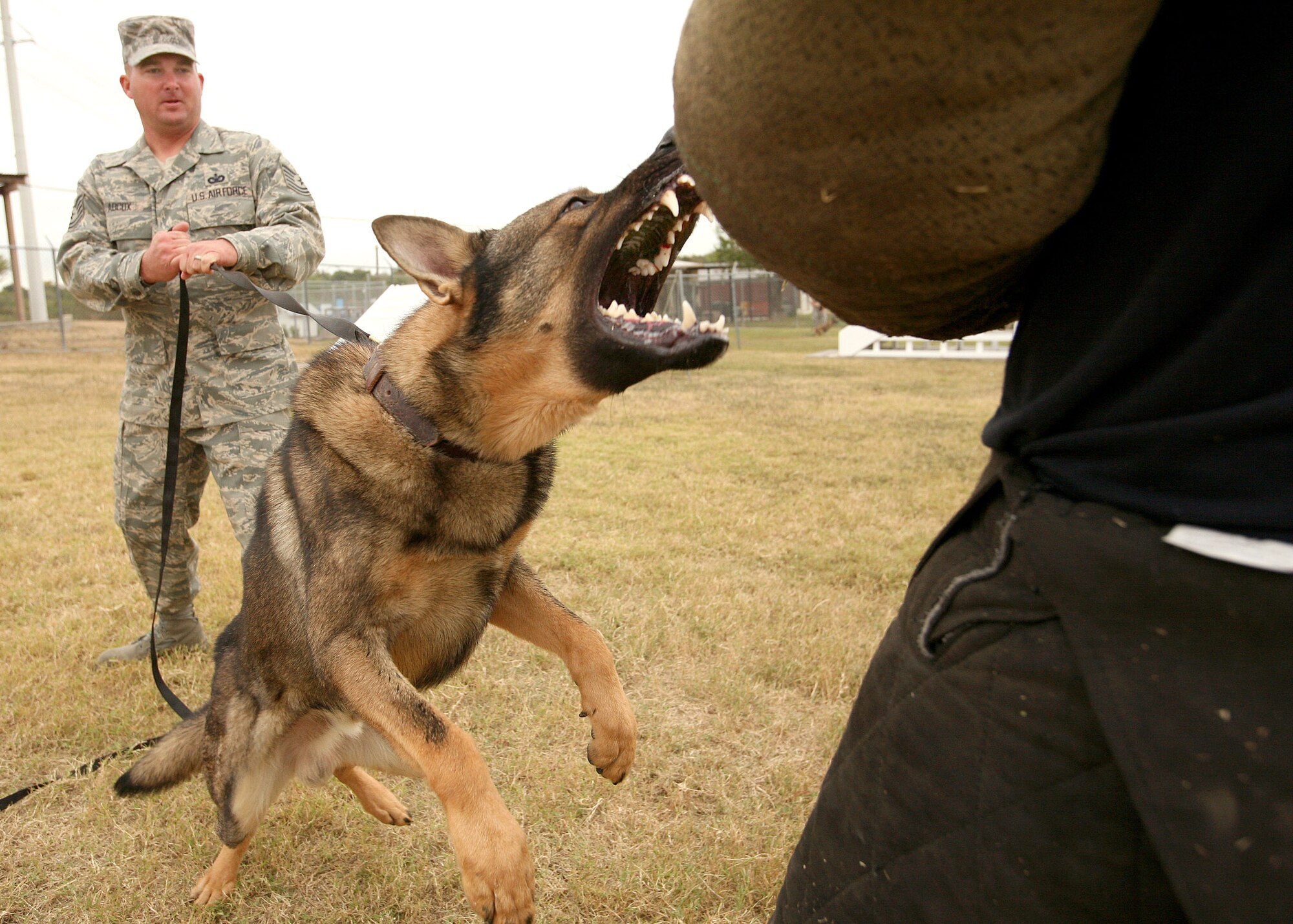
You’ve probably seen the viral photos. A Belgian Malinois or a German Shepherd snarls at the camera, revealing a flash of silver that looks straight out of a James Bond flick. People love to talk about these "bionic" dogs. They call them tactical upgrades or weaponized canines. Honestly, the internet has turned military dog titanium teeth into a sort of urban legend, suggesting the Pentagon is out here building Wolverine-style predators to hunt down high-value targets.
It’s metal. Literally. But the reality is way more about dental health than secret weaponry.
If you’re expecting a story about dogs being upgraded with razor-sharp implants to increase their "lethality," I’m sorry to burst the bubble. It just doesn't work like that. These dogs—Multi-Purpose Canines (MPCs) as the Special Operations community calls them—are massive investments. We’re talking about animals that cost upwards of $50,000 to $90,000 to train over their lifetime. You don't just throw away an asset like that because of a chipped tooth.
That’s where the titanium comes in.
The Boring Truth About "Super Soldier" Dogs
When a Navy SEAL dog or an Army Ranger K9 loses a tooth, it’s a crisis. These dogs use their mouths the way we use our hands. They pick up gear, they detonate (carefully) or indicate explosives, and yes, they apprehend suspects. If a canine's "fang"—the maxillary canine tooth—breaks, the dog is in a world of hurt.
Have you ever had a root canal? Imagine that, but you’re expected to sprint two miles and then take down a guy in a bite suit.
Military veterinarians, like those at the Holland Military Working Dog Hospital at Lackland Air Force Base, aren't looking to make the dog more dangerous. They’re just trying to get the dog back to work. A broken tooth leads to infection. Infection leads to a dog that can't eat, won't focus, and eventually has to be retired. Since these dogs are specialized athletes, titanium is the material of choice because it’s biocompatible and incredibly strong. It’s the same stuff we put in human hips and dental implants.
Basically, if a dog gets a "silver" tooth, it’s because he had a cavity or a fracture. It’s a crown. No more, no less.
Why Titanium?
You might wonder why they don't use porcelain like your local dentist uses for your molars. Porcelain chips.
If a dog is biting into a "hard suit" or a suspect wearing thick clothing, the sheer force—often exceeding 400 to 700 pounds per square inch—would shatter a ceramic crown. Titanium can take the vibration. It can handle the impact. It’s lightweight.
The process is pretty intense.
The dog is put under general anesthesia. A veterinary dentist performs a root canal if the pulp is exposed. Then, they take an impression of the remaining tooth structure. That mold goes to a lab where a custom titanium cap is fabricated. A few weeks later, the dog goes back under, and the crown is cemented on.
It’s durable. It lasts the rest of the dog’s career. But here’s the kicker: it’s actually less effective at biting than a natural tooth.
Natural teeth have a slight "give" and a texture that helps with grip. Metal is slick. If anything, a dog with military dog titanium teeth has a harder time holding onto a suspect than a dog with its original pearly whites. The "weaponization" theory falls apart the second you look at the physics of a bite.
The Cost of a Bionic Bite
We aren't just talking about a couple hundred bucks here. A single titanium crown for a military working dog can cost between $600 and $2,000 depending on the complexity and the specific vet clinic involved. When you factor in the cost of the surgical suite, the anesthesia, and the downtime for the handler and the dog, it’s a significant expenditure.
But compare that to the cost of a new dog.
Buying a "green" dog (untrained) from Europe usually starts at $8,000. Then you add months of specialized training in detection and bite work. If a $2,000 dental bill saves an $80,000 dog, the math is a no-brainer for the Department of Defense. It’s purely a business decision dressed up in tactical hardware.
Misconceptions That Won't Die
- The "Piercing" Myth: Some people think titanium teeth are sharpened to points to pierce body armor. False. Doing that would actually make the tooth weaker and more likely to snap the jawbone under pressure.
- Mandatory Upgrades: There is a weird rumor that all Special Forces dogs get these teeth as a rite of passage. Absolutely not. If the tooth isn't broken, the vets don't touch it. "If it ain't broke, don't fix it" is the golden rule in military medicine.
- The Cairo Effect: When news broke that a dog named Cairo was part of the Bin Laden raid (Operation Neptune Spear), interest in "super dogs" skyrocketed. Rumors swirled that Cairo had a full mouth of metal. In reality, while some SEAL dogs do have crowns, Cairo’s dental records aren't public, and most of the "titanium" talk was just media hype.
What Happens When They Retire?
Military dogs don't stay in the service forever. Usually, by age 8 or 9, their joints start to go, or they lose that "drive" needed for high-stakes work. When they retire, they are almost always adopted by their handlers.
The titanium teeth go with them.
You’ll sometimes see a retired MWD (Military Working Dog) at a park, and when they yawn, you see the silver. It’s a badge of service. It shows the dog worked hard enough to break a tooth and was valued enough to have it fixed. These dogs live normal lives. They eat kibble. They chew on tennis balls—though handlers are often told to be careful with hard toys that might pry the crown off.
It’s just part of the dog’s history.
Practical Realities for Civilian Dog Owners
Can you get these for your pet? Technically, yes. Veterinary dentists for civilians offer titanium crowns.
If your German Shepherd is a personal protection dog or a police K9, it might actually be a good idea if they crack a canine tooth. But for a couch-potato Golden Retriever? It’s overkill. Most civilian vets will recommend a standard root canal or a composite filling if the dog isn't doing "work" with its mouth.
Titanium is for the grinders. The biters. The ones who don't know when to quit.
The Future of K9 Tech
While the teeth get the headlines, the real technology is moving toward things like "Doggles" (tactical eye protection with integrated head-up displays) and bone-conduction hearing protection. We're seeing haptic vests that allow handlers to "steer" a dog remotely using vibrations.
The metal teeth are old school. They’re a 1970s solution to a timeless problem: dogs are brave, and sometimes their bravery exceeds the structural integrity of their enamel.
Next time you see a photo of a "Robo-Dog," remember it's likely just a pup who hit a training sleeve too hard or tried to chew through a fence to get to a bad guy. It’s not a weapon. It’s a repair. It’s a testament to the fact that we take care of the animals that take care of us.
Actionable Insights for K9 Enthusiasts
If you’re working with high-drive dogs or just interested in the field, keep these points in mind:
- Check the teeth weekly. If you see a chip or a purple tint (which indicates internal bleeding in the tooth), get to a specialist immediately. Early intervention saves the tooth.
- Avoid "hard" chews. Real bones, antlers, and hard nylon toys are the leading cause of tooth fractures in powerful breeds. Stick to rubberized toys that have some "give."
- Don't buy the hype. If a trainer tells you they can "upgrade" your dog with metal teeth for better protection work, find a new trainer. They’re prioritizing aesthetics over the animal’s welfare.
- Understand the recovery. A dog with a fresh crown needs "soft mouth" duty for several weeks. No tug-of-war, no bite work. The cement needs time to fully bond, and the jaw needs to recover from the trauma of the procedure.
The bond between a handler and a military dog is incredible. The titanium is just a tool to keep that bond working in the field for as long as possible. It’s about longevity, not lethality.