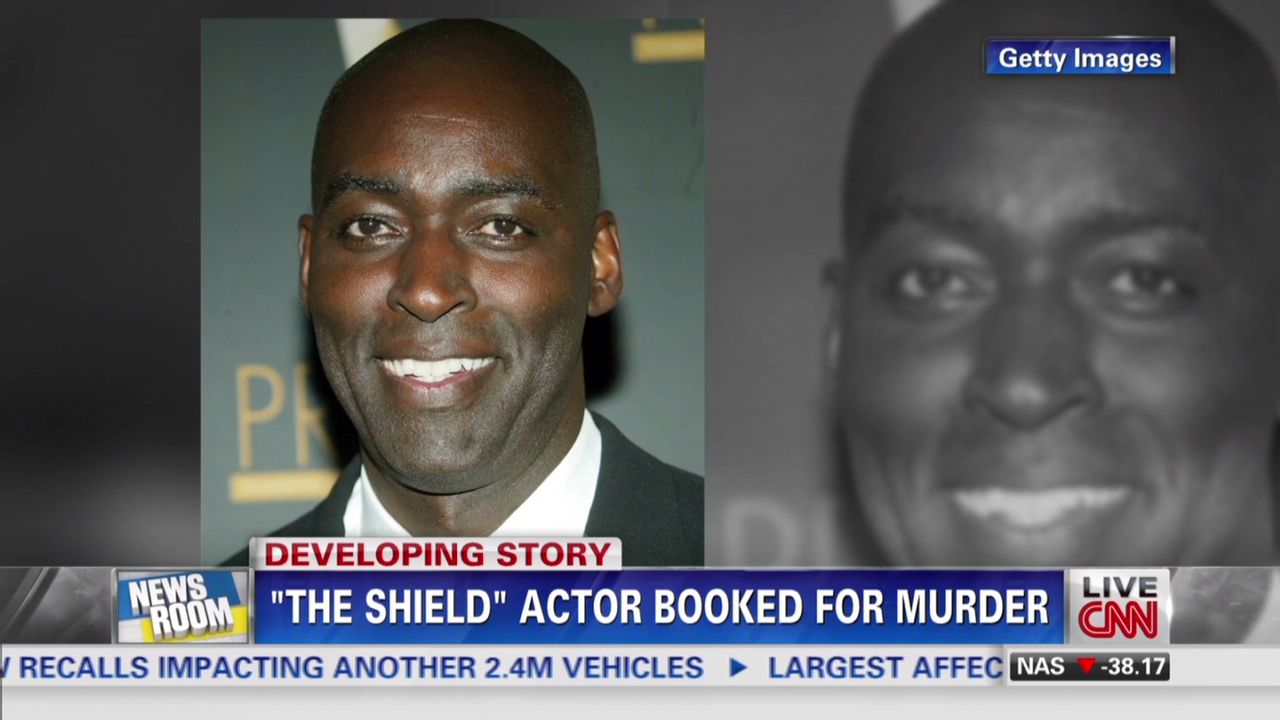
You probably didn't notice him. Most people don't. When you’re watching a movie as massive as Forrest Gump, your eyes are usually glued to Tom Hanks or maybe Gary Sinise’s incredible performance as Lieutenant Dan. But tucked away in one of the film’s most politically charged scenes is an actor named Michael Jace.
He isn't a household name for his acting anymore. These days, he's known for much darker reasons. But in 1994? He was just another young actor in Hollywood trying to make it. Michael Jace in Forrest Gump represents one of those "blink and you'll miss it" moments that actually carries a lot of weight if you look at the historical context the movie was trying to parody.
The Scene You Likely Forgot
So, where exactly is he?
He shows up during the Washington D.C. segment. Forrest has just come back from Vietnam, he’s a war hero, and he accidentally ends up at an anti-war rally. It’s chaos. Jenny is there. The "Black Panther" party is there too.
Michael Jace plays Black Panther #2.
He’s one of the guys in the black berets standing in the headquarters when Forrest is brought in. He doesn't have a long, sweeping monologue. He doesn't win an Oscar for the role. Honestly, he’s basically background texture. But for Jace, this was his big-screen debut.
One minute he's a guy from New Jersey who moved to L.A. to find work, and the next, he's in a Robert Zemeckis film that’s about to sweep the Academy Awards.
Why the Role of Michael Jace in Forrest Gump Matters
It’s easy to dismiss a role labeled as "Number 2" in the credits. However, the Black Panther scene in the movie is a pivotal piece of the "Gump-ian" history lesson. The film uses Forrest to bridge the gap between the establishment and the counter-culture.
When Jace’s character and his comrades are on screen, they are meant to represent the radical tension of the late 60s. Forrest, in his typical innocent fashion, just sits there while the Panthers talk about "the black man in America." It’s a comedy beat, sure, but it’s also a snapshot of Jace’s early career trajectory.
He was a big guy. Powerful presence. It’s why he kept getting cast as figures of authority—or those challenging it.
From Black Panther to The Shield
If you recognize Jace’s face but can't quite place it, it’s probably because of The Shield. That’s where he really hit the big time. He played Officer Julien Lowe.
It's a strange contrast.
In Forrest Gump, he’s a revolutionary. In The Shield, he’s a deeply religious, closeted cop struggling with the corruption around him. He went from a bit part in 1994 to being a series regular on one of the most critically acclaimed dramas of the 2000s.
Other roles followed:
- Cradle 2 the Grave
- The Replacements (where he played a convict football player)
- State of Play
- Planet of the Apes (the Tim Burton one)
He was a "that guy" actor. You know the type. You see him and say, "Hey, it’s that guy from that thing!"
The Tragic Turn
We have to talk about the elephant in the room. When people search for Michael Jace in Forrest Gump now, they aren't usually looking for acting tips. They’re looking because of what happened in 2014.
Jace’s career ended abruptly and violently. He was arrested for the murder of his wife, April Jace. It was a domestic dispute that turned fatal in their South Los Angeles home. He actually called 911 himself.
"I shot my wife," he told the dispatcher.
In 2016, he was sentenced to 40 years to life.
It makes watching his early scenes—like the one in Forrest Gump—feel incredibly surreal. You’re looking at a young man at the very start of a promising career, unaware that he would eventually become the subject of a true-crime documentary rather than a Hollywood legend.
Does it Change the Movie?
Does knowing about Jace's later life ruin the scene?
Probably not for most. Forrest Gump is so large, so ingrained in American culture, that individual bit players don't usually shift the needle on the "vibe" of the film. But it does add a layer of grim reality to the "innocence" the movie portrays.
The film is all about the randomness of life. "Life is like a box of chocolates," right? You never know what you're gonna get. Jace’s life is a dark, literal interpretation of that theme. He went from the heights of a Best Picture winner to a prison cell in Corcoran, California.
What to Look For Next Time You Watch
Next time you pop in the 4K disc or catch it on a streaming loop:
- Wait for the Washington D.C. protest scene.
- Look for the scene inside the Black Panther headquarters where Forrest is being "educated."
- Spot the tall, lean man in the beret.
That’s him.
It's a reminder that every face in the background of a classic movie has a story. Some of those stories are about success, others are about staying in the industry for forty years as a character actor, and some, like Michael Jace's, are just incredibly sad.
The entertainment industry is full of these ghosts. Actors who were there for the biggest moments in cinema history but ended up lost to their own personal demons.
If you want to see more of his actual acting range before things fell apart, The Shield is still the gold standard for his work. It shows the talent he actually had. But for a glimpse of where it all started, that brief moment in 1994 remains a strange, permanent footnote in film history.
Actionable Insight: If you're a film buff or a student of 90s cinema, take a moment to look at the "uncredited" or "numbered" roles in major blockbusters. Often, these are the proving grounds for actors who either become stars or, in rare cases, become the center of major news stories years later. Observing the "background" can give you a much deeper appreciation for the scale of production in films like Forrest Gump.