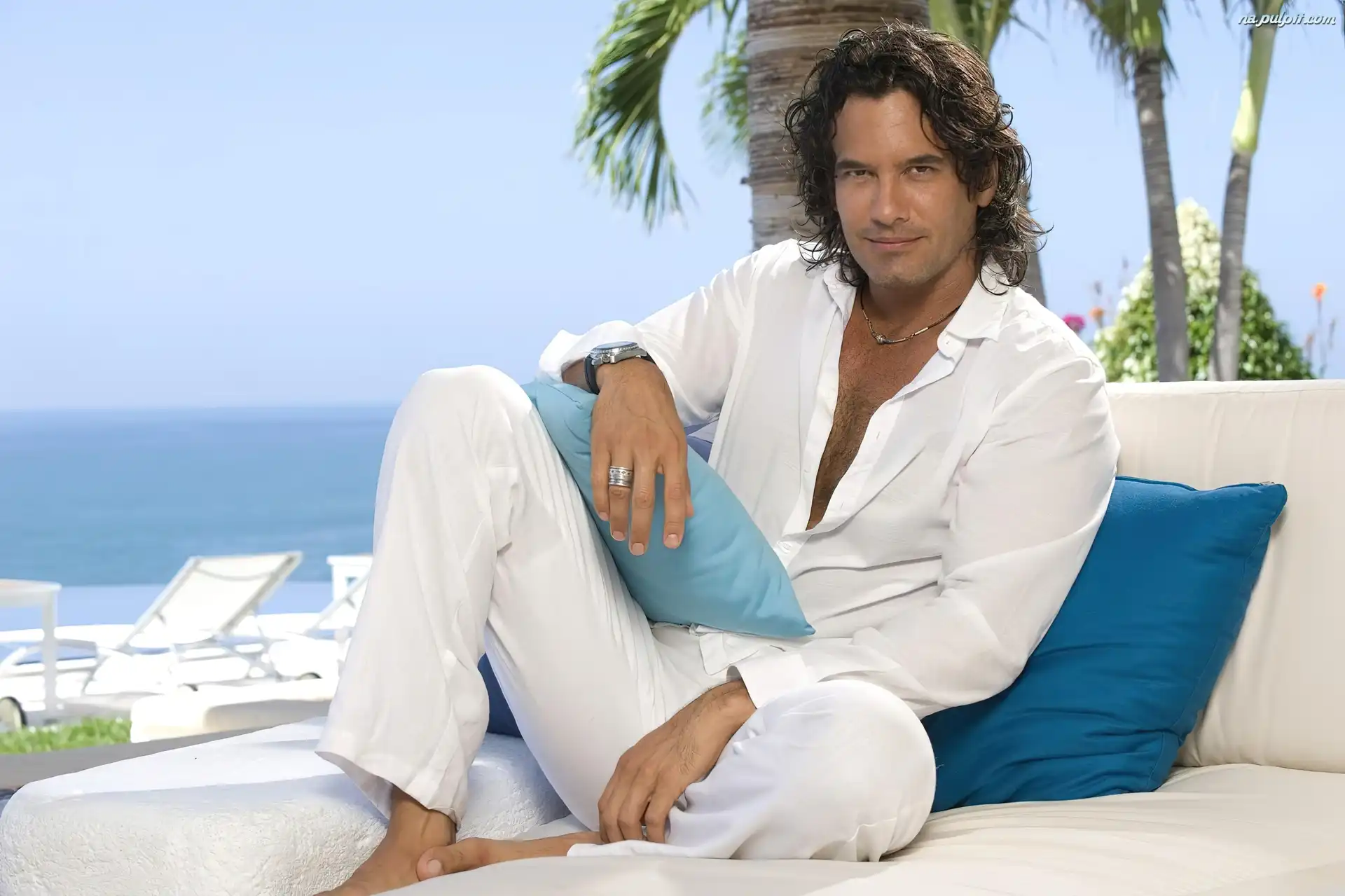
He’s the guy with the hair. You know the one. Long, wavy, slightly chaotic, and usually paired with a leather jacket or a horse. If you grew up watching Spanish-language television in the late nineties or early 2000s, Mario Cimarro—or Mario Antonio Cimarro Paz, if we’re being formal—was basically unavoidable. He was the quintessential alpha lead of the "Golden Era" of Telemundo.
But then, he just kinda stopped.
For a solid decade, one of the biggest stars in the world was effectively missing from the medium that made him a household name. People had theories. Was he difficult? Was he blacklisted? Did he just get tired of the grind? To understand why Mario Cimarro is still a massive deal in 2026, you have to look past the smoldering stares and get into the messy reality of the industry he helped build.
The Pasión de Gavilanes Peak
It’s hard to overstate how huge Pasión de Gavilanes was. When it dropped in 2003, it wasn’t just a show; it was a cultural reset for the genre. Mario Cimarro played Juan Reyes, the oldest of three brothers looking for revenge who, naturally, ends up falling in love instead.
The chemistry between Cimarro and Danna García was lightning in a bottle. It’s the kind of pairing that fans still obsess over twenty years later. The show was exported to over 100 countries. In places like Spain, Serbia, and Israel, Cimarro wasn’t just a Latino actor; he was an A-list superstar.
He had this specific "rough around the edges" energy that worked. Before Gavilanes, he’d already made waves in La Usurpadora and Gata Salvaje. He was on a roll that seemed impossible to stop. He was the bankable lead. If you wanted ratings, you hired Mario.
The Conflict and the Blacklist Rumors
Then came Los Herederos del Monte. This is where things got weird.
During the filming of this 2011 production, rumors started flying. There were reports of friction on set. Telenovelas are notorious for عندهم (their) grueling schedules—sometimes filming 14 to 16 hours a day, six days a week. It’s a pressure cooker. Cimarro has since been vocal about the fact that he clashed with executives over "internal issues" and worker rights.
He didn't just quietly go away. He spoke up.
Basically, he claimed he was being treated unfairly by Telemundo. The fallout was swift. For years, the actor was essentially persona non grata at the major networks. He moved to Italy. He traveled. He did some film work, but the daily presence in people's living rooms was gone.
Honestly, it’s a classic story of an artist thinking they’re bigger than the machine, and the machine proving they can just turn the lights off. Except, the fans never really moved on.
The Reality of the "Difficult" Label
Let’s talk about the "difficult to work with" reputation. In Hollywood or the Miami-based telenovela world, that’s often code for "refuses to follow a bad contract."
Cimarro has admitted he’s a perfectionist. In various interviews and social media lives, he’s explained that his intensity comes from wanting the best for the character. But in a fast-paced industry where time is literally money, perfectionism is expensive.
- He reportedly refused to film certain scenes if they didn't make sense for the character.
- He advocated for better conditions for the crew.
- He didn't play the usual corporate politics.
Whether he was actually "difficult" or just a man with high standards depends entirely on who you ask. If you ask his co-stars from Gavilanes, many stayed loyal. If you ask the execs from the early 2010s? They’d probably give you a very different answer.
The 2022 Resurrection
The comeback was a long time coming. When Telemundo announced Pasión de Gavilanes 2, the internet basically broke. It was the "Friends Reunion" of the Latino world.
Getting the original cast back was a logistical nightmare, but it wouldn't have worked without Mario Cimarro. Seeing him back as Juan Reyes, now as a father and a patriarch, felt like a full-circle moment. It proved that despite the blacklisting and the years away, his star power hadn't actually dimmed. People still wanted to see the hair and the scowl.
But he was different this time. Older. More settled.
Life Beyond the Screen
At 54, Mario Cimarro is living a life that looks nothing like the chaotic sets of the early 2000s. He became a father recently to his daughter, Briana. He’s with Bronislava Gregušová, a Slovak model.
If you follow him on Instagram, you see a guy who is obsessed with his family, his motorcycles, and his poetry. Yeah, he writes poetry. He’s much more of a Renaissance man than the "macho" characters he played for two decades would suggest.
He’s also leaned heavily into the "digital nomad" lifestyle. He doesn't need the networks as much as he used to. With millions of followers, he has a direct line to his audience. He’s his own media mogul now.
What Most People Get Wrong About Him
There’s this idea that Mario Cimarro is just a "pretty face" who got lucky with a few roles.
Actually, he studied at the HB Studio in New York. He’s a classically trained actor who took the craft seriously even when the scripts were, well, soap operas. He understood the "melodrama" as an art form. He knew that to make those over-the-top storylines work, the actor has to play them with 100% conviction. If you wink at the camera, the magic dies. Mario never winked.
Another misconception? That he’s a recluse. He’s not. He’s just selective. After the drama with the networks, he realized that his peace of mind was worth more than a lead role in a 200-episode slog.
The Business of Being Mario
Why does he still matter in 2026?
It’s about nostalgia, sure. But it’s also about a specific type of leading man that doesn't really exist anymore. Today’s leads are often more relatable, more "boy next door." Cimarro is a throwback to the era of the untouchable, brooding icon.
He’s also a case study in brand resilience.
- Direct-to-Consumer Fame: He used social media to bypass the gatekeepers who tried to silence him.
- International Appeal: He cultivated fanbases in Eastern Europe and Asia while he was "banned" in the US and Mexico.
- Authenticity: Even when it cost him his job, he stuck to his guns about how he wanted to be treated.
Actionable Takeaways for Fans and Creators
If you’re looking at Mario Cimarro’s career as a roadmap, there are some real-world lessons here about longevity in any creative field.
For the fans looking to catch up:
Check out his work on streaming platforms. Pasión de Gavilanes (both seasons) is usually on Netflix or Peacock depending on your region. Look for his earlier work like El Cuerpo del Deseo to see him at his absolute peak of physical and dramatic performance.
For creators and actors:
Cimarro’s story is a reminder that the industry is fickle. You can be the biggest star one day and "unhirable" the next. Diversifying your skills and maintaining a direct relationship with your audience is the only real job security you have.
Stay updated on his new projects:
He’s currently focused on independent film projects and voice work. He’s also hinted at writing a memoir. Given how much "tea" he has on the golden age of telenovelas, that book would be a bestseller the second it hits the shelves.
The era of the "unreachable star" might be ending, but Mario Cimarro managed to bridge the gap. He survived the transition from cable TV dominance to the streaming wars, and he did it without cutting his hair or losing his edge. Honestly, you have to respect the hustle.
Next Steps for Deep Research
To see the shift in his acting style, watch a clip of him in Gata Salvaje (2002) followed immediately by a scene from Pasión de Gavilanes 2 (2022). The physical transformation is minimal—the guy clearly has a great skincare routine—but the gravity he brings to the screen in his later years shows a much more seasoned, weary performer. Also, keep an eye on his production company; he’s increasingly moving behind the camera to ensure he never gets "blacklisted" again.