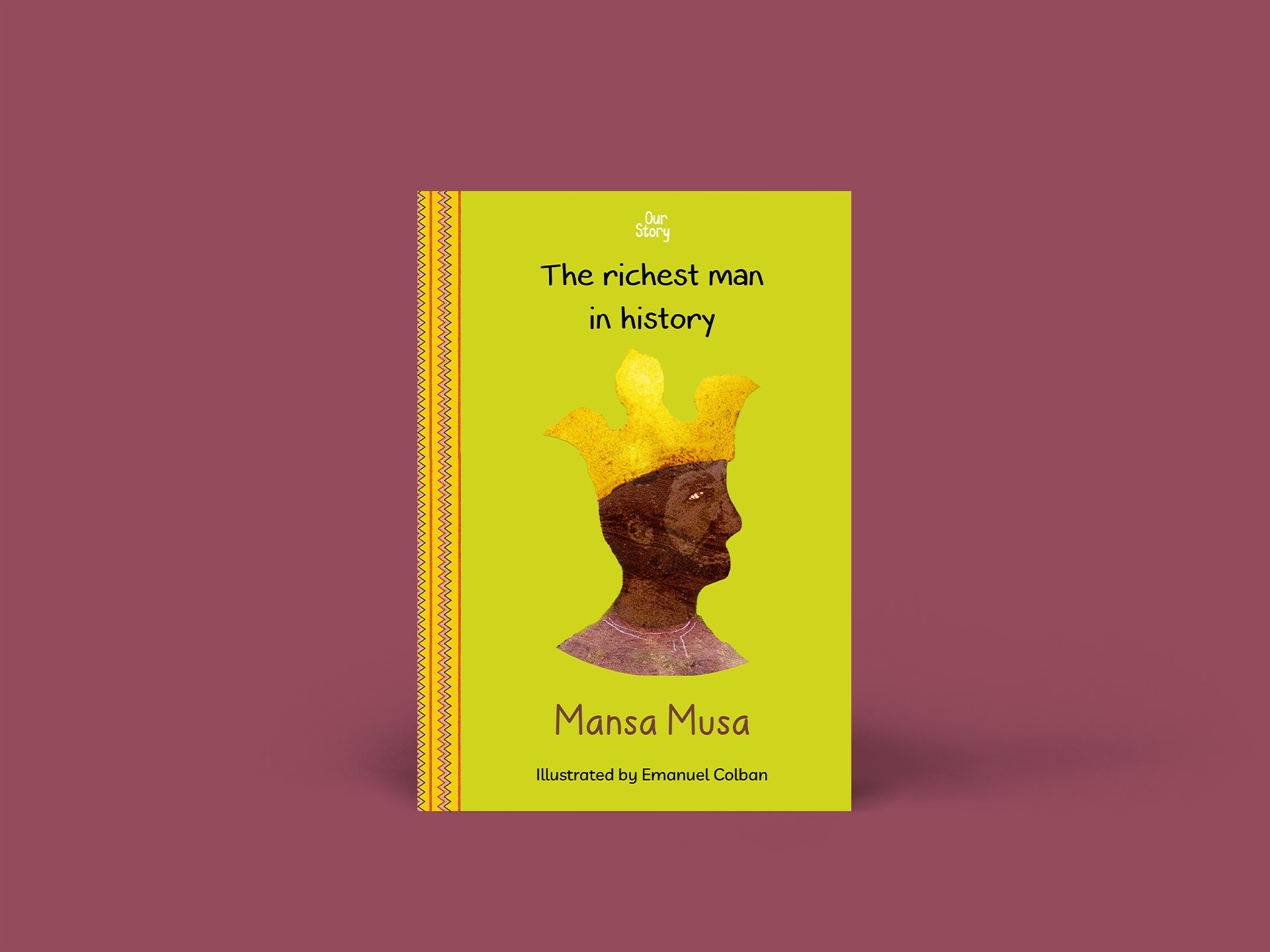
You've probably seen that one image. The one where a regal-looking man sits on a golden throne, clutching a massive gold coin and a staff. It’s everywhere. When people search for Mansa Musa Muhammed photos, that’s the visual they’re usually looking for. But here’s the thing: photography wasn't invented until the 19th century. Mansa Musa ruled the Mali Empire in the 1300s.
So, there are no photos. Obviously.
But that doesn't stop people from looking for them. We live in a visual age, and we want to see the face of the man who was so rich he literally crashed the Egyptian economy just by passing through and handing out gold. Since we can't look at a JPEG of the actual guy, we have to rely on medieval cartography and modern artistic reconstructions. It's kinda fascinating how one specific map from 1375 became the "official" face of a man who lived seven centuries ago.
The Catalan Atlas: The Only "Real" Portrait
If you’re hunting for the closest thing to Mansa Musa Muhammed photos, you’re actually looking for the Catalan Atlas. This wasn't a selfie. It was a map created by Abraham Cresques, a Jewish cartographer in Majorca.
He had never met Musa.
He’d likely never even been to West Africa. But the stories of Musa’s 1324 pilgrimage to Mecca were so legendary that they reached Europe. Cresques drew Musa sitting in the middle of the Sahara because, to Europeans at the time, Musa was West Africa. He was the personification of wealth. In the drawing, he’s wearing a crown—which is a European stylistic choice, as Malian emperors likely wore different regalia—and holding a gold nugget the size of a grapefruit.
This image is the "primary source" for every single depiction you see today. It’s the DNA of his visual legacy.
Why the 1324 Hajj Changed Everything
Musa didn't just travel; he performed. Imagine a caravan of 60,000 people. He had thousands of heralds dressed in Persian silk. He had 80 camels each carrying 300 pounds of gold dust. Honestly, it sounds like a fever dream or a movie set, but contemporary Arab chroniclers like Al-Umari and Ibn Khaldun documented it with absolute shock.
When he stopped in Cairo, he gave away so much gold that the value of the metal plummeted. It took over a decade for the Egyptian economy to recover. Think about that. One man’s "pocket change" caused a regional recession.
This is why people keep searching for Mansa Musa Muhammed photos. We want to see the human being capable of that level of impact. We want to see the eyes of a man who built the University of Sankore in Timbuktu and turned a trading post into a global hub of Islamic scholarship.
Modern Reconstructions and Digital Art
Since we don't have a camera lens pointed at the 14th century, modern artists have stepped in. If you see high-definition "photos" on social media or YouTube, they are almost certainly AI-generated or digital paintings.
Some are better than others.
The best ones try to be historically accurate. They look at the traditional clothing of the Mandinka people. They look at the "litham" (a face veil) often worn by Tuareg and some West African elites of the era to protect against the Saharan dust. These digital Mansa Musa Muhammed photos are cool, but they’re speculative. They tell us more about how we view African royalty today than how Musa actually looked.
The Problem with "White-Washed" or "Arabized" Depictions
There’s a lot of debate in academic circles about how Musa is portrayed. Some older European sketches tried to make him look more North African or even Mediterranean. This ignores his roots. Musa was a Mandinka. He came from the Keita Dynasty. When you see modern art that emphasizes his West African features, it's usually a conscious effort by historians and artists to reclaim his identity from medieval European biases.
Where to Find Authentic Visual History
If you want to see things that Musa actually touched or commissioned, stop looking for portraits and start looking at architecture.
- The Djinguereber Mosque: This is a physical "photo" of his legacy. He brought an architect named Abu Ishaq al-Sahili back from his travels to build this in Timbuktu. It’s made of mud-brick and wood, and it still stands today.
- The Manuscript Tradition: Timbuktu became a city of books because of him. While these don't contain "photos" of him (due to Islamic traditions regarding aniconism), they contain his laws, his religion, and his intellect.
Basically, the most "accurate" image of Mansa Musa isn't a face. It's the silhouette of the Great Mosque against a sunset in Mali.
Why the Search for His Face Matters
Why are we so obsessed with finding Mansa Musa Muhammed photos? It’s because history has a habit of erasing African success stories. For a long time, the world tried to pretend the Mali Empire was a myth or a lucky fluke. Seeing a face—even a reconstructed one—makes the history feel "real."
It validates the fact that the wealthiest person in human history (adjusted for inflation, he makes Jeff Bezos look like he’s working a side gig) was a Black man from the heart of Africa who valued education as much as he valued gold.
Actionable Steps for History Buffs
If you’re researching Mansa Musa for a project or just because you’re down a rabbit hole, here’s how to get the most accurate visual sense of his world:
- Study the Catalan Atlas high-res scans: Look at the Bibliothèque Nationale de France archives. It’s the most "honest" medieval representation we have.
- Look for Timbuktu Manuscript exhibits: Organizations like Timbuktu Renaissance often showcase the actual culture Musa fostered.
- Visit (Digitally or in Person) the Musées Nationaux du Mali: They house artifacts from the height of the empire that give context to what he would have worn and used.
- Ditch the AI "Photos": Most AI-generated images of Musa use generic "Egyptian" or "Middle Eastern" prompts that miss the specific Mandinka cultural aesthetics of the 1300s. Look for "Mali Empire archaeological finds" instead.
The reality is that we will never know exactly what Mansa Musa Muhammed looked like. We don't have his bones for DNA reconstruction, and we don't have his statues. But in a weird way, that makes his legend bigger. He isn't just one man; he’s the symbol of an entire golden age.