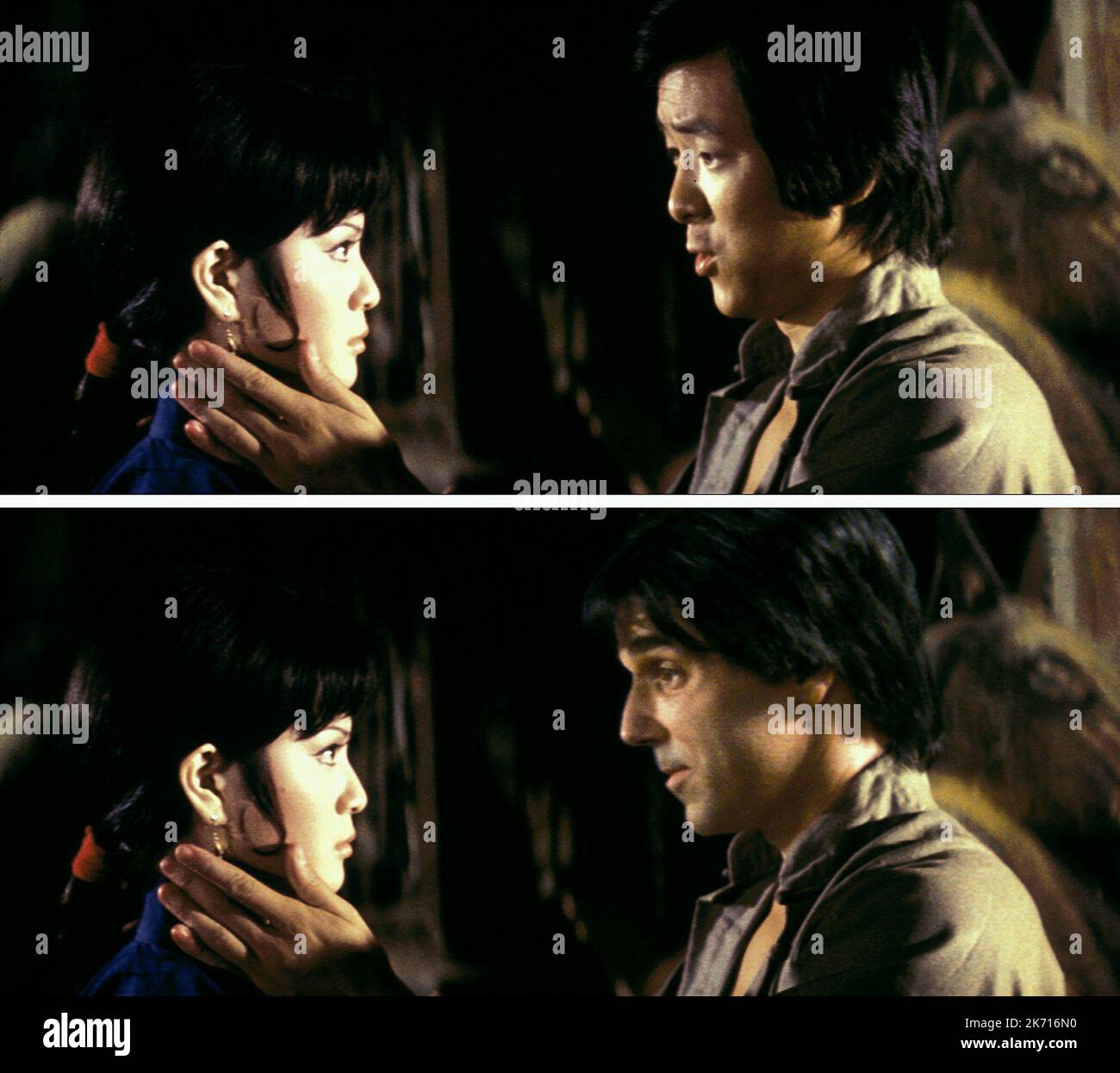
If you spent any time near a DVD player in the early 2000s, you probably remember a tiny, high-pitched woman named Ling. She had a voice that sounded like a tea kettle screaming and a tragic backstory involving a "Chosen One" who really wasn't that bright. Kung Pow: Enter the Fist is a fever dream of a movie, but Ling is the heart of its weirdness. People think it’s just a dumb parody. They’re right. It is. But the way Steve Oedekerk manipulated 1970s Hong Kong cinema to create Ling is actually a feat of technical insanity that most people overlook.
Let's be real. Kung Pow: Enter the Fist Ling isn't just a character; she's a bridge between a forgotten 1976 movie and a weirdly obsessed cult fanbase. Ling was originally played by actress Hui-Lou Chen in the film Savage Killers (also known as Tiger and Crane Fists). Oederkirk took that footage, scrubbed out the original dialogue, and replaced it with Jennifer Sung’s iconic, ear-splitting dubbing. It’s hilarious. It’s also deeply impressive if you think about the rotoscoping involved back in 2002.
Who Was the Real Ling Before the Dubbing?
Most fans of the movie don't realize that Ling was a legitimate martial arts character before she became a meme. In Tiger and Crane Fists, she wasn't some damsel in distress waiting for a guy with a tongue named Tonguey. She was part of a classic revenge plot. The original film was directed by Jimmy Wang Yu, a legend in the genre. When you watch the raw footage of Savage Killers, the scenes featuring the woman who would become Ling are actually quite serious.
Oedekerk saw that seriousness and decided to ruin it for the sake of comedy. He didn't just redub her; he added digital elements to her face to make her mouth move in ways that defied physics. He basically invented a new form of "bad" filmmaking by using high-budget technology to mimic low-budget mistakes. That's the irony. You’ve got a guy spending millions to make a movie look like it cost fifty bucks.
Ling’s most famous trait is her "weee-ooo-weee" siren-like crying. Honestly, it’s the most polarizing part of the film. Some people find it a comedic masterpiece. Others want to put their head through a wall. But that sound defines the movie's rhythm. It’s a rhythmic gag. It’s about the repetition. If she did it once, it wouldn't be funny. Because she does it for thirty seconds straight while the Chosen One stares blankly? That’s gold.
The Technical Wizardry Behind Ling's Scenes
You might think they just filmed Steve Oedekerk on a green screen and slapped him in. Nope. It was way more complicated than that. To make the Chosen One interact with Ling, the production team had to use a process called "extraction." They had to digitally remove the original lead actor from the 1976 film. This left a hole in the frame.
Think about that for a second. In 2002, they were doing frame-by-frame restoration and deletion.
- They had to recreate the background textures behind the original actor.
- Then, Oedekerk had to match the lighting of a 25-year-old film stock.
- He had to eye-line perfectly with Ling (Hui-Lou Chen), who had been dead or retired for years by then.
It’s technical madness. When Ling touches the Chosen One's face, that’s a mix of a hand double and digital compositing. It’s seamless in a way that’s intentionally seam-y. The goal was to make it look like a "badly dubbed" movie, but to achieve that look, they had to be incredibly precise. If the interaction between Ling and the Hero was too clean, the joke wouldn't land. It had to look slightly off.
The Jennifer Sung Factor
We have to talk about the voice. Jennifer Sung provided the voice for Ling, and her performance is basically a masterclass in controlled annoyance. Most voice actors try to sound natural. Sung went the opposite direction. She leaned into the nasal, shrill tones that parodied the rushed English dubs of the 70s. Those old dubs were often done by three or four people in a basement in Hong Kong who didn't speak English as their first language. They would try to match the lip flaps, leading to weird elongations of words.
"I am a great magician... YOUR CLOTHES ARE RED!"
That’s the vibe. Ling’s dialogue isn't just funny because of what she says; it’s funny because of how she says it. The "Neo" vs "Chosen One" dynamic is a direct riff on The Matrix, which was the biggest thing in the world at the time. Ling plays the role of the Oracle or the love interest, but she’s constantly undermined by the absurdity of her own existence.
Ling and the "Chosen One" Relationship Dynamics
The romance between the Chosen One and Ling is one of the strangest in cinema history. It’s entirely one-sided and built on non-sequiturs. He’s a guy who was raised by rats. She’s a girl whose father is being hunted by a man who uses "Gopher Chucks."
There is a specific scene where they are standing by a waterfall. It’s supposed to be this grand, romantic moment. In the original Tiger and Crane Fists, this was a moment of genuine tension and plot development. In Kung Pow, it’s a scene where Ling tells him that her father is "kinda dying" and then proceeds to make that "weee-ooo" sound for an eternity.
The brilliance here is the pacing. Oedekerk understands that comedy comes from the uncomfortable silence that follows a loud noise. Ling provides the loud noise. The Chosen One provides the silence. It’s a classic duo dynamic, except one of them is from 1976 and the other is from 2002.
Why the Sequel Never Happened (and Ling’s Fate)
For years, there was a "Kung Pow 2: Tongue of Fury" teaser at the end of the credits. Fans waited. And waited. We’re still waiting. Oedekerk has teased it for two decades. The problem? Licensing the original footage is a nightmare. To get Ling back on screen, they would need to find another vintage film that features the same actress, or they would have to go full CGI.
Going full CGI would ruin the charm. The whole point of Kung Pow: Enter the Fist Ling is the interaction between old film grain and new digital clarity. If you make it all modern, it just becomes a generic parody like Scary Movie. The "Ling" we know is trapped in that 1976 celluloid.
Ling’s Legacy in Internet Culture
If you go on TikTok or Instagram today, you’ll still find audio clips of Ling. Why? Because the "weee-ooo" sound is the perfect reaction for when something goes slightly wrong. It’s become a piece of digital shorthand.
Ling represents a specific era of "random" humor. This was the era of Napoleon Dynamite and Invader Zim. It was a time when being weird for the sake of being weird was the highest form of currency. Ling wasn't just a character; she was a vibe. She was the personification of the "glitch in the matrix" long before that was a common term.
Common Misconceptions About the Character
- She’s a real person Steve Oedekerk knew: No, she’s a professional actress from the 70s named Hui-Lou Chen.
- The movie was filmed in China: Most of the "new" scenes were filmed in California. They just used clever editing to make it look like they were in the same location as the 1976 film.
- The voice is the actress's real voice: Again, no. That’s Jennifer Sung doing a character.
It’s easy to dismiss Ling as a "background" character, but she has more screen time and emotional weight (in a parody sense) than Master Tang or even Wimp Lo. Wimp Lo is funny because he’s an idiot. Ling is funny because she’s trying to exist in a movie that is actively melting around her.
How to Appreciate Ling in 2026
Watching Kung Pow today is a different experience than it was in 2002. Back then, we were just impressed by the "Forest Gump" style of inserting an actor into old footage. Today, we see it as a precursor to deepfakes. Ling is essentially one of the first "AI-adjacent" characters, even though she was made by hand.
To really get the joke, you should actually try to find the original Tiger and Crane Fists. Seeing the "Real Ling" (the character of Miu Chi) helps you appreciate how much work went into making her look ridiculous. She was a stoic, brave character who was turned into a human siren. It’s a total subversion of the "Strong Female Lead" trope of the 70s.
Actionable Ways to Dive Deeper
If you’re a fan or a student of film, don't just watch the movie. Study the "Behind the Scenes" features on the DVD. They show the "blue screen" work where Oedekerk is interacting with a cardboard cutout of Ling. It’s a lesson in perspective and lighting.
- Look for the "Cutouts": In several scenes with Ling, you can see "shadow ghosts" where the original actor wasn't fully erased. It’s a fun easter egg.
- Audio Syncing: Pay attention to how the "weee-ooo" sound is timed to her mouth movements. It shouldn't match, but it somehow does.
- The "Yellow" Tint: Notice how the creators added a yellow/sepia filter to the new footage to match the aging of the original 35mm film.
The Ling Philosophy
Basically, Ling teaches us that you can take something serious and make it legendary by just adding a little bit of nonsense. She is the anchor of the movie's heart. Without her, the Chosen One is just a guy wandering around a field fighting a cow. With her, he has something to lose. Or at least, something to be confused by.
Next Steps for the Kung Pow Fan:
- Watch the "Original Version": Seek out Tiger and Crane Fists (1976) to see the original performance of Hui-Lou Chen. It provides a massive amount of context for the parody.
- Technical Deep Dive: Look up the "Oedekerk Extraction" method on film forums. It’s a fascinating look at early 2000s VFX that used Adobe After Effects in ways it wasn't really intended for.
- Check the Credits: Read the full cast list for the dubbing actors. Many of them played multiple roles, which adds to the "cheap" feel of the production.
- Support the Sequel Rumors: Follow Steve Oedekerk on social media. He still posts updates occasionally about the state of Kung Pow 2, though at this point, it’s mostly a "believe it when I see it" situation.
The character of Ling remains a masterclass in how to repurpose media. She isn't just a joke; she’s a technical achievement wrapped in a high-pitched scream. Whether you love her or hate her, you can't deny that she's one of the most memorable faces—and voices—in the history of martial arts comedies. Honestly, we probably don't deserve her. But we have her, and the world is a little bit weirder because of it.