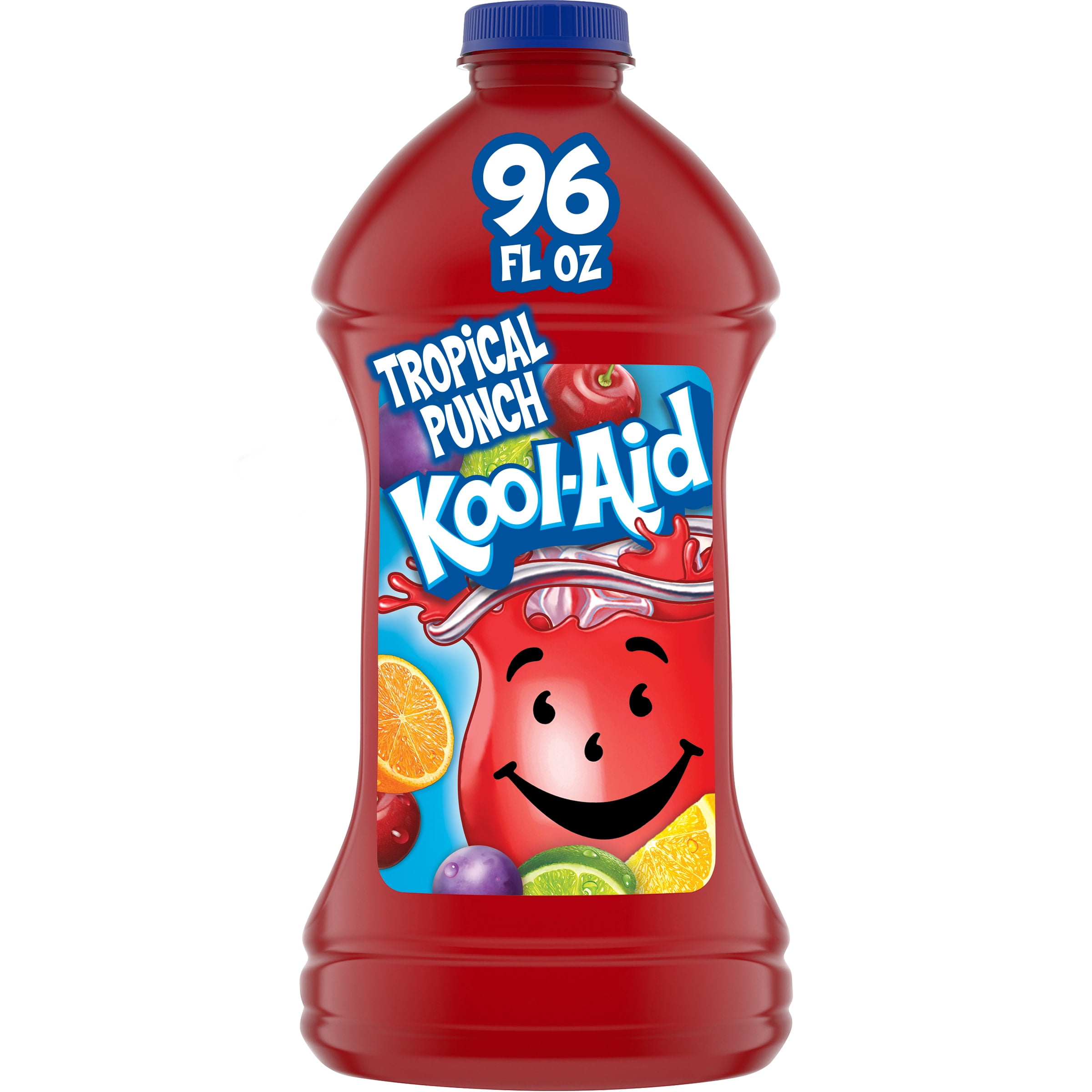
You remember the sound. It’s that crinkly, thin plastic crunching under your hand as you twist the top off a Kool-Aid Bursts bottle. It’s a specific kind of nostalgia. But lately, people are looking at Kool Aid in plastic bottles through a much more critical lens than we did in the nineties.
Honestly, the drink has changed. Or maybe we just changed?
If you walk down the juice aisle today, you’ll see the classic 6.75-ounce "Bursts" with their signature twist-off tops, alongside the larger 96-ounce multi-serve jugs. They look innocent enough. However, the science behind how a liquid interacts with a plastic container is actually pretty wild, and it explains why that cherry flavor doesn’t always taste the same as the stuff your grandma used to mix in a glass pitcher.
The Chemistry of Why Plastic Changes the Flavor
Plastics aren't inert. That's the big secret. When you store a highly acidic, brightly colored liquid like Kool-Aid in a low-density polyethylene (LDPE) or polyethylene terephthalate (PET) bottle for months, things happen.
Flavor scalping is real.
This is a process where the plastic packaging actually absorbs some of the volatile flavor compounds from the drink. It’s why the "shelf-stable" version of Kool-Aid can sometimes taste a bit muted or "flat" compared to the powder. The plastic is literally stealing the zest. On top of that, you have the potential for migration. While the FDA monitors substances like antimony—a catalyst used in making PET plastic—small amounts can leach into liquids over time, especially if those bottles are sitting in a hot warehouse or the back of a delivery truck in July.
It's a trade-off. You get the convenience of a grab-and-go bottle, but you lose that sharp, crisp hit of citric acid that defines the brand.
The Bursts vs. Jammers Debate
People get these mixed up all the time. Kool-Aid Jammers come in a pouch. Kool-Aid Bursts are the ones in the Kool Aid in plastic bottles we’re talking about.
Why does it matter?
Oxygen transmission rates. Pouches—which usually have a foil layer—are surprisingly good at keeping oxygen out. Plastic bottles, particularly the thin ones used for Bursts, are slightly more permeable. Over a long period, oxygen molecules sneak in. They oxidize the artificial flavors. They degrade the Red 40 or Blue 1 dyes. If you’ve ever opened a bottle that looked a little "off" or brownish, that’s oxygen doing its work through the plastic walls.
What's actually inside the bottle?
It’s not just water and sugar. If you look at the back of a standard bottle of Kool-Aid Bursts, you’ll see a list that looks something like this:
- Water: The base.
- High Fructose Corn Syrup: This is the big one. Most bottled versions use HFCS instead of the sucrose (table sugar) you’d typically add to the powdered mix at home. This changes the "mouthfeel." It’s thicker. More syrupy.
- Citric Acid: For that tartness.
- Sodium Polyphosphates: This is a stabilizer you don't find in the paper packets. It’s there to protect the flavor and color while it sits on a shelf for a year.
- Preservatives: Usually potassium sorbate and sodium benzoate.
It’s a different beast entirely. When you mix the powder at home, you control the water-to-sugar ratio. In the plastic bottle, the chemists at Kraft Heinz have already made that choice for you. Most of these bottled versions are technically "juice drinks," but contain 0% actual fruit juice.
Environmental Impact and the Microplastic Conversation
We have to talk about the elephant in the room. The convenience of Kool Aid in plastic bottles comes at a massive environmental cost.
The "Bursts" bottles are notoriously difficult to recycle because they are small and often made of lower-grade plastics that recycling facilities find less "valuable." Most end up in landfills. But there’s a newer concern: microplastics. A study published in the Proceedings of the National Academy of Sciences (PNAS) recently used advanced imaging to find that the average liter of bottled water contains about 240,000 detectable plastic fragments.
While that study focused on water, the acidic nature of Kool-Aid can actually be more aggressive toward the plastic lining of its container. If you’re drinking these every day, you aren't just drinking sugar water; you're likely ingesting microscopic polymer fragments.
Does it kill you instantly? No. But the long-term endocrine-disrupting effects of these particles are something researchers are still untangling.
Cost Breakdown: Are You Getting Scammed?
Let’s run the numbers.
A 6-pack of 6.75-ounce Kool-Aid Bursts usually retails for around $1.50 to $2.50 depending on where you shop. That’s roughly 40 ounces of liquid.
Compare that to a single 0.13-ounce packet of Kool-Aid powder. That packet costs maybe 35 to 50 cents and makes 64 ounces (2 quarts) of drink. Even when you factor in the cost of the sugar you add yourself, the bottled version is significantly more expensive. You are essentially paying a 300% to 500% markup for the plastic bottle and the fact that someone else moved the spoon for you.
The Health Reality of Liquid Sugar
Health-wise, the bottled version is a bit of a minefield. A single small "Burst" bottle has about 20 calories and 5 grams of sugar. That sounds low, right?
But look at the serving size. It’s tiny. Most kids (and adults) don’t stop at one. If you drink the equivalent of a standard 16-ounce soda, you’re hitting the sugar levels that start to trigger insulin spikes. Because there’s no fiber to slow down absorption—unlike in actual fruit—that liquid sugar hits your bloodstream like a freight train.
The presence of artificial dyes is another sticking point. Red 40 and Yellow 5 have been under the microscope for years regarding their link to hyperactivity in sensitive children. In Europe, many of these drinks require a warning label. In the U.S., they are still standard in the Kool Aid in plastic bottles lineup.
Practical Steps for the Smart Consumer
If you love the flavor but hate the baggage, there are better ways to do this. You don't have to give up the "Oh Yeah!" lifestyle.
- Switch back to the powder. It sounds like more work, but it’s not. Buy a high-quality glass pitcher. Glass is non-porous and won't leach chemicals or "scalp" the flavor. You'll get the exact taste you remember from childhood.
- Control your sweetener. Use monk fruit, stevia, or just less sugar. The bottled versions are tuned to a specific, high-intensity sweetness level that keeps you craving more.
- Check the "Best By" dates. If you must buy the plastic bottles, don't buy the ones sitting in the sun near a window. Heat accelerates the degradation of plastic and the oxidation of the drink. Look for bottles at the back of the shelf.
- Repurpose the bottles (with caution). If you use the empty bottles for crafts, that's great. But don't refill them with other drinks and reuse them for months. These are "single-use" plastics for a reason. The structural integrity of the plastic breaks down after the first use, increasing the risk of chemical leaching.
The reality is that Kool Aid in plastic bottles is a marvel of modern food engineering and a nightmare for sustainability. It’s the ultimate convenience food. But understanding that the bottle itself is part of the "recipe"—influencing flavor, health, and the environment—is the first step in making a better choice for your pantry.