Imagine a chubby teenager in a Chicago Bulls tracksuit, obsessively sketching Michael Jordan in his notebook. He’s shy. He struggles with German grammar. He loves Jackie Chan movies and spends his afternoons playing PlayStation.
This isn't just any kid. This is "Pak Un," a student supposedly the son of a North Korean diplomat living in a modest apartment in Bern. We now know him as Kim Jong Un, the Supreme Leader of North Korea. His time in Switzerland—often searched as Kim Jong Un Schweiz—is a bizarre, surreal chapter of modern history that sounds more like a spy novel than reality.
The Bern Years: Why Switzerland?
Between roughly 1991 and 2000, the future dictator lived a double life in the heart of Europe. It wasn't about the mountain air or the luxury watches, at least not at first. His father, Kim Jong Il, wanted his sons to have a Western education, though he ironically kept them under a tight, secretive lid.
Kim didn't just attend one school. He started at the International School of Berne (ISB) in Gümligen. That's the posh choice. Fees there today are north of £16,000, and back then, it was the enclave for children of the global elite.
But then things got weird. Around 1998, he was pulled out and moved to a public state school: Liebefeld-Steinhölzli in Köniz. Why? Rumor has it his father was annoyed by his lackluster grades or the skyrocketing costs. At the public school, he was "Pak Un," the quiet kid from the embassy who lived at No. 10 Kirchstrasse.
Basketball, Sneakers, and Bad Grades
Honestly, if you saw his report cards, you wouldn't think "future nuclear-armed leader." You'd think "kid who needs a tutor."
According to records unearthed by the Swiss newspaper Le Matin Dimanche, Kim was a frequent absentee. We're talking 75 days missed in one year and 105 in the next. When he did show up, he often arrived in the afternoon.
- Natural Sciences: 3.5 out of 6 (barely passing).
- Mathematics: 4 out of 6 (his strongest suit, surprisingly).
- German: He struggled. High German is hard enough, but his classmates spoke Swiss German (Schwyzerdütsch), which made the language barrier a mountain he couldn't quite climb.
His real passion? Basketball. He lived for it. His former best friend, João Micaelo (who later became a chef), remembers Kim wearing expensive Nike Air Jordans while everyone else had knock-offs. He spent hours meticulously drawing Michael Jordan. He didn't care about politics. He didn't care about the "Great Successor" destiny. He just wanted to hit a three-pointer.
The Swiss Lifestyle vs. The North Korean Reality
Living in Switzerland left a permanent mark on his palate. While most people focus on the politics, his "lifestyle" in Bern explains a lot about his adult habits.
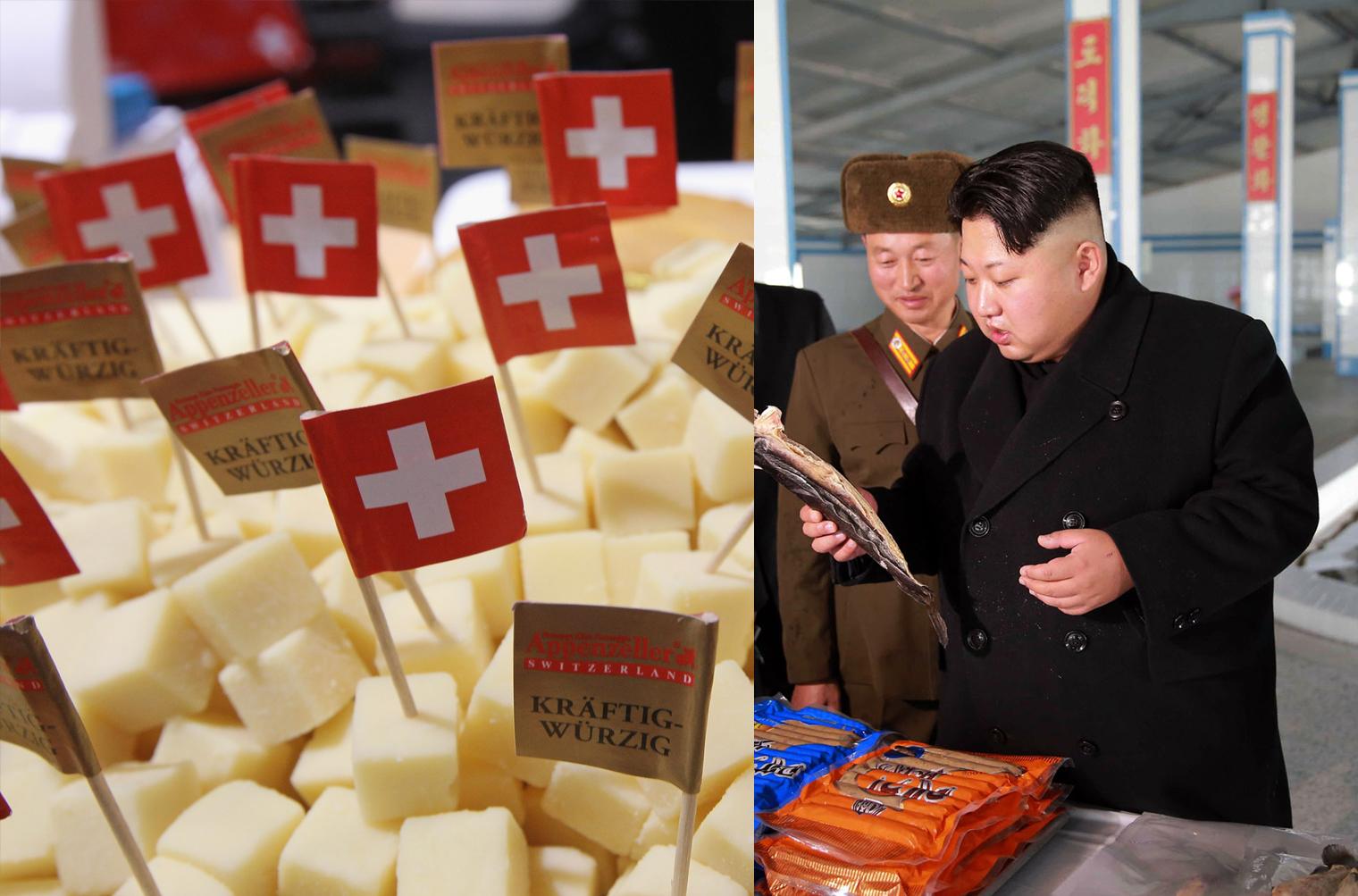
He developed a legendary obsession with Emmental cheese. Reports from South Korean intelligence suggest he’s had it flown to Pyongyang by the ton. He also got a taste for Swiss luxury. Even today, he’s frequently spotted wearing Movado or IWC watches—brands he likely first saw in the shop windows of Bern’s Kramgasse.
He lived with his aunt, Ko Yong-suk, and her husband. They acted like a normal family, making him snacks and encouraging him to bring friends over to play Legos. But the facade was thin. In 1998, while Kim was still in school, his aunt and uncle defected to the United States. They literally vanished, leaving the teenager alone with his bodyguards and his secret.
Did the West Change Him?
This is the big question. Analysts like Hillary Clinton once hoped that his time in the West would make him a reformer. They thought, "Hey, he knows what democracy looks like. He's seen the prosperity of Switzerland."
The reality is darker. His exposure to the West didn't make him want to democratize North Korea; it seemingly gave him a blueprint for how to enjoy the spoils of the West while maintaining a totalitarian grip at home. He built a Swiss-style ski resort at Masikryong. He modernized the Pyongyang airport to look more international.
Basically, he took the "aesthetic" of Switzerland but left the "values" at the border.
What Most People Get Wrong
People often think he was a lonely outcast. That’s not quite true. Classmates like Marco Imhof have described him as well-integrated and even a bit of a peacemaker on the playground. He wasn't a bully. He was "shy" and "awkward around girls."
There's also the "Pak Un" vs. "Kim Jong Chul" confusion. For years, the media thought the boy at the International School was his older brother. It took forensic facial analysis by the University of Lyon—matching a 1999 school photo with a 2012 adult photo—to confirm with 95% certainty that the boy in the class photo was indeed Kim Jong Un.
Actionable Insights: Understanding the Swiss Connection
If you're trying to wrap your head around Kim Jong Un Schweiz, here is what actually matters for understanding today's geopolitics:
- The Nostalgia Factor: His obsession with Swiss goods isn't just vanity; it's a longing for the only time in his life he felt "normal." This is why luxury sanctions hit him personally.
- The Language Skill: He likely understands more English and German than he lets on in official meetings. Never assume he needs the translator.
- The Logic of Math: His aptitude for mathematics in school reflects his later focus on the technical side of missile and nuclear development. He isn't just a figurehead; he understands the numbers.
- The "Commoner" Experience: He knows exactly what a high standard of living looks like. He isn't ignorant of the outside world; he chose a different path despite it.
To see the echoes of his Swiss childhood today, look no further than the Masikryong Ski Resort. It’s a direct, multi-million dollar attempt to recreate the Alps in North Korea. His time in Bern didn't create a diplomat—it created a leader who knows exactly what he’s missing, and how to import it for himself while his country remains frozen in time.
To dig deeper into this, you can look up the 2012 reports from Le Matin Dimanche or the memoirs of Kenji Fujimoto, the family's former sushi chef who witnessed these habits firsthand.