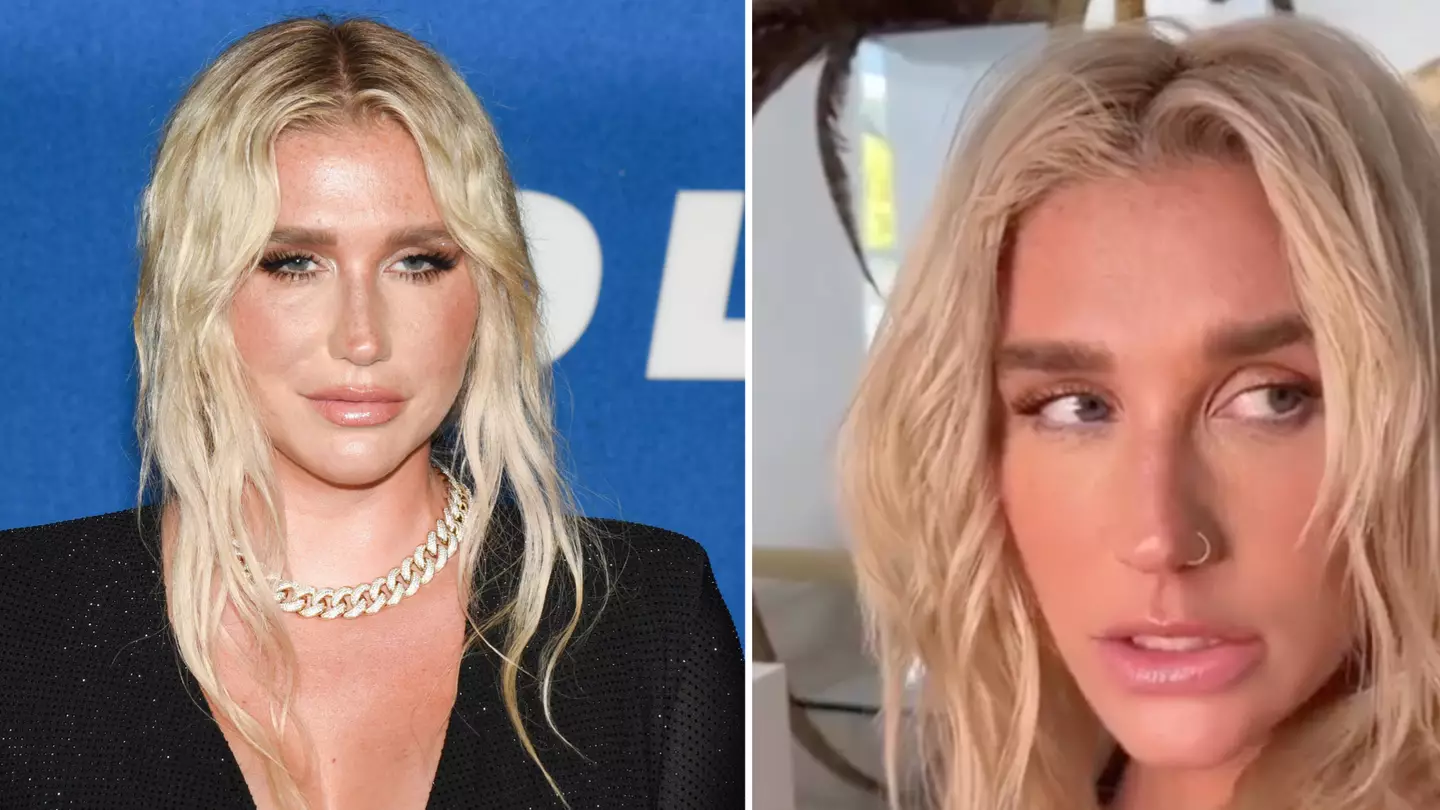
Honestly, if you look at a photo of Kesha from 2009 and compare it to a shot of her today in 2026, it feels like you're looking at two different timelines. The blue lipstick is gone. The whiskey-scented party persona? Long dead. But the "kesha before and after" story isn't just about a pop star getting older or changing her makeup. It’s a full-scale reclamation of a human being.
Most people remember the girl who brushed her teeth with Jack Daniel's. That was the "before."
The "after" is a 38-year-old independent label owner who recently sold out Madison Square Garden on her own terms. It’s been a brutal, ten-year trek through the legal system, a battle for her own name, and a total sonic reinvention that nobody saw coming when "TiK ToK" was dominating the radio.
The "Before" Era: Glitter, Garbage Bags, and a Dollar Sign
Back in 2010, Kesha—then stylized as Ke$ha—was the industry's ultimate "hot mess." It was a carefully curated aesthetic, sure, but it was also suffocating. She was signed at 18 to Dr. Luke’s Kemosabe Records. For nearly a decade, her image was defined by what the industry wanted: a party girl who didn't care about anything.
But behind the scenes, things were falling apart.
She wasn't just wearing glitter; she was using it as armor. During this time, she faced immense pressure regarding her weight and appearance. Reports eventually surfaced about the verbal and emotional toll this took, leading her to seek treatment for an eating disorder in 2014. That was the real turning point. The moment the party stopped and the fight for her life—and her career—actually began.
The Legal Limbo (2014–2023)
You can’t talk about Kesha before and after without mentioning the lawsuit. It’s the elephant in the room. For nine years, she was effectively locked in a legal stalemate with her former producer, Dr. Luke. She accused him of sexual, physical, and emotional abuse; he denied it all and sued her for defamation.
It was messy. It was public. And for a long time, it looked like she might never be free.
The "before" Kesha was a chart-topping machine. The "limbo" Kesha was a woman fighting to even be allowed to release music. When she finally dropped Rainbow in 2017, the world saw the first glimpse of the "after." The song "Praying" wasn't just a ballad; it was a scream for survival.
The Physical Transformation: Health Over Hype
If you’re searching for the physical "kesha before and after," the biggest change isn't plastic surgery, though fans often speculate about fillers or Botox. It’s health.
In her early 20s, Kesha was often dangerously thin, a byproduct of the eating disorder she later went public about. Today, she looks different because she is different. She’s gained healthy weight, her skin is glowing, and she’s embraced her natural freckles—something she used to hide under layers of stage makeup.
- Then: Heavy glitter, synthetic wigs, intentionally "dirty" aesthetic, extreme dieting.
- Now: Radiant skin, sophisticated tailoring, a focus on "spirituality and healing," and a clear-eyed presence that only comes from surviving a decade of trauma.
She recently mentioned in an interview that she used to mistake intense anxiety for a "psychotic break." Now, she uses meditation and what she calls "sober psychedelic experiences" to stay grounded. It's a vibe shift of epic proportions.
2024: The Year of Total Freedom
The real "after" began on March 6, 2024. That was the day Kesha officially became a free agent.
After a confidential settlement in 2023, she fulfilled her final contract obligations with Gag Order (which she recently renamed Eat The Acid on streaming platforms to distance herself from the legal terminology). She celebrated her freedom with a simple post: "First day I've owned my voice in 19 years. Welcome."
The Rise of Kesha Records
Kesha didn't just sign with another major label. She went rogue. She launched Kesha Records and released her 2025 album, Period (stylized as .).
This album is the definitive "after." It’s "recession pop" at its finest—fast, loud, and unapologetic. Tracks like "Joyride" and "Delusional" proved she could still make a hit without the machine behind her. She’s now the CEO of her own world. She even helped build a tech app. She’s basically a mogul now, which is a far cry from the girl who was once uncredited on Flo Rida’s "Right Round."
What We Can Learn from the Transformation
Kesha’s journey is a blueprint for anyone trying to reclaim their narrative. It’s not about "bouncing back" to who you were before; it's about becoming someone entirely new.
The Key Takeaways:
- Ownership is everything. She spent her 20s being told what to sing and how to look. In her 30s, she took the keys to the kingdom.
- Healing isn't linear. The gap between 2014 and 2024 was full of setbacks, but she didn't stop.
- Your past doesn't have to be your prison. She’s reworked her old hits for her "Tits Out Tour," stripping back the original production to "fall back in love" with the songs she once felt were tainted.
To see the real change, look at her 2025 tour stats. She sold out amphitheaters across the country as an independent artist. That doesn't happen by accident. It happens because people connect with the truth, even if that truth is covered in a little less glitter than it used to be.
If you're looking to apply the "Kesha method" to your own life or career, start by auditing your "contracts"—whether they are literal legal documents or just the mental agreements you've made to stay small. The first step to your "after" is deciding that the "before" is no longer enough. You might want to start by exploring her latest independent work to see what true creative sovereignty sounds like in 2026.