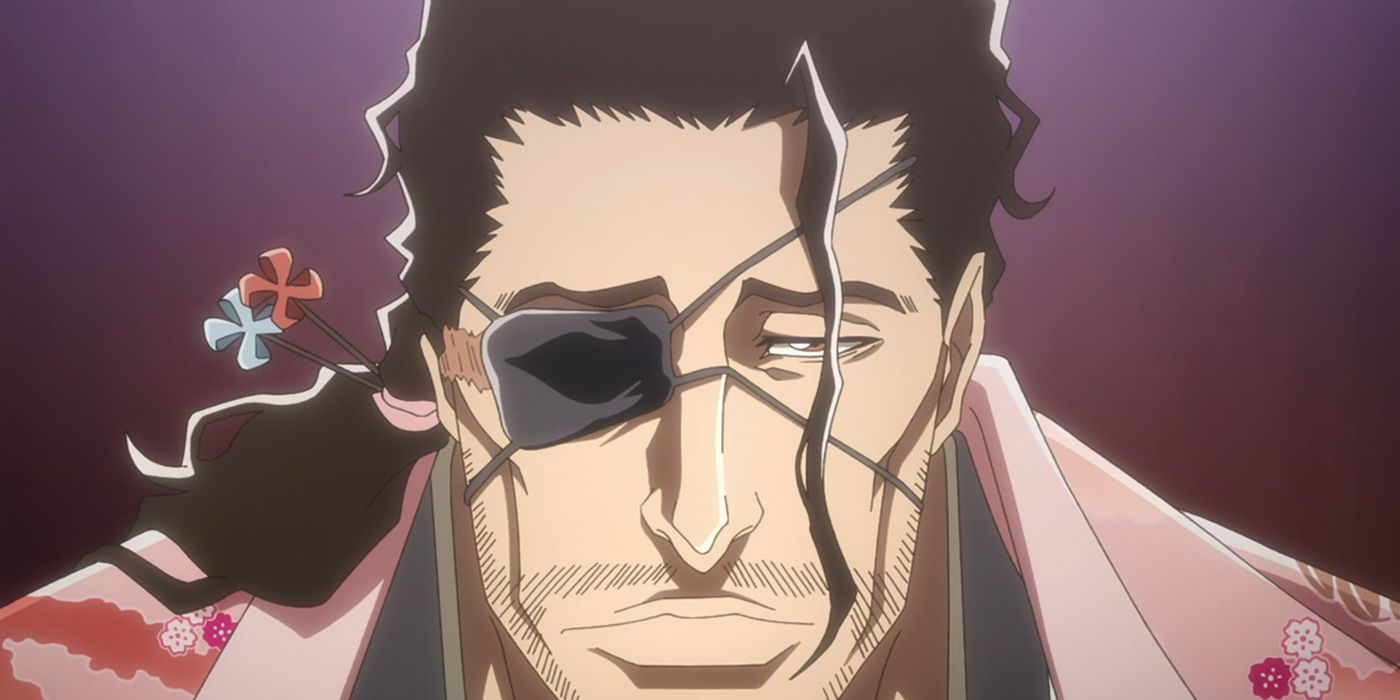
He’s the guy who always looks like he needs a nap and a warm bowl of soup. If you’ve spent any time watching Tite Kubo’s massive series, you know exactly who I’m talking about. Jushiro Ukitake, the white haired captain in Bleach who led the 13th Division, is a fan favorite for a reason, but honestly, his role in the story is often misunderstood. People see the long silver hair and the constant coughing fits and think "oh, he's just the nice one." That's a huge mistake.
Ukitake wasn't just a placeholder or a background mentor. He was one of the oldest captains in the Gotei 13, standing alongside Shunsui Kyoraku as the first graduates of Yamamoto’s Academy to reach that rank. That's a massive deal. We’re talking about a man who held a captaincy for over a century while dealing with a chronic illness that would have sidelined literally any other soul reaper.
The Reality of Ukitake’s Sickness and the Mimihagi Connection
Most viewers remember Ukitake being "sickly." It's his defining trait for like 90% of the series. But why was this white haired captain in Bleach always coughing up blood? It wasn't just a generic fantasy flu.
When Ukitake was three years old, he developed a fatal lung disease. His parents, desperate to save him, prayed to a fallen deity in the outskirts of the Rukongai. That deity was Mimihagi, the right arm of the Soul King. Mimihagi literally crawled into Ukitake’s body and became his lungs. This is why his hair turned white at such a young age—it was the physical manifestation of a god living inside him to keep him alive.
Think about that for a second.
Every time we saw him struggling in battle or taking a break to rest, he wasn't just "weak." He was literally balancing the presence of a cosmic limb within his own chest. This isn't just a cool bit of trivia; it becomes the lynchpin for the entire final arc of the series, the Thousand-Year Blood War. When the Soul King is killed, Ukitake is the only person on the planet capable of acting as a temporary replacement. He sacrifices his own life—and the god keeping him alive—to stabilize the three worlds. It's probably the most selfless act in the entire franchise.
Breaking Down Sogyo no Kotowari: Not Just Twin Swords
You can’t talk about the white haired captain in Bleach without mentioning that gorgeous Zanpakuto. Sogyo no Kotowari (Truth of the Pisces) is one of only two sets of dual blades in the entire Soul Society before Ichigo got his upgrade.
The way it works is actually pretty technical. It’s not just two swords for the sake of looking cool. The blades are connected by a heavy cord adorned with five charms. When an enemy fires a spiritual pressure-based attack at him, Ukitake absorbs the energy through the left blade. The charms on the cord then manipulate the speed and pressure of that energy, firing it back out through the right blade.
It makes him a nightmare for long-range fighters. Imagine throwing your strongest move at someone only for them to send it back at you, but faster and with a different rhythm so you can't dodge it. He’s a counter-puncher. A defensive specialist. Honestly, his fighting style perfectly mirrors his personality: gentle until you force his hand.
Why Fans Still Argue About His Power Level
There is this constant debate in the Bleach community. Was Ukitake actually strong?
We rarely see him go "all out" like we do with Kenpachi or Byakuya. Most of his screen time involves him giving advice to Rukia or Kaien Shiba. But here is the evidence for his top-tier status:
- Yamamoto, the "God of Shinigami," viewed him as a son and a peer.
- He fought Stark (the Primera Espada) without breaking a sweat.
- His spiritual pressure (Reiryoku) was so immense that it was one of the few things capable of sustaining the bridge to the Royal Palace.
The guy was a powerhouse. He was just a powerhouse with a bad heart and a worse set of lungs.
The Mentor Role: Rukia, Kaien, and the 13th Division
Ukitake’s leadership style was a total departure from the "might is right" attitude of the 11th Division or the cold efficiency of the 6th. He ran the 13th Division like a family. This is largely why Rukia Kuchiki turned out the way she did. She didn't just learn how to fight; she learned about the "heart."
Remember the flashback with Kaien Shiba? That was a turning point for the series. Ukitake made the incredibly difficult decision to let Kaien fight the hollow Metastacia alone to protect his honor, even though it meant Kaien’s death. That choice haunted Ukitake, but it also defined his moral code. He believed that there are two types of battles: battles to protect life and battles to protect pride.
Sometimes, the white haired captain in Bleach chose pride, even when it hurt. That's a layer of complexity you don't usually see in "kindly mentor" archetypes.
Misconceptions About the White Hair
Some people think he’s old because of the hair. He isn't. Not in Shinigami terms, anyway. Shunsui Kyoraku has brown hair and they are the same age. Toshiro Hitsugaya has white hair and he's a kid.
In Ukitake's case, the hair is purely a result of the Mimihagi "miracle." It’s a mark of his burden. If you look at the series' art progression, Kubo starts drawing Ukitake with more and more detail, making him look tired but noble. He’s the moral compass of the Soul Society. When the Central 46 (the government) makes a stupid or cruel decision, Ukitake is usually the one quietly working behind the scenes to fix it or ignore the rules for the sake of what’s right.
What You Should Do If You're Revisiting the Series
If you’re going back through the manga or watching the Thousand-Year Blood War anime, keep a close eye on Ukitake’s dialogue. He drops hints about the Soul King way earlier than anyone else. He knows things he shouldn't.
- Pay attention to his interactions with Kyoraku. Their chemistry tells you more about the history of the Gotei 13 than any data book ever could.
- Look at the charms on his sword cord. In the anime, the way they glow during his fight with Stark explains exactly how he’s redirecting Ceros.
- Observe his relationship with the lower-seated officers. He treats them with genuine respect, which is rare in a military hierarchy based on raw power.
Ukitake is the soul of the series. Literally. Without him, the worlds would have collapsed long before Ichigo even learned how to hold a sword. He didn't need a flashy Bankai reveal to be a legend; he just needed to keep breathing, even when his own body tried to stop him.
Actionable Insights for Bleach Fans:
To truly understand Ukitake's impact, re-read Chapters 616 and 617 of the manga. These chapters detail the "Kamikake" ritual and provide the definitive explanation of his connection to the Soul King. Additionally, if you are playing Bleach: Brave Souls, Ukitake's various forms often showcase his elemental connections (lightning and water) which are subtle nods to the "Pisces" theme of his Zanpakuto that the anime sometimes glosses over. Knowing the lore behind the Mimihagi completely changes how you view his "sickly" moments in the early seasons—it wasn't weakness, it was a lifelong struggle to contain a god.