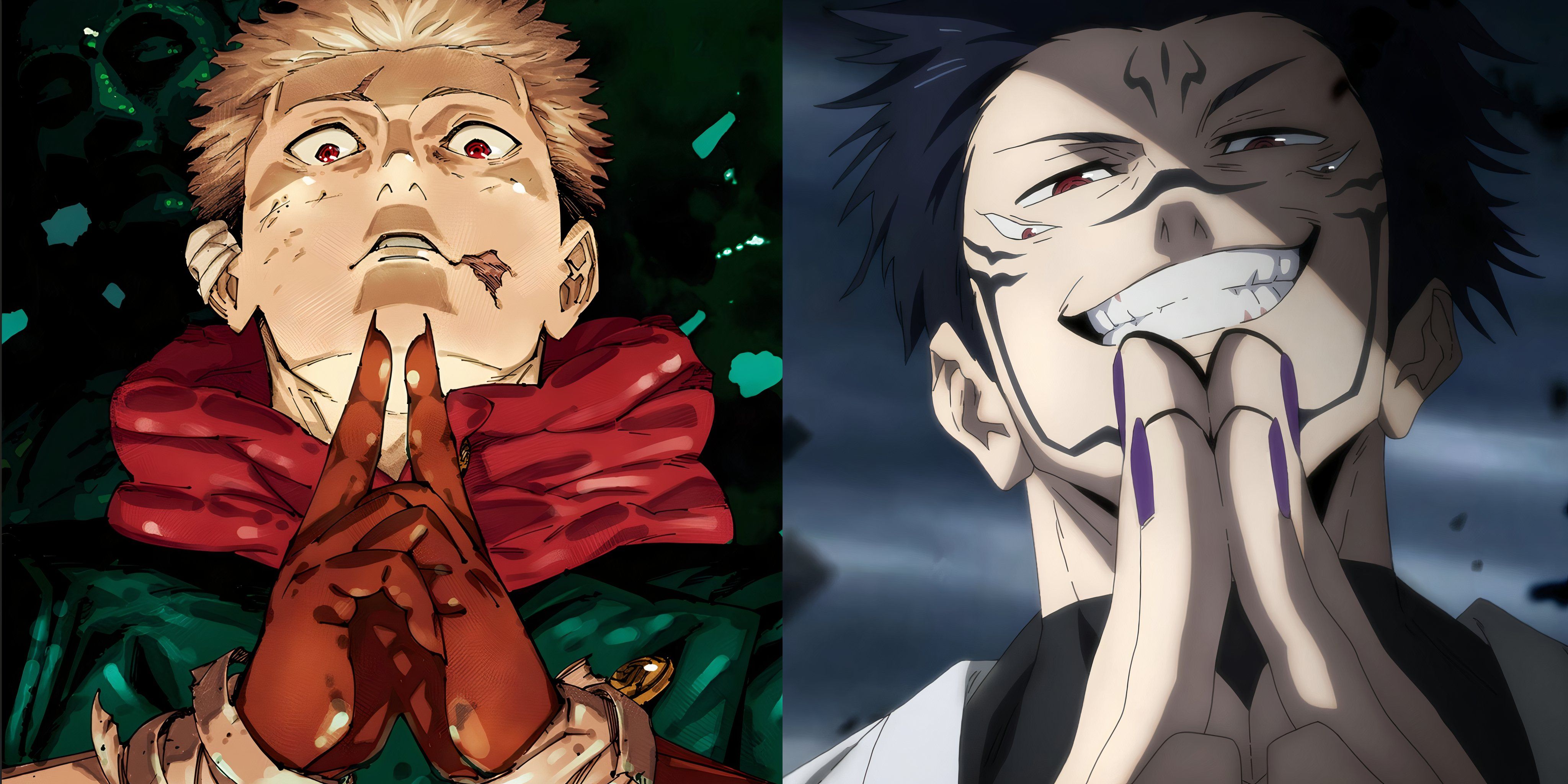
You’ve seen them all over TikTok and Pinterest. Those sharp, sometimes jarring Jujutsu Kaisen side profiles that make Satoru Gojo look like a runway model or Ryomen Sukuna look like a literal demon. But there's more to it than just "pretty boys with sharp jawlines." If you look closely at Gege Akutami’s evolution as an artist, those profiles tell a story about the grueling pace of weekly manga production and a very specific stylistic choice that prioritizes movement over anatomical perfection.
Most people think Akutami just got "better" at drawing over time. That's a bit of a simplification. Honestly, the shift in how characters are viewed from the side—moving from the softer, more traditional Shonen look of Jujutsu Kaisen 0 to the jagged, minimalist lines of the Shinjuku Showdown arc—is a deliberate move toward "efficiency of expression."
The Evolution of the JJK Silhouette
In the beginning, Yuji Itadori’s side profile was rounder. It felt safe. If you go back and look at the early chapters or the first few episodes of the MAPPA anime, the character designs followed a standard template. Big eyes, slightly sloped foreheads, and recognizable chin structures. It was classic. But as the Shibuya Incident rolled around, something shifted. The lines got thinner. The noses got more prominent. The "strong" side profile became a hallmark of the series' identity.
Character designer Tadashi Hiramatsu, who worked on Season 1, brought a certain fluidity to these profiles. He understood that in a series about Cursed Energy, characters shouldn't always look static. They should look like they’re under pressure. When you see Gojo’s side profile during the Infinite Void expansion, it isn't just about showing off his blindfold; it’s about the tension in the neck muscles and the specific angle of the jaw that suggests a god-like detachment from the world.
Why the "Sharpness" Matters
It’s about the "Iki" aesthetic—a Japanese concept of chic, sophisticated minimalism. Akutami doesn't waste lines. If a side profile can be rendered in three strokes, he’ll do it in two. This creates a high-fashion look that fans have latched onto. Characters like Nanami or Toji Fushiguro are defined by their profiles. Toji, specifically, is a fan favorite for this. His profile isn't just a face; it's a weapon. The heavy brow, the scarred lip, the straight line from the forehead to the nose—it conveys a sense of predatory instinct that a front-facing shot sometimes loses.
Anatomy vs. Style: The Great Debate
Let’s be real for a second. Sometimes the Jujutsu Kaisen side profiles in the manga look... weird. You might see a panel where a character's ear is placed a bit too far back or the jawline seems to extend into infinity.
Is this a mistake?
Probably not. In professional manga circles, especially for a hit like JJK, these "distortions" are often intentional. They provide a sense of "speed." When Sukuna is mid-fight, his profile might be elongated to emphasize the direction of his movement. It’s a technique used by legendary artists like Yoshihiro Togashi (Hunter x Hunter), whom Akutami openly admires. It’s not about being a human camera; it’s about being a storyteller.
- The Gojo Effect: His profile is often drawn with a very high bridge on the nose, which gives him an aristocratic, "better-than-you" vibe.
- Maki’s Transformation: Post-Shibuya, Maki Zenin’s side profile changed drastically. The scars and the shorter hair emphasized a more rugged, squared-off jawline, visually representing her shift from a struggling student to a "Heavily Restricted" powerhouse.
- The Yuta Paradox: Yuta Okkotsu often has a softer, more slumped profile, which reflects his internal fatigue and the weight of Rika.
How MAPPA Handles the Profile
Animation is a different beast entirely. While Akutami can be messy and experimental in the manga, the animators at MAPPA have to keep things consistent. During the "Hidden Inventory" arc (Season 2), the art style shifted under the direction of Shota Goshozono.
The profiles became even more simplified, but the "acting" improved. Think about the scene where Geto is sitting in the KFC, his profile illuminated by the harsh neon lights. The simplicity of the line allowed for more nuanced shadows. You could see the descent into madness not just in his eyes, but in the way his head was tilted. That's the power of a well-executed side view. It allows for a profile-heavy composition that feels more cinematic and less like a standard "talking head" anime.
The Cultural Impact of the JJK Aesthetic
Why are we even talking about this? Because Jujutsu Kaisen has become a "lifestyle" anime. People aren't just watching it for the fights; they're watching it for the vibes. The specific way Akutami draws side profiles has influenced an entire generation of digital artists. You can go on any social media platform and find "how to draw JJK style" tutorials that specifically focus on that sharp, angular chin and the high-set ears.
It’s a break from the "moe" style that dominated the 2010s. It’s gritty. It’s "ugly-cool." It’s something that feels grounded in a dark reality, even when people are throwing purple balls of energy at each other.
Common Misconceptions
People often think that a sharp jawline in JJK means a character is "strong." That’s not always true. Look at Mahito. His profile is often fluid, almost melting, representing his ability to reshape souls. His profile changes depending on his mood. When he’s mocking Yuji, his features become more human and sharp; when he’s losing, he becomes more amorphous. The side profile is a barometer for a character’s mental state.
Practical Insights for Artists and Fans
If you're trying to capture that JJK look in your own art or just trying to understand why certain panels hit harder than others, look at the "negative space." Akutami uses the space in front of a character's face to create tension. If a character is looking off-panel in profile, it feels like they are looking into the future—or at an approaching threat.
- Focus on the Bridge: The connection between the forehead and the nose is the most distinct part of the JJK profile. It’s rarely a soft curve; it’s usually a sharp angle.
- The Eye Placement: In JJK, the eye in a side profile is often drawn smaller and closer to the bridge of the nose than in other anime. This creates a "staring" effect.
- Jawline Economy: Don't over-detail the jaw. One or two clean lines are better than a bunch of sketchy ones if you want that "Gojo" look.
The fascination with Jujutsu Kaisen side profiles isn't just some weird internet obsession. It's a recognition of a unique artistic voice that managed to break through the noise of generic shonen designs. By prioritizing mood and movement over rigid anatomical rules, Akutami created a visual language that feels as dangerous and unpredictable as the Curses themselves.
To truly appreciate the artistry, pull up Chapter 236 and look at the profiles of the characters in the "airport" scene. Notice how the softness of their faces contrasts with the jagged, violent lines used during the fight that preceded it. It’s a masterclass in using character design to signal a shift in tone. For anyone looking to study modern manga composition, there's no better place to start than the silhouette of a Sorcerer.
Next Steps for Deepening Your Knowledge
To better understand the technical side of these designs, you should look into the "Character Design Sheets" released by MAPPA for Season 2. These sheets show the "turnarounds" of characters like Toji and Geto, providing a 360-degree view of how their profiles are constructed for movement. Additionally, comparing the original manga panels of the Shibuya arc to the anime adaptation will reveal how professional animators "clean up" Akutami's more experimental, scratchy lines while maintaining that iconic sharp silhouette. Look specifically at the "weight" of the lines—thicker lines are often used on the underside of the chin to ground the character in the space.