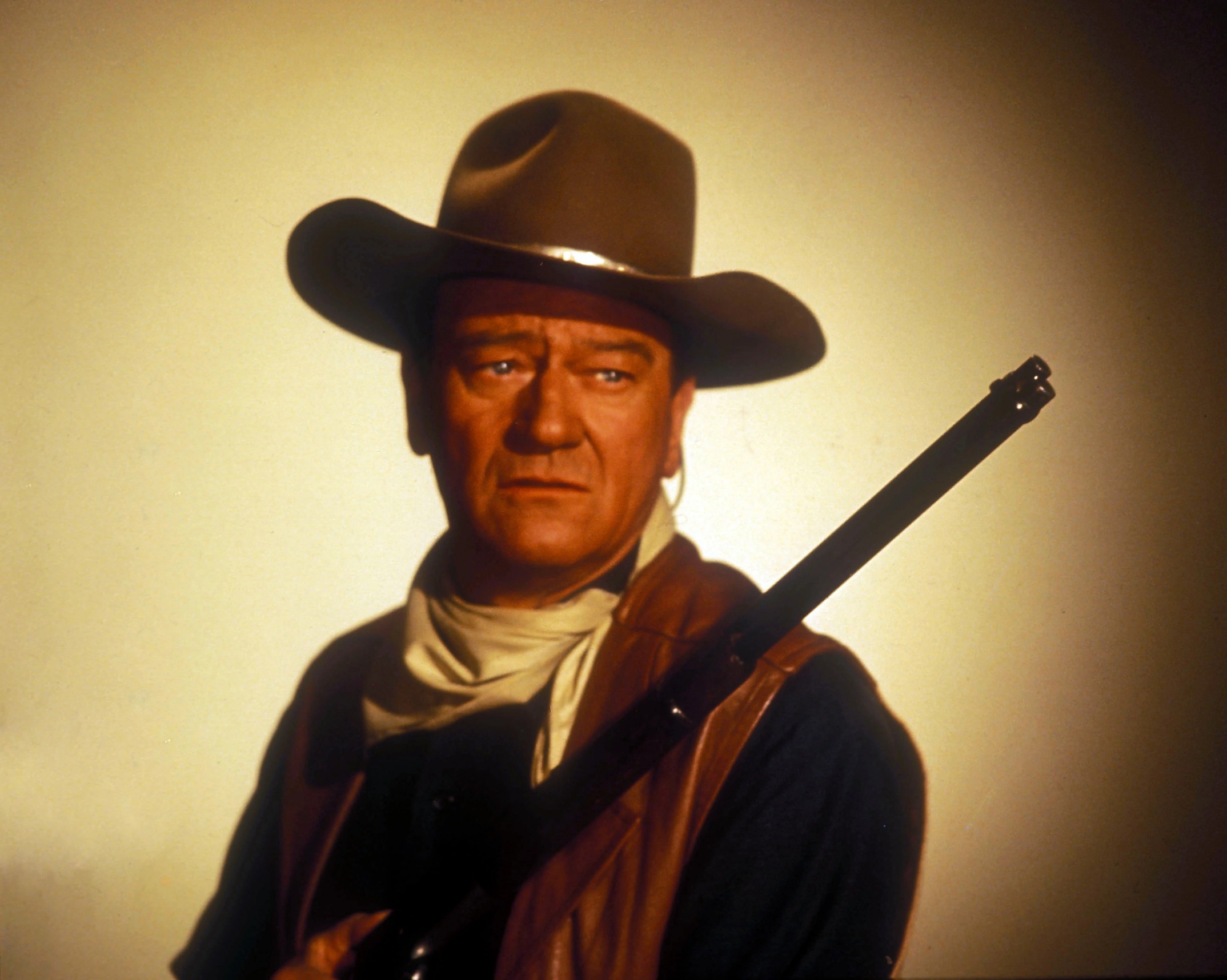
You've heard it. Even if you haven't sat through all 116 minutes of Stanley Kubrick’s Full Metal Jacket, you’ve probably heard that raspy, exaggerated drawl.
"Is that you, John Wayne? Is this me?"
It is one of those lines that has lived a thousand lives. It’s a meme. It’s a TikTok sound. It’s a shirt. But honestly, most people quoting it today have no clue what it actually meant in 1987, let alone what it says about the guy who said it.
It wasn’t just a joke. It was a suicide note for a specific kind of American hero.
The Moment Everything Changed on Parris Island
Picture this. You have Gunnery Sergeant Hartman—played by the legendary R. Lee Ermey—screaming into the faces of terrifyingly young men. He is a whirlwind of creative profanity. He is the ultimate authority. The air is thick with the smell of floor wax and fear.
Then, out of the back of the formation, comes the voice.
It’s Matthew Modine, playing Private Joker. He’s not just talking; he’s doing "The Duke." He nails the cadence. The pauses. That specific, husky Western hero vibe that defined masculinity for three decades.
Hartman stops. The silence is deafening.
"Who the f*** said that?"
That’s the moment Private Joker is born. By mocking the biggest war hero in cinema history, Joker isn't just being a "slimy little communist twinkle-toed c**ksucker," as Hartman calls him. He’s calling out the entire lie of Hollywood warfare.
Is This Me? The Existential Crisis You Missed
The second half of that quote is where things get weird. "Is this me?"
Think about it. Why would he ask that? If you're just making fun of a drill instructor, you say, "Is that you, John Wayne?" and leave it there. But Joker adds that second part.
Basically, he’s pointing at the mirror.
In the original novel by Gustav Hasford, The Short-Timers, the dialogue is actually split. A character named Cowboy says the first part, and Joker responds. Kubrick changed it so Joker says the whole thing. This shift makes it way more personal.
He’s asking: Am I the hero now? Is this what the 'tough guy' looks like in real life?
John Wayne represented the "Good War." He was the guy on the poster for Sands of Iwo Jima. He was the guy who told everyone that war was noble, clean, and fought by men with perfect jawlines who always knew right from wrong.
By the time these kids got to Vietnam, that myth was dead.
Joker is looking at the brutality of boot camp and the absurdity of the military machine and asking if he’s becoming the very thing he’s mocking. It’s a question of identity. If the world is a movie, which character is he playing? The hero or the victim?
Matthew Modine’s Secret Source
Here is a bit of trivia that most film buffs don't even know. Matthew Modine didn't actually learn that John Wayne impression for Full Metal Jacket.
He learned it from Mel Gibson.
A few years earlier, Modine was working on a film called Mrs. Soffel with Gibson. Mel was working with a dialect coach to lose his Australian accent and sound more "American." For some reason, his practice voice often sounded exactly like John Wayne. Modine picked it up by osmosis.
Fast forward to the set of Full Metal Jacket. Kubrick, who was notoriously difficult and would do 100 takes of a guy eating a sandwich, loved the impression. He realized it was the perfect "mask" for Joker to wear.
The John Wayne Shadow over Vietnam
We can't talk about this line without talking about the real John Wayne.
The Duke was a complicated figure. He never actually served in the military during World War II, which was a point of massive insecurity for him. He spent the rest of his life overcompensating by playing the ultimate soldier on screen.
In 1968, he directed and starred in The Green Berets. It was a pro-war film made at the height of the Vietnam conflict. It was, to put it lightly, not well-received by the guys actually in the mud.
To the soldiers in Full Metal Jacket, John Wayne wasn't a hero. He was a ghost. He was the guy who sold their parents a version of war that didn't exist.
When Joker says the line again later in the film—this time while being filmed by a news crew in the ruins of Hué City—it’s even darker. He’s surrounded by corpses. The city is burning. And there he is, doing the voice again.
"Is that you, John Wayne? Is this me?"
At that point, it’s not a joke anymore. It’s sarcasm so thick you could choke on it. He’s saying, Hey, look at us. We're the movie stars now. Isn't it great?
Why the Line Exploded into Pop Culture
So, why do people still say it?
- It’s the ultimate "macho" deconstruction. It works because R. Lee Ermey was the real deal (a former Drill Instructor), and seeing someone poke a hole in that intensity is satisfying.
- The rhythm is perfect. Kubrick had a musical ear for dialogue. The way the line bounces makes it "sticky."
- It fits any situation involving fake toughness. Use it on a boss who's power-tripping. Use it on a friend acting like a tough guy at the gym. It’s the universal "get over yourself" button.
Interestingly, many people think the line is actually from a John Wayne movie. It’s not. It’s a parody of a persona that never existed in the way we remember it.
The Actionable Takeaway
If you're going to use the line, use it right. Don't just do the voice; understand the irony.
Next time you see someone trying to sell a "perfect" or "heroic" version of a messy situation—whether it's in business, politics, or just a dramatic Facebook post—remember Private Joker.
The "John Wayne" version of life is usually a set with painted backgrounds. The "Is this me?" part is the reality check.
To really get the full weight of the quote, you should do two things. First, go back and watch the opening ten minutes of Full Metal Jacket again. Notice how Joker’s eyes don’t match his voice. He’s terrified. Second, read The Short-Timers by Gustav Hasford. It’s a brutal, lean book that makes the movie look like a Disney flick. It gives the line a much meaner, sharper edge that explains why Joker ended up the way he did.
Stop looking for the hero in the mirror and start looking for the person. That’s what Joker was trying to do, even if he had to hide behind a movie star’s voice to do it.
Next Steps for the History Buff:
If you want to dive deeper into how Hollywood changed our memory of the war, look up the production history of The Green Berets. Comparing that film to Full Metal Jacket is like looking at two different planets. One is a propaganda poster; the other is a car crash you can't look away from.