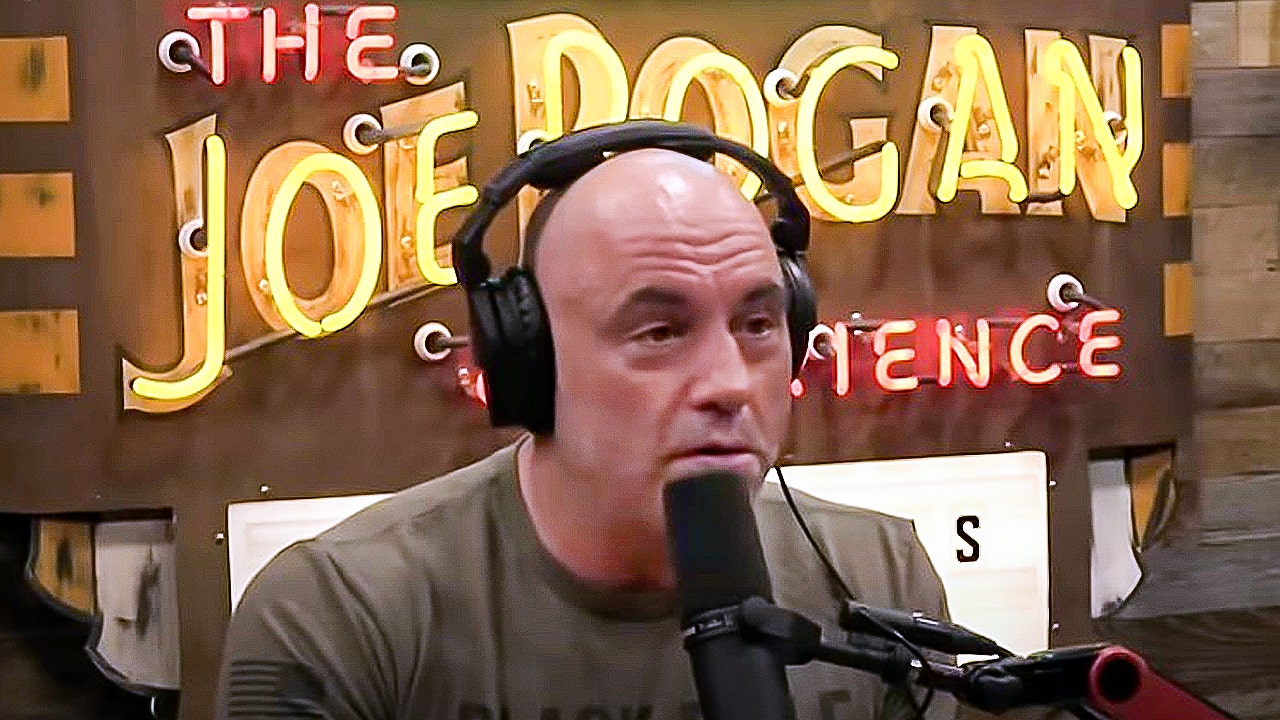
You've probably seen the clips. Joe Rogan sits there, eyes wide, jaw practically on the floor, as a guest describes a world that sounds more like a dystopian sci-fi novel than a modern country. When the topic of Joe Rogan North Korea comes up, people usually point to one specific moment: the interview with Yeonmi Park. It went viral for a reason.
It was harrowing. It was unbelievable. Honestly, for a lot of listeners, it was their first real "look" behind the curtain of the Hermit Kingdom. But since that episode dropped in 2021, the conversation has shifted. It’s gotten complicated. What started as a shocking survival story turned into a massive debate about truth, embellishment, and how we consume "out there" information in the age of the mega-podcast.
The Yeonmi Park Episode: Why It Broke the Internet
In August 2021, Joe Rogan hosted Yeonmi Park on JRE #1691. For over three hours, Park detailed her escape from North Korea at age 13. She talked about seeing bodies in the streets, eating dragonflies to stay alive, and the brutal reality of human trafficking in China.
Rogan was visibly shaken. At one point, she mentioned how North Koreans are so brainwashed they don't even have a word for "love" in the way Westerners do—it’s all reserved for the "Dear Leader."
The sheer scale of the tragedy she described—people pushing trains because there was no electricity, or the "punishment of three generations" where an entire family is imprisoned for one person's "crime"—blew up on social media. It was a masterclass in long-form storytelling. But it also invited a level of scrutiny that most podcast guests never face.
Where the Controversy Starts
Here is the thing. When you have a platform as big as Rogan’s, people are going to fact-check you in real-time. After the episode aired, critics and even other North Korean defectors started raising eyebrows.
Some of the stories Park told Rogan seemed to contradict things she’d said years earlier in South Korea or in her own memoir, In Order to Live. For instance, her story about seeing a friend’s mother executed for watching a James Bond movie has changed several times—sometimes it was a South Korean DVD, sometimes it happened in a stadium, other times in a street.
Experts like Andrei Lankov, a professor at Kookmin University who has interviewed hundreds of defectors, have expressed skepticism about some of her more extreme claims. He pointed out that while North Korea is undoubtedly a brutal dictatorship, some of the "cartoonish" details—like people pushing a 15-ton train—don't quite align with the logistical reality of the country.
Does that mean she’s lying? Not necessarily. Trauma is a weird thing. Memory is even weirder. But it highlights the core "Joe Rogan" problem: he provides a massive, unfiltered microphone. He isn't a journalist; he’s a guy having a conversation.
Michael Malice and the "New Right" Perspective
Before Yeonmi Park, there was Michael Malice. If you want to understand the Joe Rogan North Korea rabbit hole, you have to look at Malice’s appearances (like #1197 and #1300). Malice wrote Dear Reader: The Unauthorized Autobiography of Kim Jong Il, and his approach is totally different.
Malice focuses on the "theological" nature of the state. He explains to Joe how North Korea isn't just a communist country; it’s a cult of personality that has successfully frozen time.
Rogan and Malice often discuss the "complacency" of the West. They use North Korea as a dark mirror to look at American culture. In these episodes, the conversation usually veers away from the individual suffering and toward the terrifying efficiency of total state control. It’s less about "I can’t believe they eat grass" and more about "Look how easily a population can be convinced of a false reality."
Why These Conversations Matter (Even if They’re Flawed)
People love to bash Rogan for "platforming" people without a live fact-checker. And yeah, some of the stuff said about North Korea on the show is likely exaggerated or missing context.
But there is a flip side.
Before these episodes, how many average people were thinking about the slave labor camps in the DPRK? Or the fact that China often repatriates escapees knowing they'll face torture? Rogan’s North Korea episodes—regardless of the inconsistencies—forced a massive, young, global audience to acknowledge a human rights crisis that usually stays in the "boring" section of the evening news.
Common Misconceptions Addressed on the Show:
- The "One Train" Myth: Park told Rogan North Korea has "one train" that people have to push. While the rail system is famously broken and people often wait days for a train to move, the country obviously has more than one locomotive.
- The Internet Gap: Most people think North Koreans just have "bad" internet. Rogan’s guests clarify that most citizens have zero concept of what the World Wide Web even is. They have a closed intranet (Kwangmyong) with a handful of state-approved sites.
- The 3-Generation Punishment: This is actually a well-documented reality. If you defect or commit a political crime, your parents and children can be sent to the kwan-li-so (political prison camps) alongside you.
Realities of the "Slave Labor" Connection
In more recent episodes, including snippets from 2024 and 2025, Rogan has touched on the "hidden" North Korean workforce. He’s discussed how the regime sends "state-sponsored slaves" to China and Russia to work in logging, mining, and even seafood processing.
The money they earn doesn't go to them; it goes straight to the Kim regime to fund the nuclear program. This is a point where the "entertainment" of the podcast hits the "real world" hard. Rogan has mentioned New Yorker articles and investigations that show North Korean labor is likely involved in the supply chains of products Americans buy every day.
What We Can Learn from the Joe Rogan North Korea Dialogue
If you’re looking for a peer-reviewed academic paper, the Joe Rogan Experience is the wrong place. But if you’re looking to understand the vibe of the North Korean tragedy—the fear, the isolation, and the sheer absurdity of the Kim regime—these episodes are a powerful entry point.
The controversy around Yeonmi Park shouldn't distract from the broader truth: North Korea is a country-sized prison. Whether or not someone "pushed a train" is less important than the fact that millions are living in a state of manufactured famine and total information blackout.
Actionable Insights for Further Learning:
- Cross-Reference the Narratives: If you watched the Yeonmi Park episode, read her memoir In Order to Live and then compare it to accounts from other defectors like Joo Yang or Thae Yong-ho. You’ll see where the stories align and where the "podcast version" might be tuned for maximum impact.
- Follow Human Rights Groups: Look into organizations like Liberty in North Korea (LiNK). They focus on the logistics of getting people out through the "underground railroad" in China and Southeast Asia.
- Check the "Slaves to the Empire" Data: Research the "Committee for Human Rights in North Korea" (HRNK) reports on overseas labor. It’s a sobering look at how the DPRK stays financially afloat.
- Watch the Satellite Imagery: Go on Google Earth and look at the border between China and North Korea at night. The "black hole" of light is the most honest piece of data you'll ever see regarding the country's energy and economic state.
At the end of the day, the Joe Rogan North Korea episodes serve as a gateway. They aren't the final word, but they've done more to spark interest in the DPRK's human rights issues than almost any traditional media campaign in the last decade. Take the stories with a grain of salt, but don't ignore the very real fire behind all that smoke.