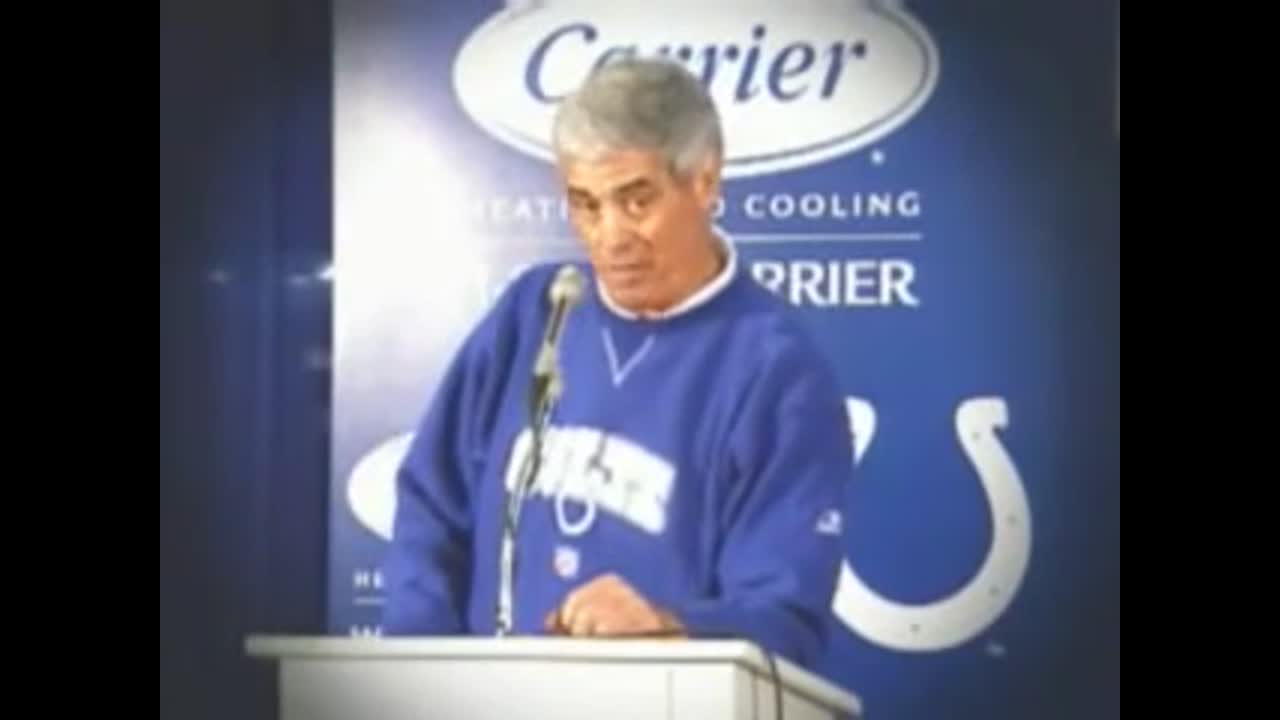
Everyone knows the soundbite. If you’ve watched more than five minutes of ESPN in the last twenty years, you’ve heard it. A frustrated, red-faced man leaning into a microphone, his voice cracking into a high-pitched register of pure disbelief: "Playoffs? Don't talk about—playoffs? You kidding me? Playoffs?"
It’s the gold standard of coaching meltdowns. It’s a meme that existed before we really called things memes. But honestly, most people have the context all wrong. They think Jim Mora was just a grumpy old coach who lost his mind over a single question.
The truth is way messier.
The Jim Mora playoffs rant wasn't just about a post-game question; it was the final explosion of a locker room that was cannibalizing itself, a public feud with a legendary quarterback, and a coach choosing his friendship over his career.
The Afternoon Everything Broke
It was November 25, 2001. The Indianapolis Colts had just been embarrassed by the San Francisco 49ers, losing 40-21. This wasn't just any loss. The Colts turned the ball over five times. Peyton Manning, still a young star at the time, threw four interceptions. One of those was a pick-six. Three others gave the Niners the ball deep in Colts territory.
Basically, the offense handed the game over on a silver platter.
When Jim Mora walked into that press conference at the RCA Dome, he wasn't just "agitated." He was vibrating with rage. But he wasn't mad at the reporter, Tim Bragg, who eventually asked the famous question. He was mad at the narrative.
For weeks, the Indianapolis media and Colts president Bill Polian had been crushing the defense. They were blaming defensive coordinator Vic Fangio for the team’s struggles. Mora and Fangio were incredibly close friends. Mora felt like his friend was being made a scapegoat while the "Golden Boy" quarterback was getting a free pass for turning the ball over like it was a hot potato.
Jim Mora Playoffs: The Full Tirade
People usually only see the five-second clip. You’ve seen the "Playoffs?" part. But the preamble is where the real venom was. Mora started the presser by explicitly telling everyone not to blame the defense.
"I don't care who you play," Mora barked. "When you turn the ball over five times... you ain't gonna beat anybody. That was a disgraceful performance."
He was taking direct, public shots at Peyton Manning. That just didn't happen back then. You didn't roast your franchise QB in front of the cameras.
Then came the question. Tim Bragg asked if, despite the loss, the Colts needed to "win out" to make the postseason.
Mora’s brain seemingly short-circuited. "Playoffs? I just hope we can win a game! Another game!"
It was the sound of a man who knew the season was dead. The Colts were 4-6. They would go on to finish 6-10. Mora never coached in the NFL again after that season.
The Fallout Nobody Talks About
We remember the funny voice, but the internal damage was permanent. Peyton Manning was legendary for his preparation and his pride. Being called "disgraceful" by his head coach in a viral press conference didn't sit well. Manning later said that Mora never spoke to him directly about those comments before saying them to the media.
"It bothers me," Manning told reporters a few days later. That’s "Manning-speak" for being absolutely livid.
There was a fork in the road at the end of that 2001 season. Bill Polian gave Mora an ultimatum: Fire Vic Fangio, or you’re gone.
Mora, a former Marine with a rigid sense of loyalty, refused. He wouldn't fire his friend to save his own skin. So, the Colts fired them both.
It’s one of the great "what ifs" in sports. If Mora stays, does Tony Dungy ever come to Indy? Does Manning win that first Super Bowl in 2006? The Jim Mora playoffs meltdown was the catalyst for the entire Tony Dungy era. Without that rant, the Colts' history looks completely different.
Beyond the Soundbite: The Mora Legacy
It’s kinda sad that Jim Mora is mostly remembered for a few seconds of yelling. The guy was actually a winner.
- He turned the New Orleans Saints from a "'Aints" joke into a playoff team.
- He won two USFL championships with the Philadelphia Stars.
- He held the record for most wins in Saints history for years.
But he was also the king of the "Zero Playoff Wins" club in the NFL. He finished his career 0-6 in the postseason. Maybe that’s why the word "playoffs" triggered such a visceral reaction. It was his Achilles' heel.
Why the Rant Still Resonates in 2026
In a world of scripted, boring corporate coach-speak, Mora was raw. He didn't have a PR filter. He didn't care about "optics."
When you search for Jim Mora playoffs, you aren't just looking for a laugh. You're looking for a moment of genuine human frustration. We've all been there—where you're doing your best, things are falling apart, and someone asks you a question that feels so out of touch with your current reality that all you can do is laugh-scream.
How to Handle Your Own "Playoffs" Moment
If you're a leader or a manager, there are actual takeaways from this disaster. It’s not just a funny video; it’s a case study in what not to do.
- Don't Litigate in Public: Mora was right about the turnovers, but wrong to roast Manning in the press. If you have a problem with your "star player" at work, do it behind closed doors.
- Loyalty Has a Price: Mora chose Fangio over his job. That’s honorable, but you have to be prepared to live with the consequences. He did. He never looked back.
- Check Your Stress: That rant happened because of weeks of build-up. If you feel yourself getting to that "Playoffs?" level of annoyance, it’s time to take a walk before the cameras start rolling.
The next time you see that clip on social media, remember it wasn't just a guy being cranky. It was a coach standing up for a friend, a team losing its identity, and the end of an era in Indianapolis.
Jim Mora didn't want to talk about the playoffs. He just wanted to win a game. Honestly? After watching the 2001 Colts, you can’t really blame him.
Next Steps for NFL History Buffs
To get the full picture of this era, you should look into the "Diddly Poo" rant from Mora's Saints days. It's arguably even more intense than the playoffs speech and explains his long-standing tension with the media. You can also research the 1999 Colts season—the 13-3 turnaround—to see just how high the expectations were before it all came crashing down in 2001.