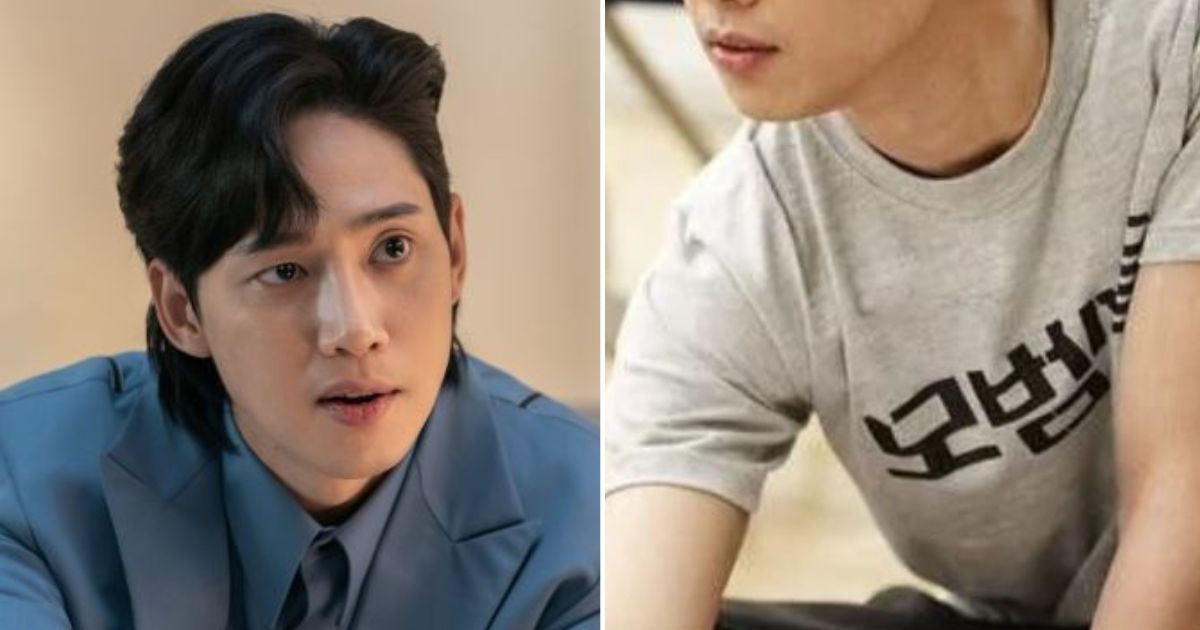
Honestly, if you've finished watching The Glory on Netflix, there is one character who probably lives rent-free in your head—and not for the right reasons. Jeon Jae-jun. He’s that specific brand of "rich guy" villain that makes your skin crawl because he’s so believable. While Park Yeon-jin was the face of the group’s cruelty, Jae-jun was the muscle and the money, a man whose entire personality was built on a foundation of unchecked privilege and a very literal blindness to his own flaws.
He’s complicated. Not in a "he has a secret heart of gold" kind of way, but in a "how can one person be this protective and this monstrous at the same time" kind of way.
The Genetic Curse: Color Blindness as Destiny
Most people look at Jae-jun’s color blindness as just a plot device to prove he's the father of Ha Ye-sol. But it’s deeper than that. It’s his only vulnerability. For a man who owns a luxury boutique (Siesta) and a massive golf resort, not being able to see red or green is a massive blow to his ego. It’s why he loses his mind whenever anyone mentions it.
Remember the scene where he beats up the teacher, Mr. Chu? That wasn't just about protecting Ye-sol from a creep—though that was the catalyst. It was Jae-jun lashing out at a world that dared to look down on his "flaw" being mirrored in his daughter. He saw himself in her, and his narcissism wouldn't allow that version of himself to be bullied.
Why He Never Married Yeon-jin
It’s a question that pops up in every K-drama forum. If they were sleeping together for twenty years, why didn't they just tie the knot?
Basically, Jae-jun is a player. He liked the chase, and he liked the convenience. But more importantly, Yeon-jin’s mother wanted status. Jae-jun was wealthy, sure, but Ha Do-yeong? He was "old money" respectable. Jae-jun was the guy you had fun with in the dressing room of a high-end shop; Do-yeong was the guy you displayed on your mantelpiece.
Jae-jun didn't even realize he "loved" Yeon-jin—or his twisted version of love—until he saw someone else owning what he thought was his. His possessiveness was constantly mistaken for affection.
The Brutal Reality of His Ending
Let’s talk about that final scene. It’s arguably the most poetic death in the entire series.
Moon Dong-eun didn’t actually kill him. Not directly. She just set the stage. By swapping his eye medicine with a substance that blinded him while he was driving, she took away his only weapon: his ability to see the world he thought he owned.
Then comes the construction site.
The person who pushed him into the vat of wet cement was Ha Do-yeong. If you look closely at the tie the perpetrator is wearing, it’s the exact one we see Do-yeong with later. It’s the ultimate "f*** you" from the man Jae-jun tried to cuckold.
- The Cement: Falling into wet cement is a terrifying way to go. It’s heavy, it burns the skin, and once it sets, you are literally part of the building.
- The Irony: Jae-jun spent his life looking down on people. Now, people will literally walk over him for decades without ever knowing he’s under their feet.
- The Absence: Unlike the other bullies who went to jail or lost their social standing publicly, Jae-jun just... vanished. To the world, he’s just a rich guy who went missing. No legacy. No grave. Nothing.
Park Sung-hoon: The Man Behind the Monster
We have to give credit to Park Sung-hoon here. He played Jae-jun with this weird, magnetic energy. You’d find yourself laughing at his ridiculous insults one minute and then feeling genuine physical revulsion the next.
He’s since gone on to play other villains, like in Queen of Tears, but fans still call him "Jae-jun" on the street. That’s how much he lived in that role. He managed to make a character who is objectively a rapist and a bully feel like a living, breathing human being rather than a cartoon villain.
What Most People Get Wrong About His "Redemption"
Some fans argue that his love for his daughter, Ye-sol, was his "save the cat" moment. It wasn't.
Everything Jae-jun did for Ye-sol was an extension of his own ego. He wanted her because she was his blood. He didn't care about her well-being as much as he cared about winning a custody battle against a man he hated. If he truly cared about children, he wouldn't have been so indifferent to the fact that he got Yoon So-hee pregnant through assault years prior.
He was consistent to the end: a man who only valued what he could claim as his own property.
Practical Takeaways for Your Next Rewatch
If you’re going back to watch The Glory again (and honestly, who isn't?), keep an eye on these specific details regarding Jae-jun:
- The Color Palette: Notice how Jae-jun often wears muddy yellows or browns—colors that don't rely on the red-green spectrum he struggles with.
- The Dog: Louis XI. It’s the only creature he’s consistently kind to. It’s a subtle hint that he's capable of care, but only toward things that can't talk back or challenge his authority.
- The Eyes: Watch how often the camera focuses on his eyes before the finale. The foreshadowing is everywhere.
Jae-jun wasn't just a bully; he was the embodiment of what happens when wealth meets a total lack of empathy. His end wasn't just a plot point; it was a structural necessity for the show’s themes of "poetic justice." He started life in the heights of luxury and ended it as a foundation for a building he’d never own.
Keep an eye on the subtle shifts in his relationship with Choi Hye-jeong, too. His dismissal of her is ultimately what gave Dong-eun the opening to swap his meds. It was his arrogance toward the "lower" members of his own circle that truly sealed his fate.
To understand Jae-jun is to understand the core message of the show: the higher you stand on the backs of others, the further—and harder—you eventually fall.
Next Steps for Fans
Check out the fashion choices in Siesta; the costume designers used specific textures to compensate for Jae-jun's inability to see certain colors, making his wardrobe one of the most meticulously planned in the series. You might also want to look up Park Sung-hoon’s interviews where he discusses the "color-blind glasses" he wore to get into character.