You’re standing in a studio, looking at a wall of flashes. Color is loud. It’s vibrant, it screams for attention, and in the world of Japanese tattooing, it’s often the default. But there’s something about a Japanese tattoo black and white design that just feels different. It’s heavier. It’s more permanent, somehow, even though all ink is permanent.
Most people think going grayscale is just a budget choice or a way to avoid the "fading" issues of red and yellow inks. That’s a massive misconception. In reality, the monochrome tradition, or Sumi, is the literal backbone of the entire craft. If the linework and shading don't hold up in black, the color won't save it.
I’ve spent years talking to artists who specialize in Irezumi, and they’ll tell you straight up: black and white is the "naked" version of the art. There is nowhere to hide a mistake. No bright cherry blossom pink to distract from a shaky line on a dragon’s scale.
The Sumi-e Connection
To understand why Japanese tattoo black and white styles look the way they do, you have to look at classical ink wash painting. This is called Sumi-e. Back in the day—we're talking centuries ago—monks and artists used fermented pine soot and glue to create sticks of solid black ink.
They’d rub these sticks on a stone with a bit of water to get different gradients. A single brushstroke could be pitch black at the start and fade into a misty gray by the end.
Modern tattooing mimics this. When you see a high-end Japanese backpiece that is strictly black and grey, the artist is essentially painting on your skin using those same principles of "negative space" and "flow."
Honstly, the "white" in these tattoos isn't usually white ink. It’s your skin. The artist leaves gaps or uses very light washes to let your natural skin tone act as the highlight. It creates a high-contrast look that pop-culture color tattoos just can't replicate. It’s organic. It ages with you.
Why the Dragon Looks Better in Grayscale
Let’s talk about the Ryu (the dragon).
In color, a dragon can get messy. You have green scales, red whiskers, gold bellies. It’s a lot. In a Japanese tattoo black and white composition, the focus shifts entirely to the texture and the movement. You notice the "Karajishi" (lion dog) or the dragon because of the heavy, black background clouds, known as Gakuryo.
These backgrounds are the secret sauce.
In Japanese tattooing, the background isn't just filler. It's the structure. In a monochrome piece, those finger-shaped clouds or swirling water currents are shaded with "smooth" gradients that make the main subject—say, a samurai or a snake—jump off the skin. It’s a trick of the eye. By using deep blacks in the background and lighter grays for the subject, the artist creates a 3D effect without needing a single drop of pigment.
I once watched a master at a convention in Tokyo work on a Hannya mask. He didn't use any white ink for the teeth. He just shaded the gums so darkly that the bare skin looked like polished ivory. That’s the level of skill we’re talking about here.
The Durability Factor
Let’s be real for a second. Color fades.
Sunlight is the enemy of tattoos, and it eats through light blues and yellows like crazy. If you’re a "beach person" or you work outside, a full-color sleeve is going to look like a blurry watercolor painting in ten years unless you're religious about sunscreen.
Black ink is different. Carbon-based black ink has a much larger molecular structure than many colored pigments. It stays where it’s put.
A Japanese tattoo black and white piece is basically bulletproof. Even after decades, the "bones" of the tattoo remain visible. The grays might soften, and the blacks might turn a slightly cooler charcoal tone, but the image remains legible from across the street. This is why many traditionalists prefer it; they want the tattoo to look good when they’re eighty, not just when they’re twenty-five.
Common Symbols and Their Grayscale Vibe
You don’t have to stick to dragons. There’s a whole library of imagery that actually gains gravity when you strip away the color.
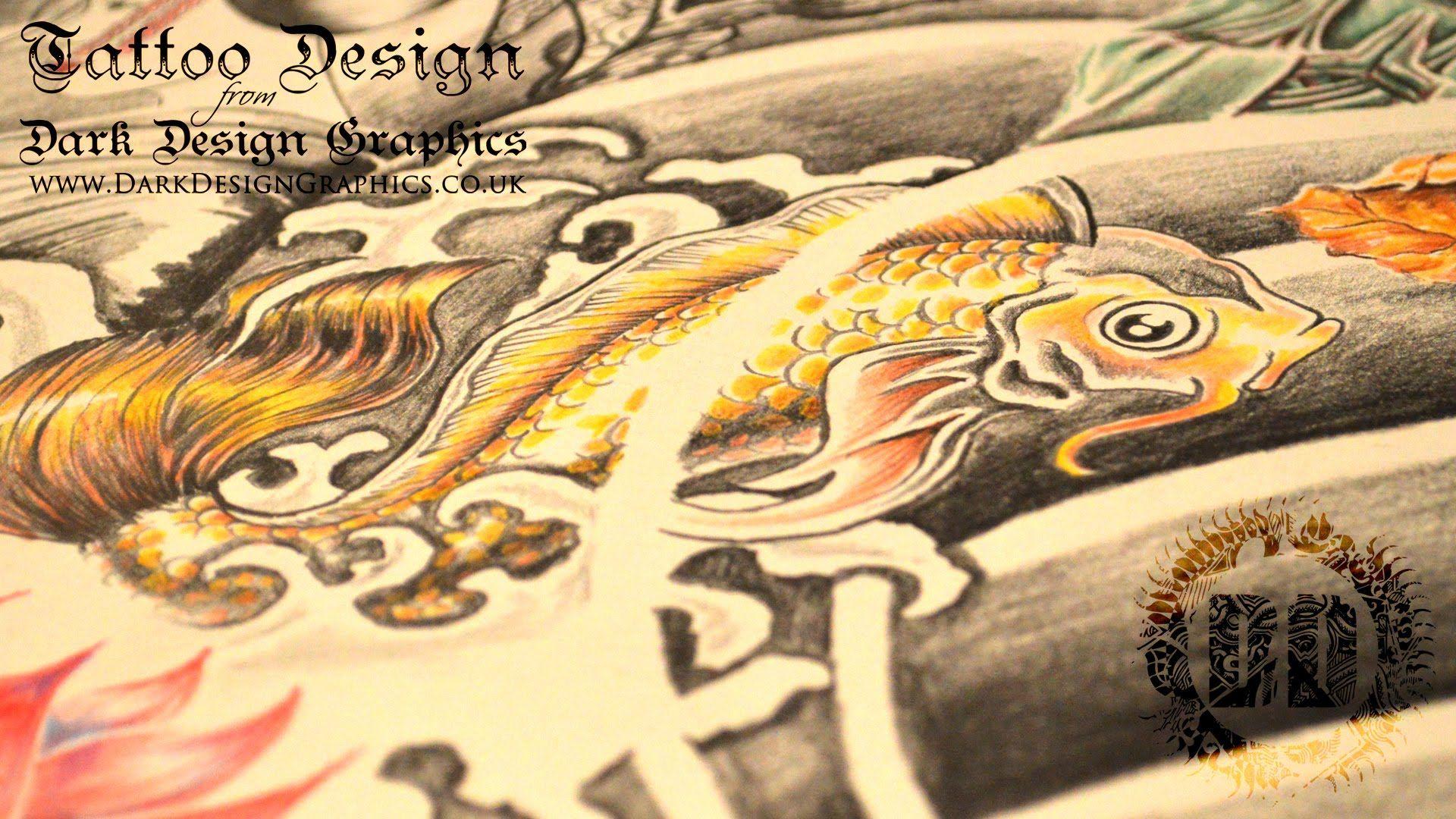
- The Koi Fish: Normally orange or red. In black and grey, it looks like a creature of the deep. It emphasizes the struggle of swimming upstream.
- The Tiger: Instead of orange fur, you get high-contrast stripes. It looks more like an ancient stone statue come to life.
- Cherry Blossoms (Sakura): People think these must be pink. Wrong. Shading them in light grey makes them look ghostly and ephemeral, which fits the actual meaning of the flower—the fleeting nature of life.
- The Namakubi: Severed heads. Honestly, these are pretty gruesome in color. In black and white, they feel more like a historical woodblock print (Ukiyo-e) and less like a horror movie prop.
Choosing Your Artist
This is where people mess up.
Not every artist who can do a "cool" black and grey tattoo can do traditional Japanese. Irezumi has rules. The way the water flows, the direction of the wind, the season the flowers bloom—all of it has to match.
If you want a Japanese tattoo black and white masterpiece, you need to find someone who understands Bokashi. That’s the specific technique of Japanese shading. It’s not the same as the "smooth" realism shading you see in Chicano-style tattoos or portraiture. Bokashi is more textured, more intentional.
Ask to see healed photos. Everyone’s work looks great when it’s fresh and red. You want to see what that black looks like after two years. Is it still deep? Are the transitions from dark to light smooth, or are they blotchy?
The Pain and the Process
Fair warning: black and white Japanese tattoos often require more "packing" of ink.
To get those deep, bottomless blacks in the background, the artist has to go over the skin thoroughly. It’s a different kind of burn than fine-line work. But the payoff is that usually, these pieces require fewer sessions than complex color realism because the artist isn't constantly switching needles and cleaning tubes to change pigments.
It’s an efficient, brutal, and beautiful process.
Actionable Steps for Your First Piece
Don't just walk into a shop and ask for a "Japanese tattoo." Do the homework.
- Study Ukiyo-e prints. Look at artists like Kuniyoshi or Hokusai. Notice how they used black ink to create weight.
- Pick a theme, not just a picture. Do you want a story of "strength" (Tiger/Dragon) or "resilience" (Koi)?
- Check the "Flow." Japanese tattoos are designed to follow the musculature of the body. A good black and white piece should look like it's moving when you flex.
- Think about the background. Do you want wind bars (flat, bold lines) or clouds (soft, shaded gradients)? This will change the entire vibe of the tattoo.
- Commit to the size. Japanese style doesn't work well as a tiny "postage stamp" tattoo. It needs room to breathe. If you’re going for black and white, go big. A forearm or a calf is the minimum to really see the detail.
The real beauty of a Japanese tattoo black and white design is that it doesn't try too hard. It’s classic. It’s like a well-tailored black suit or a vintage monochrome photograph. It strips away the noise and leaves you with the soul of the image.
Once you have your concept, find an artist who respects the tradition. Don't haggle on the price. You're paying for their ability to make black ink look like silk, stone, and water all at once. When it's done, keep it out of the sun for the first month, use a scent-free moisturizer, and let the ink settle into your skin. It'll be there forever, so you might as well make it a classic.